

Discover how you can keep essential appliances running during a power cut with a simple home battery that you plug directly into the socket.
Life without electricity: an unimaginable challenge
Imagine this: you’re in the middle of a severe storm, the lights flicker and suddenly it goes pitch black. The fridge stops humming, your phone cannot be charged and your internet connection drops. Without electricity you are cut off from the modern world. When your phone battery runs out and the temperature in the house begins to drop, you will soon realise how dependent you have become on all those devices that no longer work.
A power cut can occur for various reasons: due to extreme weather conditions, such as storms or snowfall, overloading of the electricity grid during peak hours, technical faults in outdated infrastructure, planned maintenance work or even small local defects, such as a blown fuse. In some regions, the power supply is becoming increasingly less stable due to the growing pressure on the electricity grid from sustainability measures and the increasing electricity consumption.
Even a short power cut of a few hours can be very disruptive. You cannot work, cannot communicate, cannot prepare meals as you are used to and in winter even have problems keeping warm. The question is not so much whether you will ever experience a power cut, but when. And then the logical question is: are you ready for it?
5 recommended plug-in batteries for emergencies
After extensive research and based on my personal experience, I can recommend the following plug-in batteries. Further on in the article you can read the basis on which I made this selection.
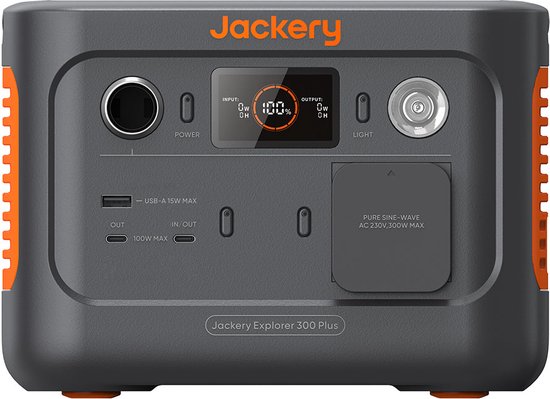
Jackery Explorer 300 Plus
Een betrouwbare middenklasser met 293Wh capaciteit en 300W vermogen. Deze stekkerbatterij is compact (3,1 kg) en heeft alle essentiële aansluitingen: twee stopcontacten, USB-A, USB-C en zelfs een 12V auto-aansluiting. Wat ik bijzonder waardeer, is de stille werking zonder ventilator, ideaal voor gebruik ‘s nachts tijdens een stroomuitval.
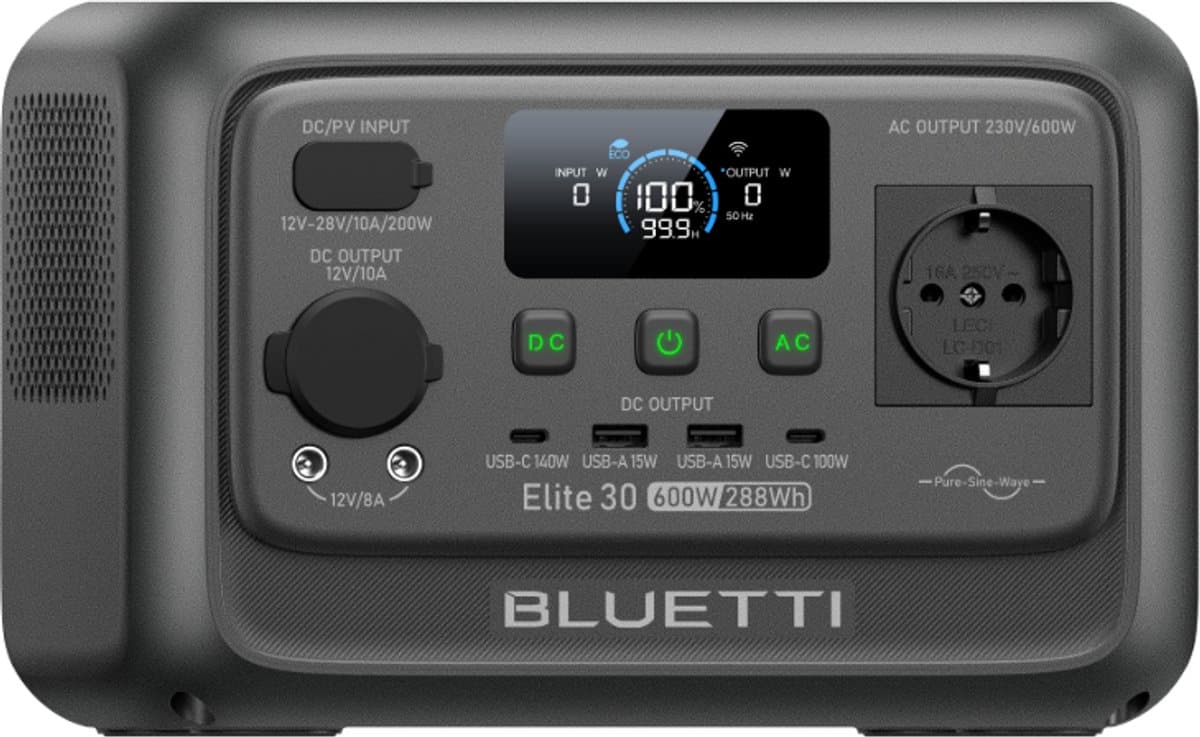
Elite 30 V2 powerstation (288 Wh)
Compacte powerstation met 288 Wh LiFePO4-accu en 600 W vermogen, voor laptop, lampen en kleine toestellen.
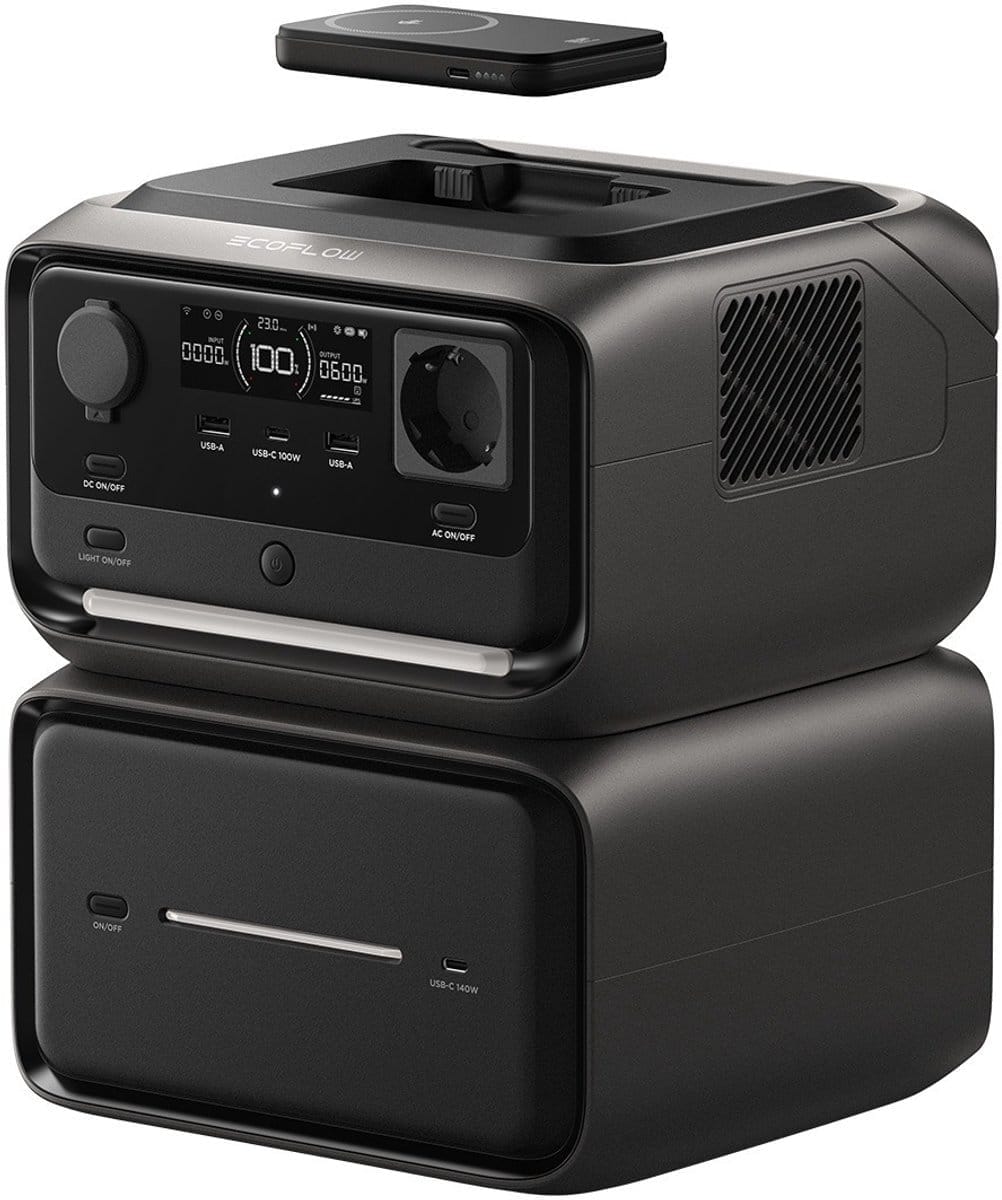
RIVER 3 Max Plus (858 Wh)
Draagbare powerstation met 858 Wh capaciteit, geschikt om meerdere toestellen een tijd draaiende te houden.
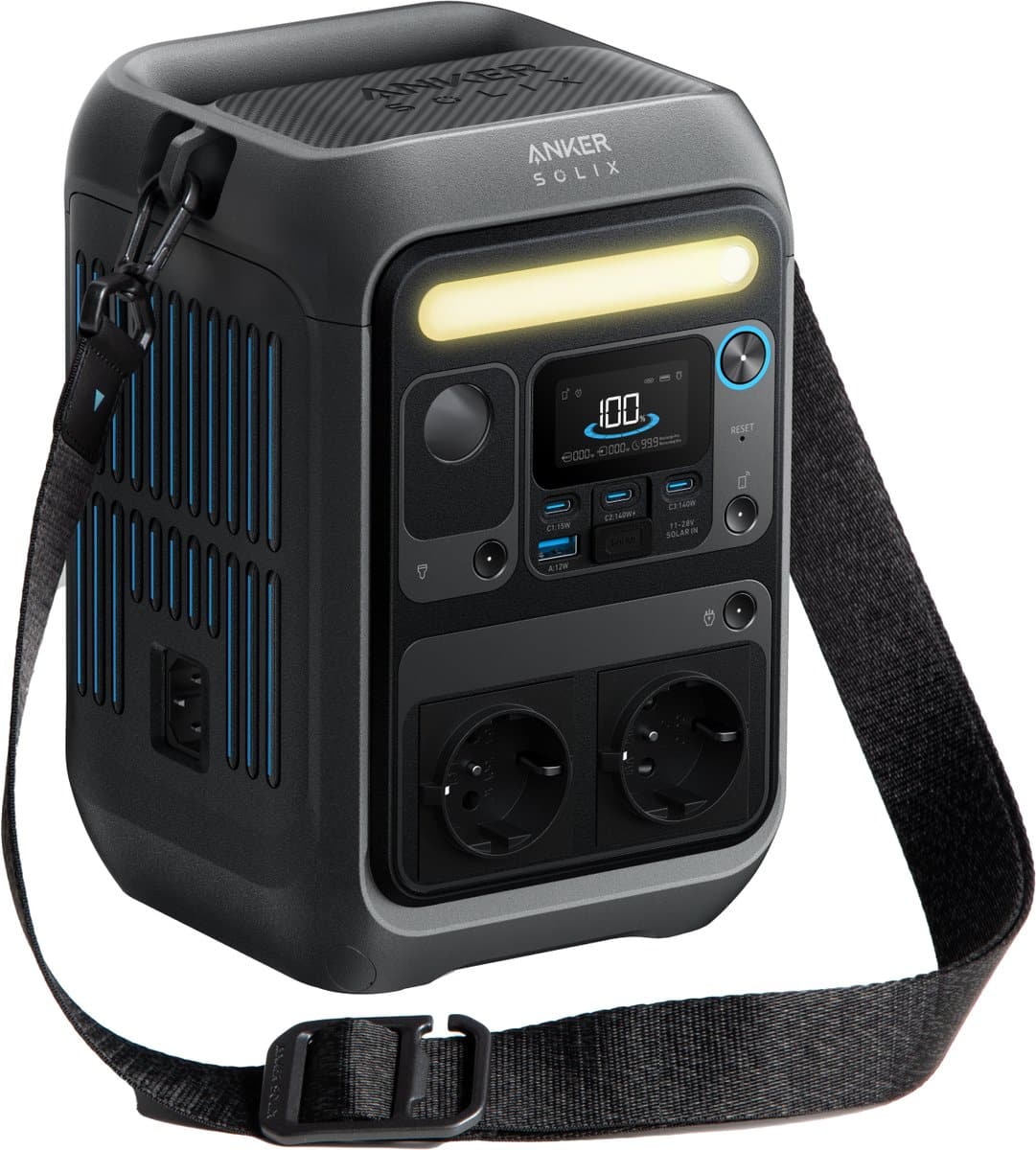
C300X powerstation (288 Wh)
Draagbare powerstation met 288 Wh LiFePO4-accu, 300 W vermogen en snelladen via USB-C.
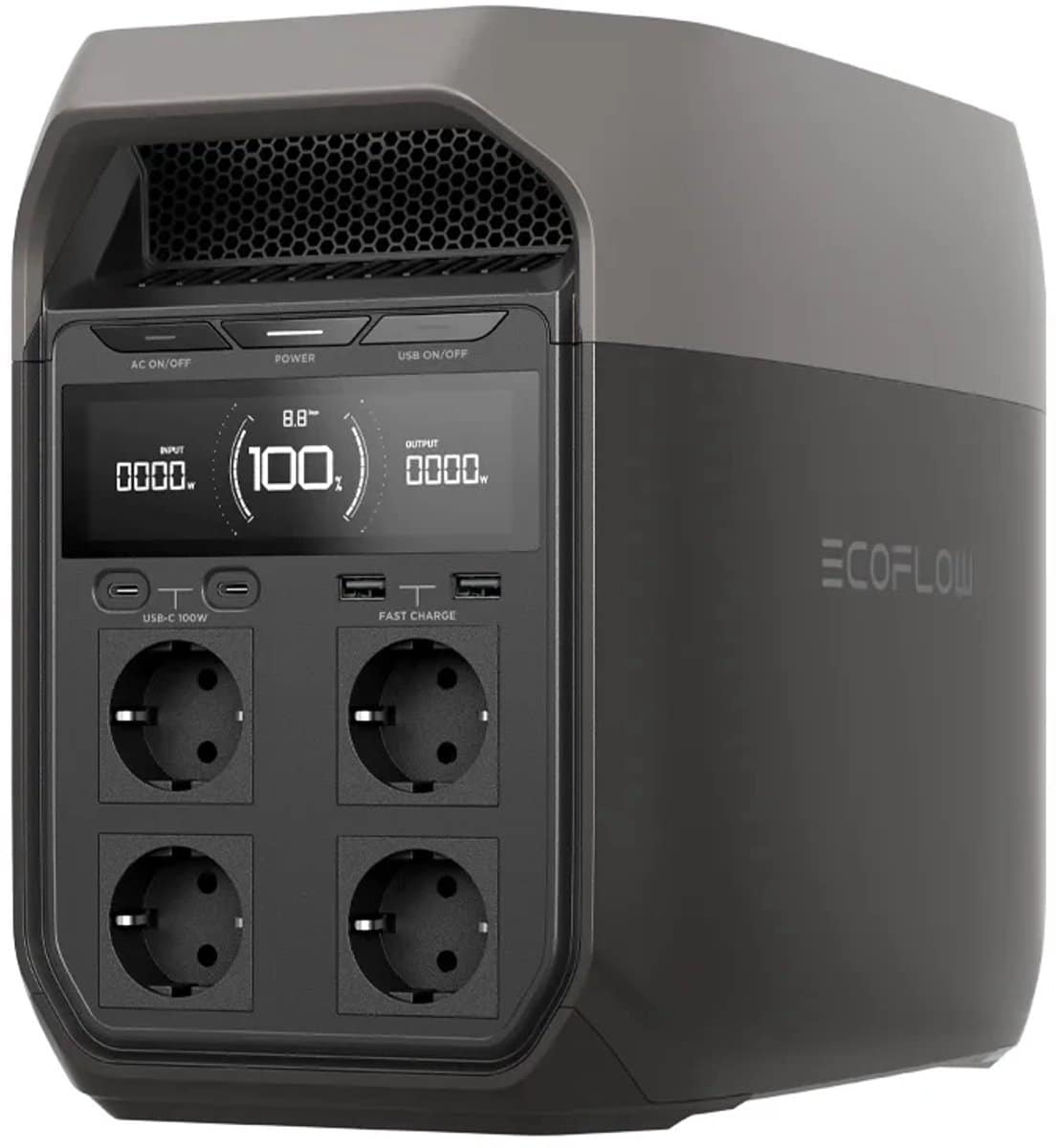
DELTA 3 powerstation
Krachtige powerstation die grotere toestellen zoals een koelkast kan voeden tijdens een stroomuitval.
Plug-in batteries: power always within reach
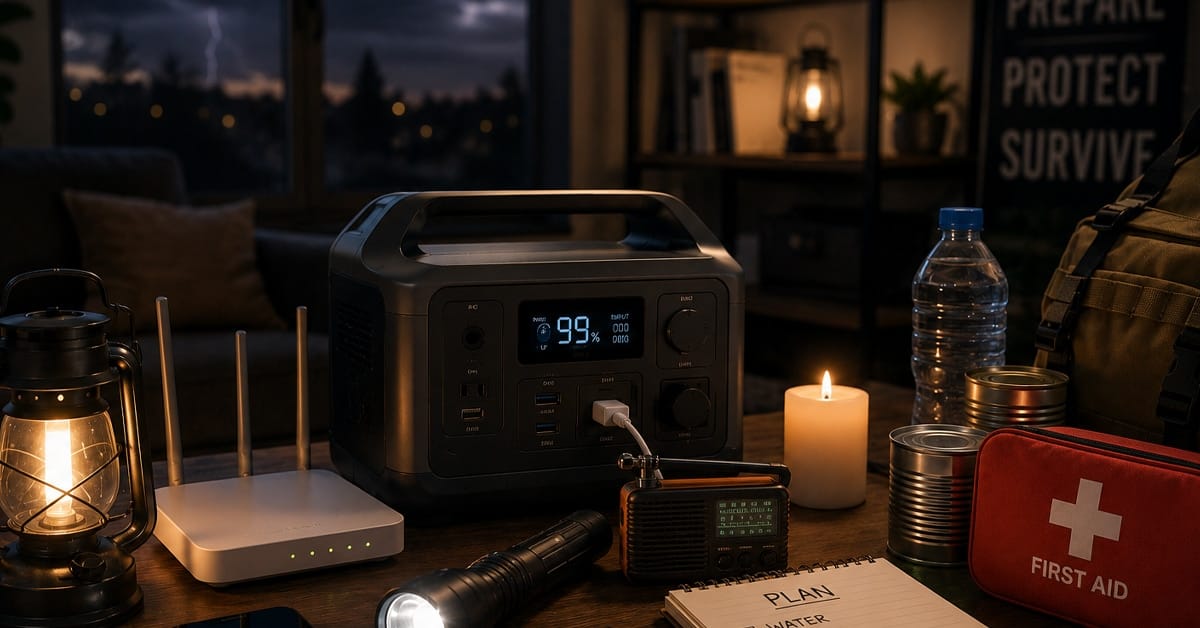
A plug-in battery is actually a user-friendly energy buffer that protects you against a power cut, without needing an electrician. I regard them as a mini version of an emergency generator, but without the noise and the hassle of a fuel tank that you have to refill. And above all: without complicated installation.
What makes these simple plug-in batteries so attractive is their accessibility. You take them out of the box, plug them into the socket to charge them and they are ready for use. When the power goes out, you can connect your essential appliances to them immediately. Some models even switch on automatically when they detect a power cut, so that sensitive devices such as computers continue to work without interruption.
Plug-in batteries are compact and can easily be stored in a cupboard or under a desk until you need them. I have placed mine strategically in the living room, where it serves as a charging station for my mobile devices and is ready to be used during a power cut.
What are plug-in batteries?
When I talk about plug-in batteries, I am referring to user-friendly energy storage systems that you can simply plug into an ordinary socket. No fuss with complex installations or adapting your electrical wiring: you just need to connect them and they are immediately ready for use.
Plug-in batteries consist of a battery (usually lithium-ion or LiFePO4), a built-in inverter that converts the stored direct current into the alternating current that your sockets use and smart electronics that control everything. Some models have multiple sockets, USB ports and even wireless charging functions built in.
The beauty of plug-in batteries is that you can charge them via the socket in ‘normal’ times and keep them ready for an emergency. As soon as the power goes out, you can connect essential appliances directly to the home battery. I have one in my living room myself – unobtrusive, but always ready for use.
What should you look for when purchasing a plug-in battery?
If you are considering purchasing a plug-in battery for emergencies, there are various factors that you need to take into account:
- Capacity: The capacity is measured in watt-hours (Wh) or kilowatt-hours (kWh) and determines how much energy the battery can store. It is best to first make an inventory of the appliances that you absolutely need during a power cut. A smartphone, for example, requires approximately 10Wh for a full charge, whilst a laptop can consume 50 to 100Wh. A fridge requires approximately 1 to 2kWh per day.
- Output power: This is expressed in watts (W) and determines which appliances you can connect. For smartphones and laptops, 100W is sufficient, but for a kettle or microwave you need at least 1,500W. Pay close attention to this, because plug-in batteries differ greatly from each other in this respect.
- Number and type of connections: Check how many sockets, USB ports (A and C) and any other connections the plug-in battery has. A plug-in battery needs at least two normal sockets and multiple USB ports to be truly practical during a power cut.
- Charging speed: How quickly can the battery be recharged after you have used it? This is crucial if the power cut comes and goes, and you want to recharge your battery during short periods with power.
- Alternative charging options: Can the battery only be charged via the socket, or also via solar panels, a car connection or other sources? Multiple charging options are worth their weight in gold during a prolonged power cut.
- Ease of use: Is there a clear display that shows the remaining capacity? Are there warning signals when the battery is nearly empty? Is there an app that helps you monitor consumption? In an emergency you don’t want to have to struggle through complex manuals.
- Weight and size: If you may need to move the home battery during an emergency, it is important that it is not too heavy or awkward. Batteries with a high capacity are often heavier and therefore less portable.
Being prepared is peace of mind
A plug-in battery is not just a handy gadget. It is an accessible first step in your preparation for a power cut. For me the choice was simple: I wanted something that I could use immediately, without fuss with installation or technical knowledge.
I always have a charged home battery in the house that is immediately ready for use. All I have to do is plug my essential appliances into it when the power goes out. This simple preparation gives me a sense of control and peace of mind in an increasingly unpredictable world.
Have you already got experience with plug-in batteries or questions about specific models? Share your thoughts in the comments below, so that we can work together on practical solutions for an unexpected power cut.