
Colruyt enters the emergency pack market
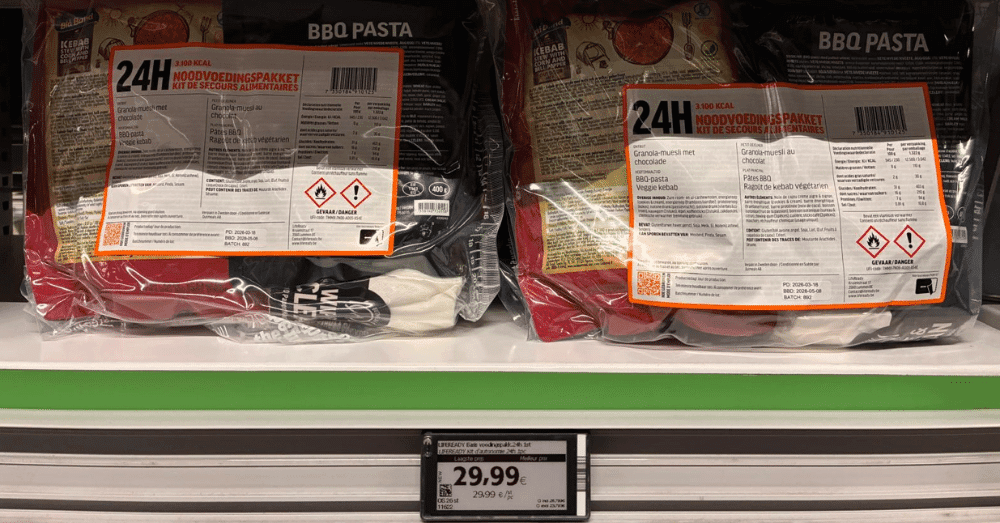
From 31 March, customers can buy a basic pack at Colruyt that will make them self-sufficient for 24 hours. The initiative from the Belgian supermarket chain is not a coincidental marketing stunt. It fits into a broader trend where governments, aid organisations and ordinary citizens are increasingly thinking seriously about preparing for emergency situations. That a supermarket is now stepping in indicates that the demand is real, and that is actually quite a healthy signal. On thepatriot.eu we have previously written about how to put together an emergency pack and how best to approach your preparations. The Colruyt pack is now a concrete addition to that story.
What exactly is in the pack?
The basic pack contains 3,100 calories: breakfast in the form of chocolate granola muesli, two meals (kebab stew and BBQ pasta, both vegetarian), three energy bars (cookies & cream, raspberry/strawberry and coconut), cashew nuts, isotonic drink powder in two flavours, three coffee sticks, six chewing gums, tissues, a spoon and a flameless heater to warm up the food.
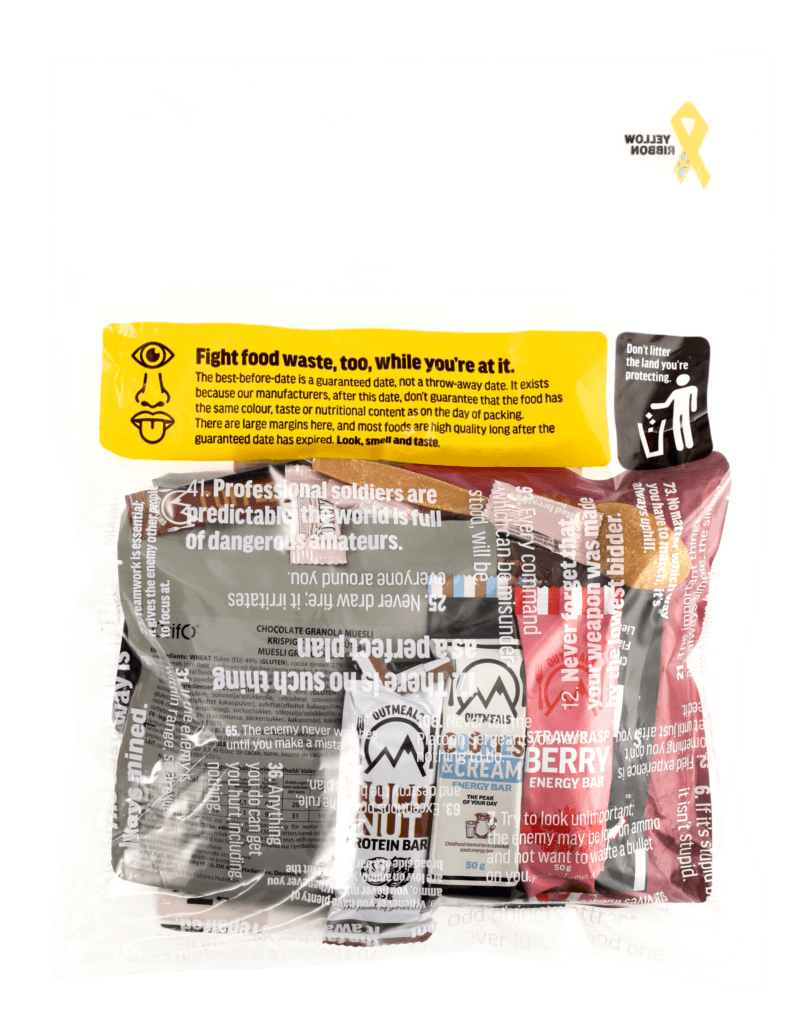
That is a fairly complete list for one day. The flameless heater is a handy addition, as you don’t need fire, a hob or electricity. Useful during a power cut or if you have to leave your home quickly.
3,100 calories: enough for one day
The calorie amount has been deliberately chosen. An adult needs an average of 2,000 to 2,500 calories per day at rest, but in a stressful or physically intensive situation that is higher. The 3,100 calories in this pack therefore provide a small buffer above daily requirements.
What is missing?
The pack expressly does NOT contain water. The Red Cross recommends having nine litres of water per person at home. That is therefore something you must provide yourself. Buying a bottle of water alongside is easy, but building up a proper water reserve requires more awareness. On our website we have previously explained how to safely store and purify water.
Furthermore, the pack also contains no first aid supplies, no emergency radio and no torch. The pack complements the Red Cross emergency pack, which concentrates on first aid. Colruyt therefore focuses on nutrition. The two products are thus complementary, not interchangeable.
Why is Colruyt launching this now?
Geert Elen from Colruyt Group explains it like this: “There are circumstances where it proves useful to be able to continue completely autonomously, just think of the floods in Wallonia in summer 2021 or recently the two-week gas outage in Bergen. But equally power cuts that last longer than hoped or come at an inconvenient time.”
These are not hypothetical scenarios. The gas interruption in Bergen lasted two full weeks and affected thousands of families. The 2021 floods cost dozens of people their lives and flooded entire neighbourhoods. Or think of the complete power outage in Spain and Portugal last year. And we haven’t even mentioned the increasing cyber threat to critical infrastructure or the geopolitical tensions that are also felt in Western Europe.
The government was behind this too
Colruyt says with this initiative it is responding to both customer demand and government guidelines to be able to be autonomous for several days in exceptional situations. That is significant: the Belgian National Crisis Centre and European bodies have long been calling for people to be prepared at home. Previously we also wrote on The Patriot about how governments encourage their citizens to prepare for crises.
The success of the Red Cross as a catalyst
A survey by Red Cross Flanders shows that 70% of Flemish people consider it important to have an emergency pack at home, but that more than 50% find it difficult to put together such a pack. The Red Cross launched its own pack at the end of 2025, which quickly proved successful. Vincent Verbeecke from Red Cross Flanders responds positively to the Colruyt initiative: “However, we do not offer food, but in a crisis situation you can be left to your own devices. We are therefore pleased that Colruyt is taking this step with a complementary product and thus helping to get the discussion going.”
How good is the pack actually?
The Colruyt pack is an entry-level model. That is both its strength and its limitation.
Strength: accessible and affordable
The pack costs €29.99 and is available in around eighty Colruyt shops spread across Belgium. If demand proves high, Colruyt is considering making the pack available in all shops. For someone who is completely unprepared, this pack offers a quick and accessible start. You put it in your shopping trolley, pay at the till and you have at least something ready just in case.
Limitations: 24 hours is just a start
Most governments recommend being able to be autonomous for at least three to seven days. The Red Cross speaks of 72 hours as a minimum. This pack is therefore more of an awareness tool than a full crisis plan.
Moreover, the pack is designed for one person. A family with children has a completely different story. The caloric needs, taste preferences and specific requirements (medication, baby food, dietary requirements) are different for every household.
What do customers say?
In the Colruyt shop in Halle, customers said: “Given what is happening in the world, one might perhaps need to think about it.” That is a sober but telling reaction. Most people would rather not think too long about what could go wrong, but awareness is growing.
What else do you need?
Buying a basic pack at Colruyt is a good first step, but it doesn’t stop there. A well thought-out emergency pack contains more than one day’s food:
- Water: at least 3 litres per person per day, for several days
- First aid supplies: dressing materials, painkillers, any medication
- Emergency radio: in case of power failure or network disruptions, a battery-powered radio is your information lifeline
- Torch and extra batteries: essential during prolonged power cuts
- Documents and cash: identity documents, insurance papers, a small cash reserve
- Warmth and shelter: emergency blanket, lighter or matches
We have previously written a comprehensive article about what should be in an emergency pack and how to build it up step by step. And our review of ready-made emergency packs helps you make the right choice should you prefer to leave that to a specialist.
Conclusion
That a Belgian supermarket chain is putting this kind of product on the shelves says something about where society stands. The pack itself is limited: one day, one person, no water, no first aid… But it is an accessible way to start the conversation about preparation. Anyone who thinks after this article: “Actually I should take this more seriously”, has already taken the most important step. By all means buy the Colruyt pack as a starting point, but then build on it afterwards. Because a crisis rarely announces itself.