

In 2025, nuclear threats are once again very real. President Vladimir Putin has already threatened to use nuclear weapons if the continued existence of the Russian state were to be threatened. With Israel’s attacks on Iranian nuclear facilities in June and the Doomsday Clock at a historic 89 seconds to midnight, it is logical that more and more people are seeking protection. This brings us to the question of where we should go if a nuclear attack or nuclear disaster occurs, and so the shelter quickly comes into discussion.
The nuclear threat is real
The likelihood that a nuclear war will be fought in the near future remains small, despite everything. Nevertheless, the possibility remains, as several countries – including China, India and North Korea – have nuclear weapons in their arsenal.
In 2024, 147 incidents of illegal or unauthorised activities involving nuclear or radioactive material were reported to the Incident & Trafficking Database (IDTB) of the International Atomic Energy Agency (IAEA), including cyber-attacks. The time when these kinds of scenarios seemed pure science fiction is over.
What does your ideal bunker look like?
Do you already have an idea of how a bunker should be laid out for you? Do you already have a design? Comment below on how you would build your bunker.
Are there public shelters?
The Netherlands no longer has any operational shelters
In the Netherlands, many provinces, large municipalities and government buildings had shelters in the past. For example, atomic shelters were built during the construction of many underground stations in Amsterdam and Rotterdam. Today, there are officially no public shelters left in the Netherlands. Just as in Belgium, after the Cold War ended, Dutch shelters have increasingly been used for other purposes, such as storage, archiving and housing servers.
There are no bunkers or shelters for the population in the Netherlands, in case we become involved in a major armed conflict. This is apparent from research by various ministries. It is a disturbing finding: citizens do have the right to protection by the government in times of crisis, but there are simply no facilities left.
During the Cold War, the Netherlands did indeed build extensive shelters. Cellars were constructed with thick steel doors and concrete walls for protection against attacks with nuclear weapons and poison gas. Hidden beneath squares, car parks and public buildings were secret emergency seats for 4,650 civil servants.
Belgium faces a similar situation
According to the former Minister of the Interior Annelies Verlinden (cd&v), there are four shelters on Belgian territory.
- Two of these are located in former NATO bunkers in Wallonia, but they have now been converted into reception centres for Fedasil.
- Another shelter is located in Lier and now serves as an archive building: it is therefore no longer usable as a (nuclear) shelter.
- Finally, there is the shelter beneath Warandepark in Brussels, but according to the minister, it is in “very poor condition”.

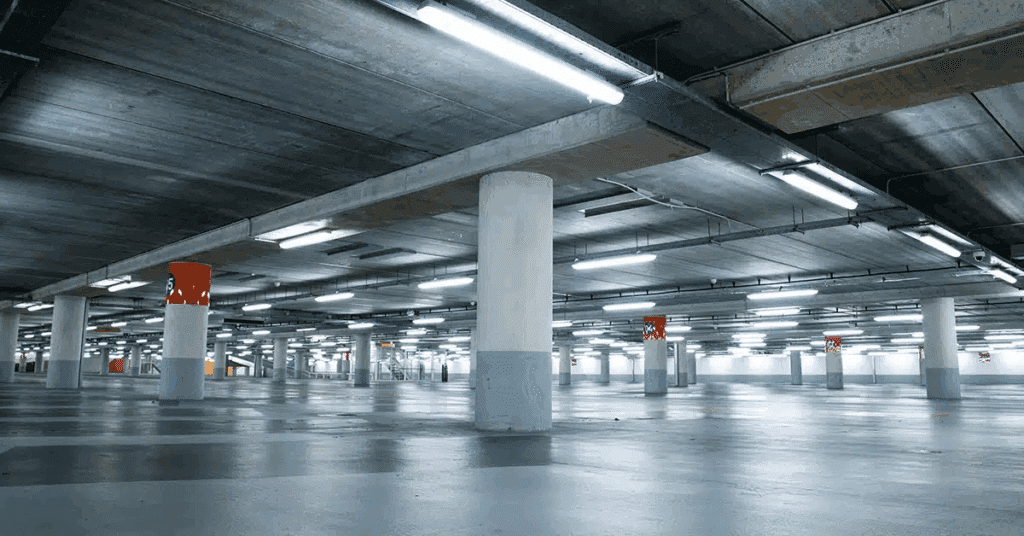
Minister of Defence Theo Francken did advocate for a new measure in October 2025: newly built car parks should henceforth also be able to serve as shelters. He points to Eastern European examples and their advantages:
- Dual use ensures there is no loss of space
- Car parks are often centrally located
- Reinforced concrete already provides basic protection in any case
👀 Read here: Car parks as shelters?
Government offers little protection
The Belgian minister Verlinden also mentioned at the time that “if the number of atomic shelters is limited or if their condition does not permit their use, the Belgian population can turn to alternative means”. By alternative means, protective buildings or structures were meant, such as cellars, private shelters and other underground constructions.
In any case, it seems that in the event of a nuclear attack or disaster, you are better off looking after your own safety. That sounds disturbing, but it need not necessarily be. For example, defence expert Sven Biscop notes that shelters in themselves are not effective against today’s nuclear weapons.
Build a shelter yourself?
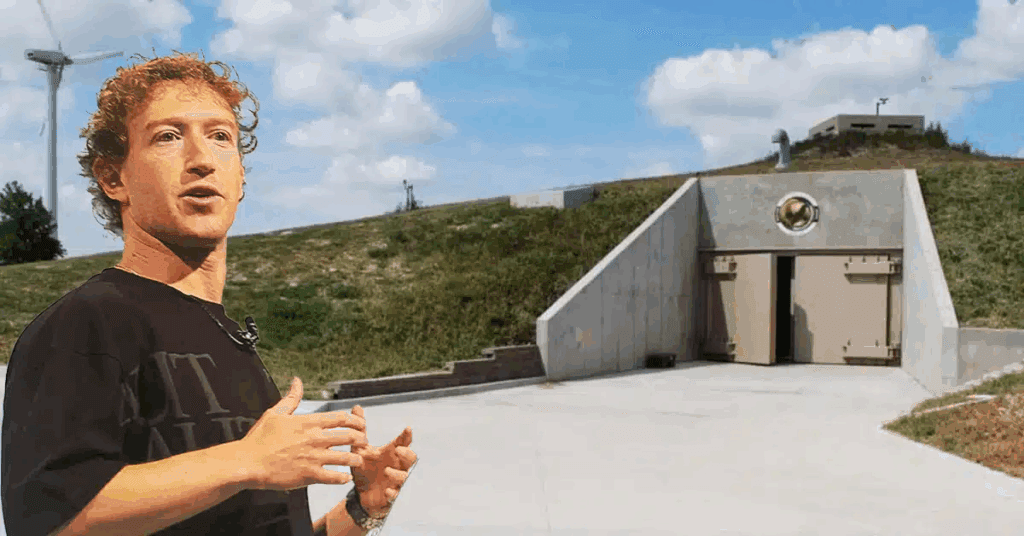
Nevertheless, it is not a given that one must passively await a nuclear disaster or attack. The determined do-it-yourselfer and survivalist can build an atomic shelter themselves. In Silicon Valley, some 50 per cent of tech billionaires are said to have ‘apocalypse insurance‘ in the form of bunkers, shelters or self-sufficient land.
Private construction is possible
It is noticeable that more and more people are building a bunker or shelter. The cost varies considerably: building a bunker for your home can, depending on size and specifications, cost between €39,000 and €65,000. A custom-made bunker can cost several hundred thousand euros.
The most important elements of a good bunker are:
- An underground concrete structure
- Good ventilation
- Supply of food and water
Companies that build shelters
👀 Look inside a bunker!
We spoke to two companies that install bunkers and also visited one. Read the article about it? You can do so here!
Belgium: Dr-Bunkers
There are also several specialised companies, such as Eastl from Lille. They build bunkers that are resistant to nuclear, biological and chemical contaminated air (NBC). Moreover, the company has specialised in converting standard concrete cellars into NBC-resistant bunkers. For a cost of 15,000 euros, the company transforms your cellar into a private shelter. “Not too much for the difference between life and death”, believes founder Karl Copmans.
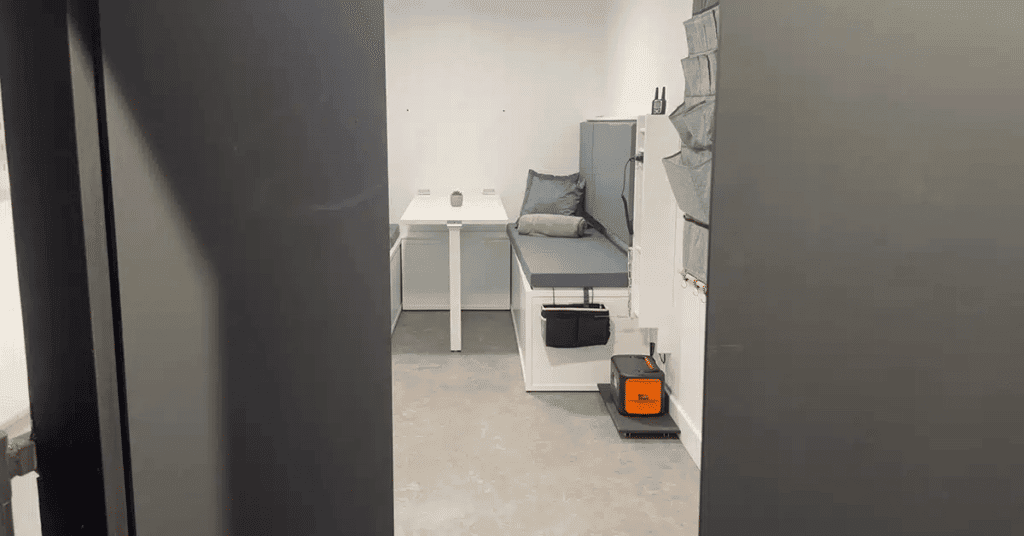
DR-Bunkers from Heist-op-den-Berg focuses on above-ground bunkers or ‘safe rooms’. These resemble a standard shipping container. “So neighbours don’t know that it’s a shelter”, says Peter, who builds the bunkers. Look inside their bulletproof bunker here.
Netherlands: RevBunker
Revbunker installs prefabricated bunkers for individuals, businesses and government agencies. “With a foundation in shipbuilding, our bunkers meet high quality standards”, assures Revbunker. “Whether you want to be connected to utilities or go completely off-grid, our bunkers offer complete protection against external threats.”
Other protective measures
Eastl proclaims on their website that the threat of a nuclear attack or disaster is real. According to them, “the Belgian government does not distribute free iodine tablets for nothing”. These statements are contradicted by experts, who are of the opinion that the distribution of iodine tablets does not mean that a disaster is immediately imminent.
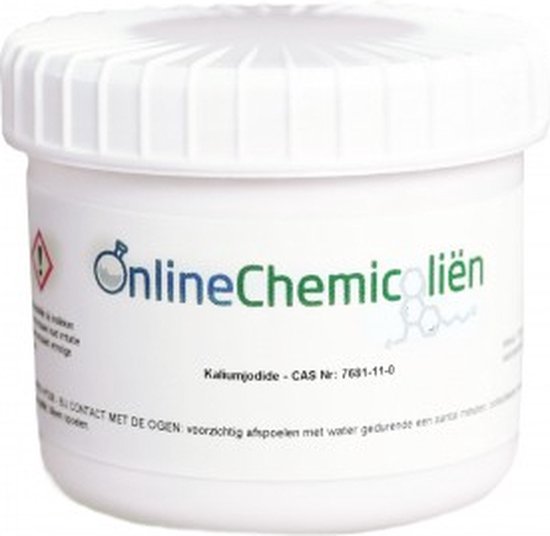
As for the iodine tablets, the national crisis centre clarified that the distribution of iodine tablets was part of a recurring awareness campaign. According to the national crisis centre, “not scaremongering, but a good precautionary measure that people have a box at home in the event of a nuclear accident”. Of course, it can never hurt to get iodine tablets at home.
Kaliumjodide voor diverse toepassingen
Kaliumjodide (KI) is een veelzijdig en essentieel product dat in verschillende situaties van pas kan komen. Of je nu jouw schildklierfunctie wilt ondersteunen, een jodiumtekort wilt aanvullen of jezelf wilt beschermen tegen radioactief jodium, deze kleurloze verbinding is eenvoudig te gebruiken en goed oplosbaar in water. Met kaliumjodide ben je voorbereid op onvoorziene omstandigheden in een onzekere wereld. Verkrijgbaar in potjes van 15, 30 en 50 gram.