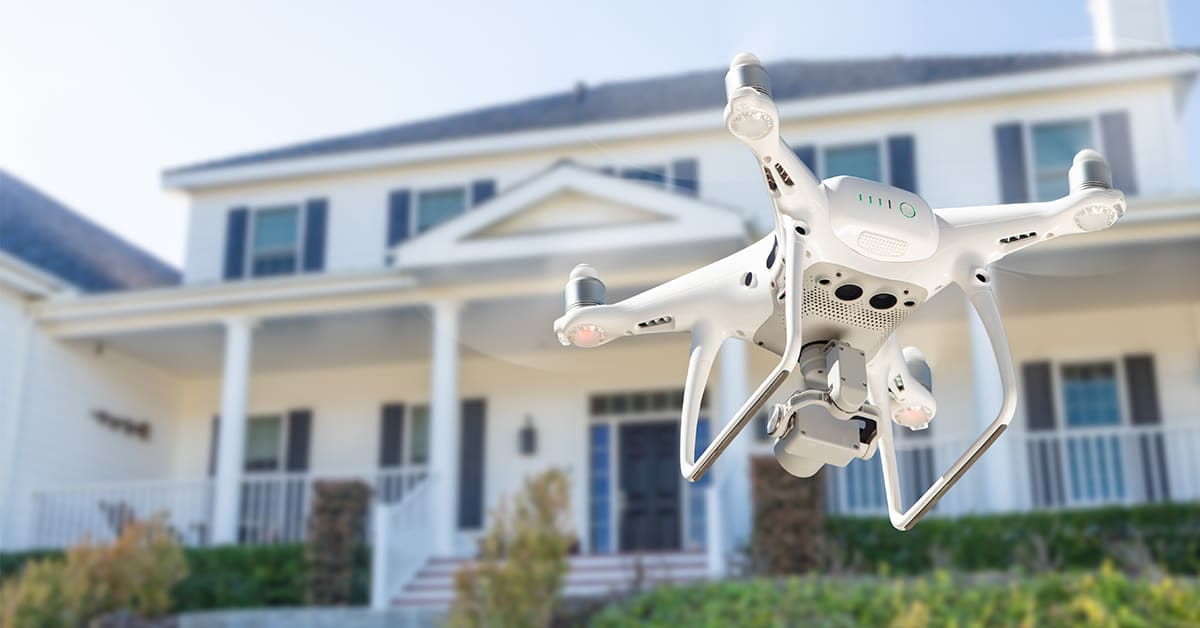

The drone as a security tool: it is possible, but is it realistic?
In recent years, you see them more and more: drones with cameras used for monitoring and security. From business parks to large events, and even residential areas abroad. The question many people ask themselves is simple: could such a drone be useful for me as well? It is difficult to give a straightforward answer.
Drones undoubtedly offer interesting possibilities. They can:
- Oversee areas that are difficult to access
- Be on site quickly when an alarm goes off
- Provide a perspective that you don’t have from the ground
But whether that is also practical and worthwhile for your specific situation depends on several factors. That is why I think it is important to look critically at what a drone can and cannot mean for your safety.
🧷 Want to know more about drones? Read everything here
When a security drone might be worthwhile
Large grounds and estates
For those who have a large property, a drone can actually add value. Think of agricultural land, woodland or an extensive estate. Here a drone has clear advantages: you can quickly get an overview of a large area without being physically present. In the event of an alarm, you can check what is going on within a few minutes without having to travel kilometres yourself.
Professional security companies have been successfully using drones for these types of applications for years. They use autonomous systems that can automatically patrol or take off when sensors detect something. The technology is mature enough to work reliably.
Specific situations and incident response
Some scenarios lend themselves well to drone deployment. When detecting smoke or fire, you can quickly assess the situation with a drone before calling the emergency services. In the case of suspicious activity in remote parts of your property, a drone gives you information without having to put yourself directly in danger.
A drone can also be useful for monitoring suppliers or work on your property. You maintain oversight without being constantly physically present.
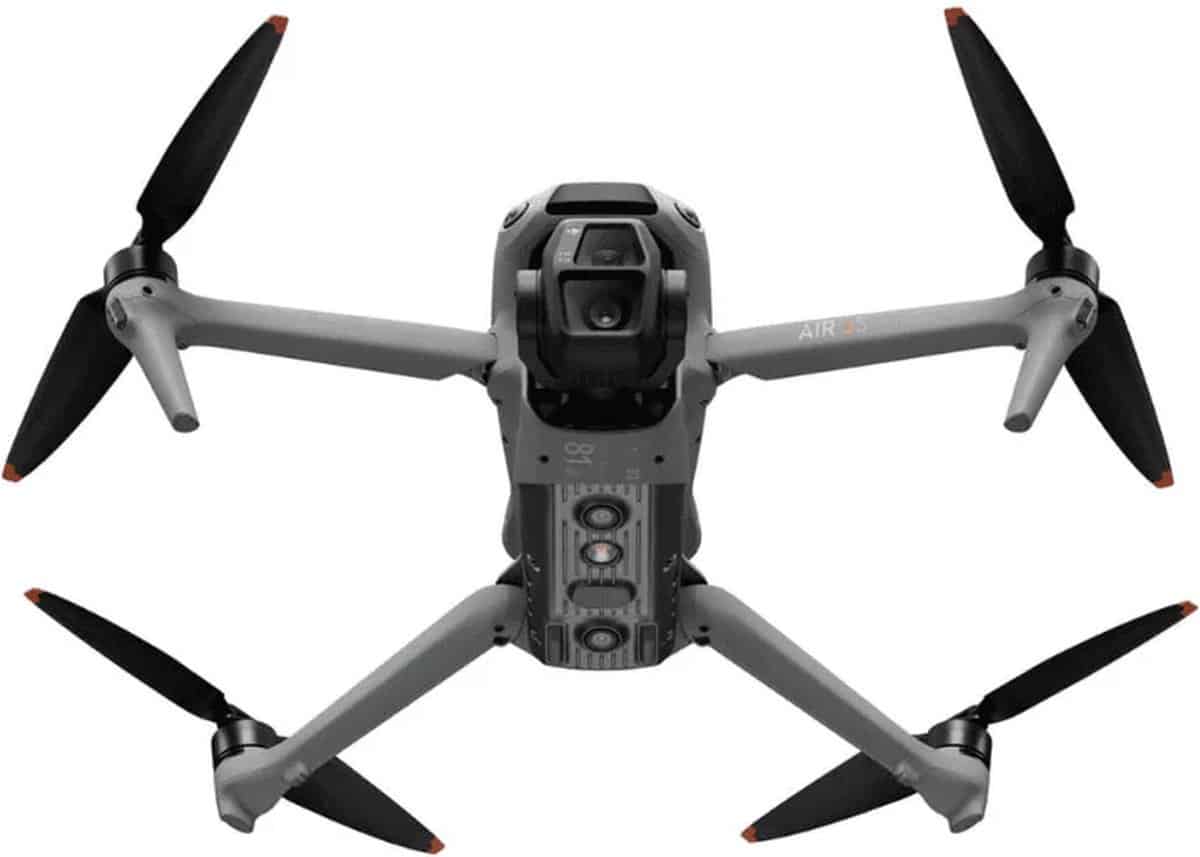
Air 3S met RC-N3-afstandsbediening
Opvouwbare drone met twee camera's en lange vliegtijd, geschikt voor beelden van grotere afstand.
Why a drone is often not a good idea
Legal restrictions are considerable
The reality is that the law in the Netherlands and Belgium severely restricts what you are allowed to do with a drone. You are not allowed to fly above roads, not above built-up areas, and not above people either. The maximum flying height is 50 metres, the horizontal distance maximum 100 metres. You must always keep the drone in sight, so flying in the dark is not permitted.
- Read here what Dutch law says about the use of drones
- Read here what Belgian law says about the use of drones
Flying above someone else’s property without permission? Forbidden. And that also applies to your neighbours. As soon as you have a camera on board, you also immediately come into contact with privacy legislation. Filming people without permission is punishable, and from the ground it is often not even possible to see whether a drone has a camera.
Violation of these rules can lead to hefty fines, confiscation of your drone, or even criminal prosecution. The greatest risk, however, is your liability: if your drone crashes and causes damage or injury, you are responsible.
Limited practical value for homes
For an average home or even a larger garden, a drone is honestly of little use. Traditional camera systems do the job better, more cheaply and without legal headaches. A fixed security camera offers 24/7 monitoring, has no battery problems, and requires no constant operation.
You have to manually launch or programme a drone, the battery only lasts 20 to 40 minutes, and the device must be regularly recharged and maintained. And if something happens at night – when most burglaries take place – you are not even allowed to fly.
🧷 Protecting your own home? Read here how to do that!
Privacy and social tension
The use of drones for surveillance provokes resistance. Neighbours feel watched, even if you are not deliberately filming their property. The image of a buzzing device with a camera quickly creates the feeling of unwanted surveillance. This can lead to conflicts in the neighbourhood, and rightly so: would you like it if your neighbour regularly flew a drone above your garden?
Costs do not outweigh alternatives
The investment in a good security drone quickly runs into thousands of euros. Professional systems with automatic docking stations even cost tens of thousands. On top of that come costs for insurance (mandatory), training and certification, and possibly permits.
💰 More financially logical option
For the same money, you can install an extensive camera system with night vision, motion detection and direct connection to an alarm system. It works day and night, requires no constant operation, and has no legal restrictions.
Security risks of drones themselves
An aspect that is often overlooked: drones themselves also pose a security risk. They are vulnerable to hacking and malware. The security of consumer drones is often minimal, allowing malicious actors to gain access to your camera footage or even take control of the device.
Images sent via wifi can be intercepted. If your drone crashes or is brought down, stored images can fall into the wrong hands. For professional applications this is a recognised problem, but for private users the risk is often underestimated.
What are realistic alternatives?
Traditional CCTV surveillance
A good camera system with motion detection and night vision function is the better choice for most situations. It works continuously, is legally much less problematic (as long as you film your own property), and requires hardly any maintenance. Nowadays you can also find cameras at affordable prices that you can install yourself with your smartphone.

Ring Binnencamera
De Ring Binnencamera biedt een betrouwbare manier om je huis in de gaten te houden met scherpe 1080p HD-video. Met tweerichtingsspraak kun je eenvoudig communiceren met je huisdieren, waar je ook bent. Het privacykapje geeft je controle over wat er wordt opgenomen. Dankzij de eenvoudige installatie en voeding via het stopcontact ben je altijd voorbereid op onverwachte situaties in een onzekere wereld.

Ring Buitencamera op batterij
De Ring Buitencamera op batterij biedt een betrouwbare manier om je huis te beveiligen. Met HD-video en nachtzicht zie je alles wat er buiten gebeurt, terwijl je via de app met bezoekers kunt communiceren. De camera is eenvoudig te installeren en aanpasbare bewegingszones zorgen ervoor dat je alleen relevante meldingen ontvangt. Dit product is ideaal voor mensen die zich willen voorbereiden op onverwachte situaties in onze steeds veranderende wereld.
Alarm systems with sensors
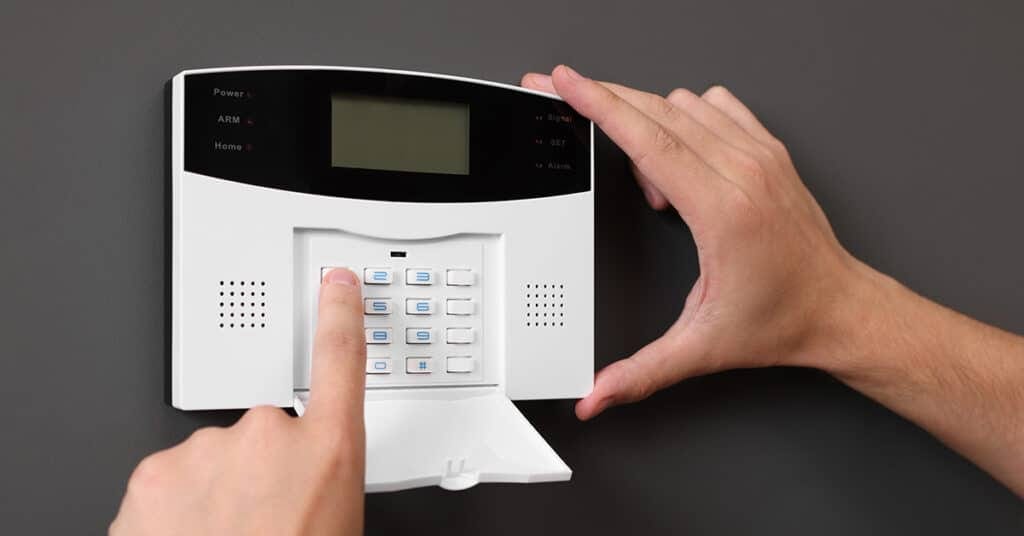
Modern alarm systems can be tailored to your needs with motion sensors, glass break detection and access control. They alert you immediately to suspicious activity and can be linked to an alarm monitoring centre.
Strengthen physical security
Invest in good locks, motion sensor lighting, and thorn hedges or fencing. These measures are passive, always work, and cost you no energy or time in maintenance.
When should you consider a drone?
There are exceptions. Do you have a very large property (several hectares) that is difficult to oversee? Do you live remotely with few neighbours? Do you have the time and willingness to study legislation and certification? Then a drone can be part of a broader security strategy.
🚨 Not an all-encompassing solution
See it as a supplement, not a replacement. A drone can give a snapshot, but you still need fixed cameras, good lighting and alarm systems. The investment in a professional drone-in-a-box system with automatic operation is considerable, but for specific applications it can be worthwhile.
Conclusion
Buying a drone for your own safety sounds futuristic and attractive. The reality, however, is more obstinate. For the vast majority of homeowners, a drone offers no added value that outweighs the costs, legal restrictions and practical disadvantages. Traditional security methods are more reliable, cheaper and more effective.
Do you really want to invest in security? Then focus first on the basics: good locks, lighting, CCTV and alarm systems. These form the core of a solid security strategy. A drone is at best a gimmick, unless you have very specific circumstances that justify the investment.