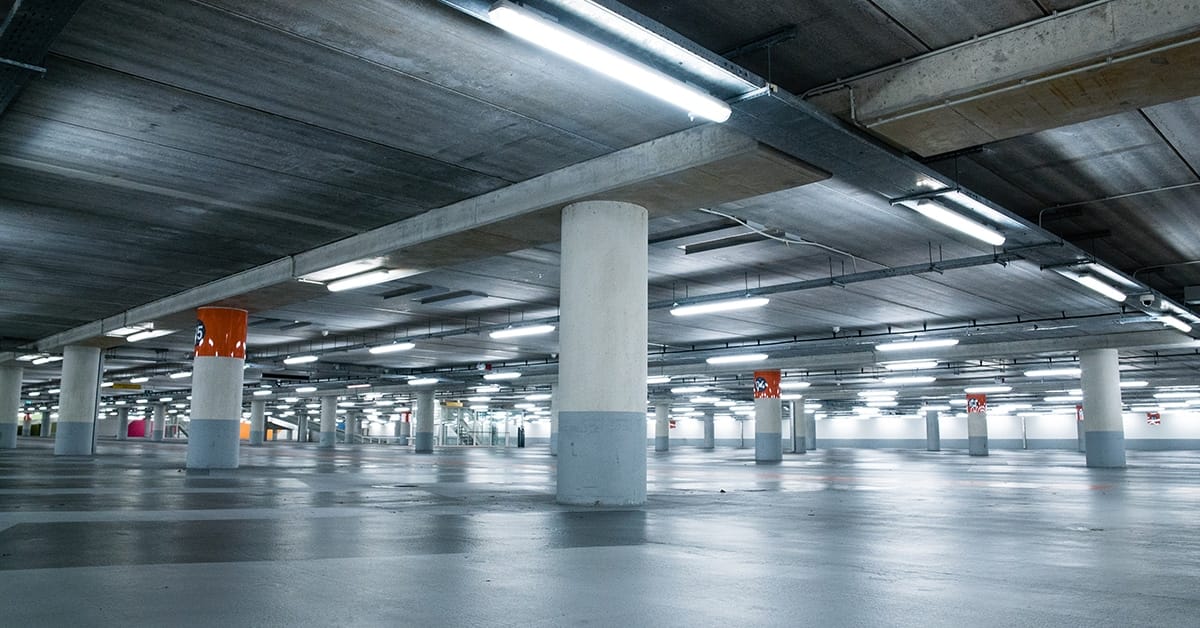
New underground car parks in Belgium must also be able to serve as shelters. That is the view of Defence Minister Theo Francken, who told VTM that this would be cheaper than building shelters as such.
According to the Defence Minister, this would be cost-saving and would solve the shelter problem in Belgium: at present there are barely four public shelters, which are hardly usable or not usable at all.
Read this article: Do I build a shelter myself or are there public ones?
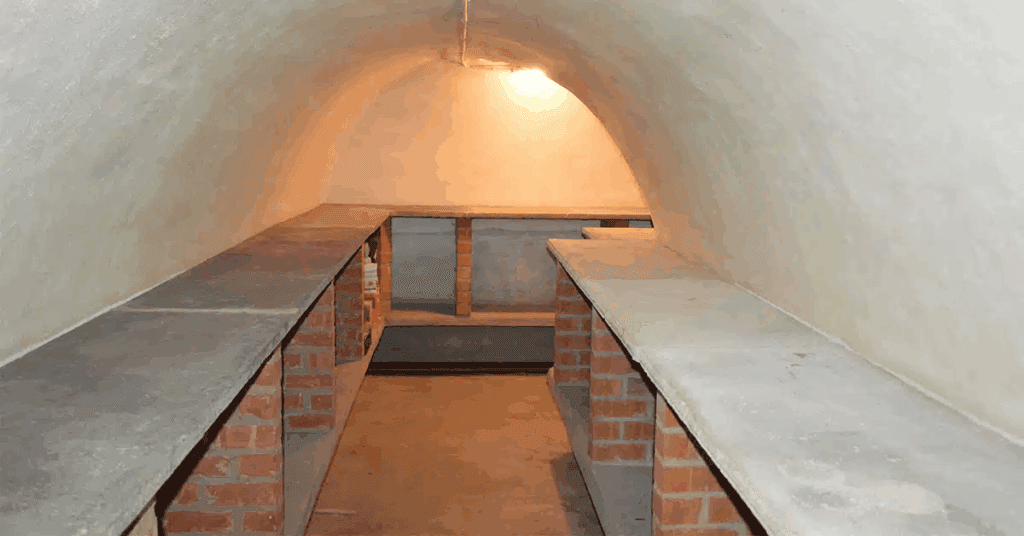
The Belgian government is working on a resilience plan and the minister also wants to include guidelines for those who build large, commercially operated car parks. He draws his ideas from Eastern Europe. “There it is mandatory that you have extra reinforcement and ventilation, so that you can use them as a shelter, hospital or even school”, he said in the television studio.
The Eastern European approach
Finland: 55,000 shelters for 5.5 million inhabitants
The Finnish model is striking. In Helsinki alone, 900,000 people can find shelter, whilst the city has fewer than 700,000 inhabitants. Finnish law requires that every building larger than 1,200 square metres has a shelter.
What is interesting is that many of these shelters have a dual function. They sometimes even serve as swimming pools or sports facilities, although car parks remain the most common, and can be converted into emergency accommodation within 48 to 72 hours. I find this a clever approach – infrastructure that already has utility now, with a safety net built in.
The Finnish population lives with a realism that stems from their history. For centuries they have been pushed back and forth between larger powers. That experience has made them prepared. Citizens are expected to be able to survive independently for 72 hours in a crisis, and shelters are a natural part of that.
Sweden: 65,000 shelters as standard
Sweden also has extensive shelter facilities, with approximately 65,000 locations. After the Russian invasion of Ukraine, the Swedish government launched a nationwide information campaign in 2018. Citizens received information about what to do in the event of war or other crises, including an ‘introduction to shelters’.
The Swedish approach goes beyond infrastructure alone. Households received brochures with practical tips: how to use a toilet when there is no water, what emergency supplies you should have, where to find the nearest shelter. It is a holistic approach to resilience.
In Stockholm, beneath a church, there is a cellar for 8,000 people. The entrance is located in a metro station, and tunnels lead to a car park 25 metres underground – an infrastructure that is used daily, but can be transformed within a few hours.
Germany and Poland follow
Germany encourages households to adapt cellars and garages. House builders are given a legal obligation to include shelters in new homes – as Poland did earlier. It is a European trend that is gradually expanding westwards.
The Belgian situation
Only four functional shelters
The contrast with Belgium is stark. Former Minister of Home Affairs Annelies Verlinden confirmed that only four shelters exist on Belgian territory. Two of these are located in former NATO bunkers in Wallonia, but have since been converted into Fedasil reception centres.
Car parks as a solution?
Practical advantages
Car parks as shelters may sound strange, but have practical advantages:
- They already exist – no additional land use or major investments in completely new infrastructure
- Solid construction – reinforced concrete provides basic protection against bombardment
- Strategic location – often centrally located in towns and neighbourhoods
- Dual use – daily utility with a safety option when needed
Limitations and requirements
But a car park is not a fully-fledged shelter. For proper function, modifications are needed:
- Air filter systems to keep contaminated air out
- Emergency power and means of communication
- Water supply and sanitary facilities
- Reinforcement of entrances with special doors
- Clear signage and evacuation routes
Switzerland and Finland show that this is possible. Their shelters beneath car parks are sometimes even equipped with NBC filters (nuclear, biological, chemical) that guarantee 99.9 per cent pure air. Even in the event of a power cut, air supply is ensured via manual cranks.
Practical thinking
Eastern Europe shows that preparation is possible without permanent fear. Their shelters are not symbols of paranoia, but of pragmatism. They demonstrate that infrastructure can be deployed cleverly: useful in peacetime, protective in crisis.
For Belgium, there is an opportunity to learn from this experience. Not by digging bunkers en masse, but by arranging existing infrastructure such as car parks so that they can have a protective function if necessary.