

When the sky is no longer a safe place
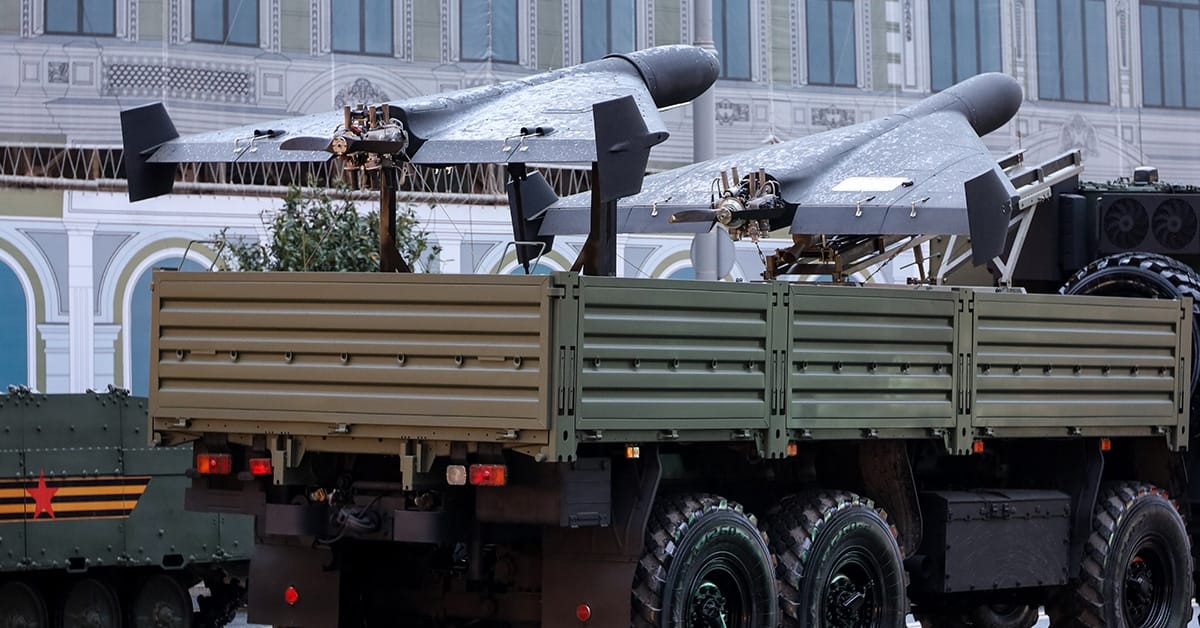
The war in Ukraine is evolving. What began as a conflict with tanks and artillery is increasingly taking on the character of a technological battle in which drones play a leading role. Russia is not carrying out these attacks randomly: energy infrastructure, urban areas and civilian targets are being deliberately hit. The effect extends beyond Ukraine alone.
Europe is confronted with a new reality in which small, unmanned devices can cause major damage and where classical defence strategies fall short. This means that many people – and policymakers – are only now becoming aware of how vulnerable our energy supply and infrastructure actually are. After all, drones can be deployed not only as an offensive weapon, but also as a spy device and as a disruption mechanism.
Why Russia is massively deploying drones
Ukrainian Prime Minister Denys Shmyhal recently stated that the recent wave of attacks is deliberately escalating. Russia chooses drones because they are effective, relatively cheap to produce and difficult to intercept. A traditional cruise missile costs far less than an attack drone.
☢️ Nuclear danger as well?
According to Russian President Zelensky, Moscow deployed more than twenty drones in the attack on the city of Slavutych, causing power supply to the nearby Chernobyl nuclear power plant to be interrupted for three hours.
Advantages for the attacker:
- Drones are small and fly low, which means radar systems often do not detect them in time
- Production costs are low, which makes mass deployment possible
- They can be launched from different locations without risk to personnel
- Damage to energy infrastructure has direct economic and psychological impact
The consequences for Ukraine are considerable. Power stations and distribution networks are being damaged, leading to power outages for millions of people. Especially during the winter months, this poses a direct threat to the population.
Europe’s vulnerability comes to light
The attacks are not without effect on European security thinking. Ursula von der Leyen emphasised that the EU remains “rock solid” behind Ukraine, but meanwhile there is a growing realisation that modern infrastructure has little resistance to this type of attack.
Risks closer than thought
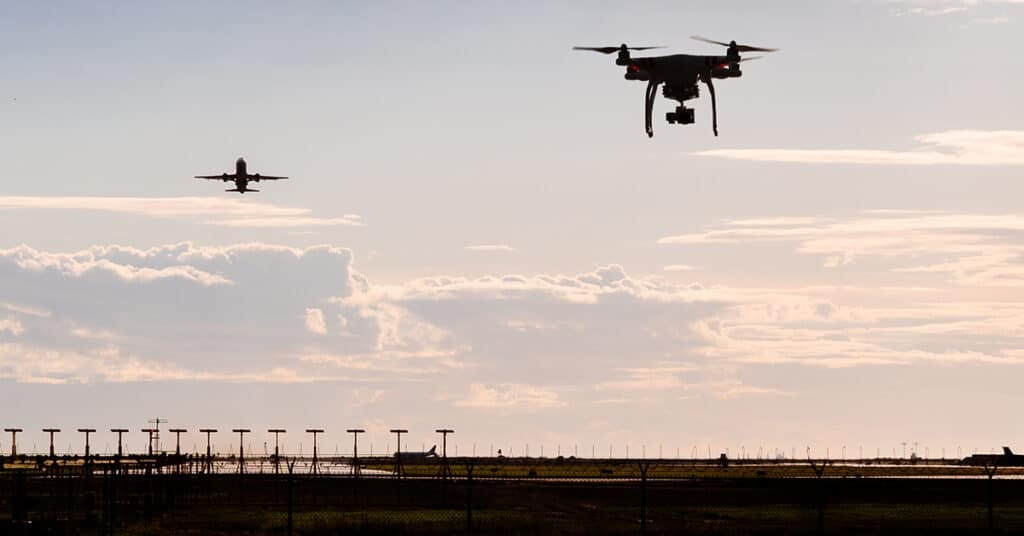
European airports have experienced several disruptions from drones in recent months. Whether involving hobbyists, criminals or hostile actors: the incidents demonstrate how easily critical locations can be disrupted. Power stations, water supplies and communication networks are potential targets.
Cyber attacks linked to drones make the threat more complex. A drone does not even need to carry explosives to cause damage. Disrupting navigation systems or disabling communications can be enough to cause chaos.
How are governments responding?
The EU and NATO countries are working on various responses. Air defence systems are being expanded, but they are primarily designed for larger projectiles. Drones require different detection technology and faster response times. Joint procurement of ammunition must maintain stocks, whilst investment in anti-drone systems is increasing.
Measures in development:
- Jamming technology to disrupt or disable drones
- Laser systems that neutralise drones without wasting ammunition
- Networks of sensors that detect drones at an early stage
- European production capacity to be less dependent on external suppliers
The call for domestic production is growing. Not only to be able to respond more quickly, but also to be less vulnerable to geopolitical tensions that can obstruct the supply of defence resources.
What does this mean for civilians?
For those who value self-reliance, this development raises questions:
- What do you do if the power supply fails due to an attack on energy infrastructure?
- How do you ensure that your family is not dependent on systems that can be disrupted within a few hours?
It is not about sowing panic, but about thinking realistically about vulnerabilities. Emergency power supplies, water filters and communication devices that operate independently of the grid are no longer a luxury. They are becoming part of a sensible preparation for scenarios we previously only saw in films.
Conclusion
Russia’s massive deployment of drones marks a shift in modern warfare. Cheap technology can cause major damage to vital infrastructure, and that threat does not stop at the Ukrainian border. Europe is investing in defence and detection, but the vulnerability remains tangible. For civilians, this means that self-reliance is no longer a hobby, but a realistic response to uncertain times.