
During the dry and warm months, the risk of wildfires increases. In dry conditions, one wrong spark can cause a dangerous fire. If you still need to make a fire, you must do so in a safe manner. In this article, I discuss 6 ways in which you can do this.
In March, there was a severe forest fire in the nature reserve in Zeeuws-Vlaanderen. Because the fastest route to the forests is from Belgium, the Belgian fire brigade arrived first to extinguish it. About 2 hectares of nature in the Dutch part of the Clingse forests were destroyed, the cause is still unknown.
At the Mechelse Heide, 75 hectares of nature reserve burnt down at the end of May 2025. A sea of fire developed in a short time. According to the public prosecutor’s office, this was a case of arson, but this fire proves once again that you must handle fire safely in dry conditions.

Preparation
Choose a good location
The place where you make a fire is very important. Look for an open space at least 4 metres in diameter, free from overhanging branches, dry leaves or grass. A rocky or stone surface or bare earth works best. Avoid hollows in which warm air can become trapped.
The wind can cause additional danger. Therefore, check the wind direction and strength before you begin. In winds of force 4 or higher, it is wiser to postpone the fire if possible.
Gather tools and materials
To make fire safely in drought conditions, you need much more than just kindling and matches. Below we list what you need to keep it safe.
- Water or sand for extinguishing (minimum 10 litres)
- Shovel to throw earth over the fire
- Fire-resistant gloves
- Metal bucket or fireplace
In addition, we have selected several essential products for making fire:
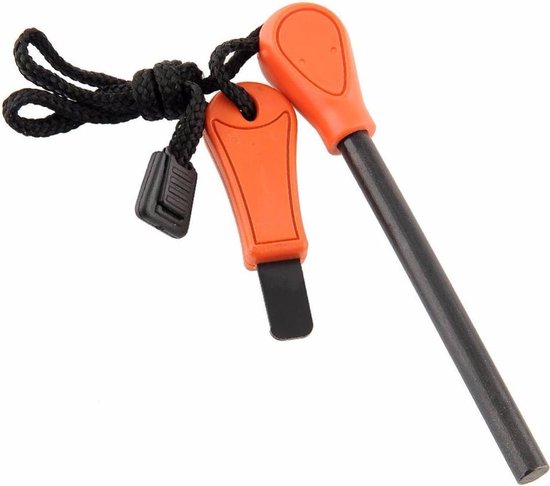
Magnesium vuurstarter met strijker
Met de magnesium vuurstarter met strijker maak je eenvoudig vuur, zelfs onder moeilijke omstandigheden. De extra dikke magnesiumstaaf van 11 cm genereert intense vonken wanneer je met de strijker langs de staaf beweegt. Dit maakt het mogelijk om diverse aanmaakmaterialen snel aan te steken. Deze betrouwbare vuurstarter is een waardevol hulpmiddel.
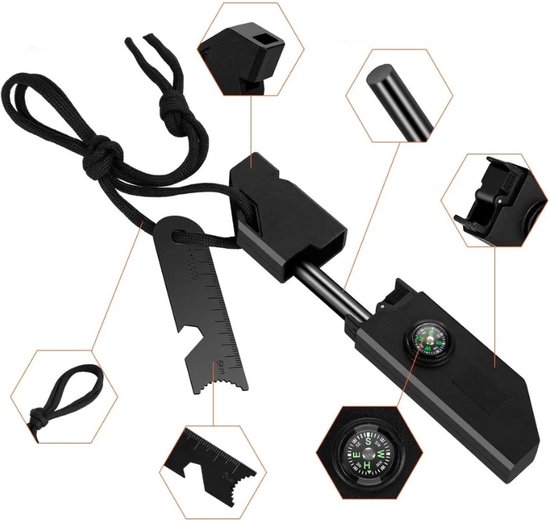
6-in-1 survival tool met vuurstarter
Ontdek deze 6-in-1 survival tool met vuurstarter, ontworpen voor avonturiers en iedereen die goed voorbereid wil zijn. Dit compacte gereedschap biedt essentiële functies, zoals een vuurstarter voor elk weertype, een kompas, en een noodfluit. Ideaal voor outdoor-activiteiten of onverwachte situaties.
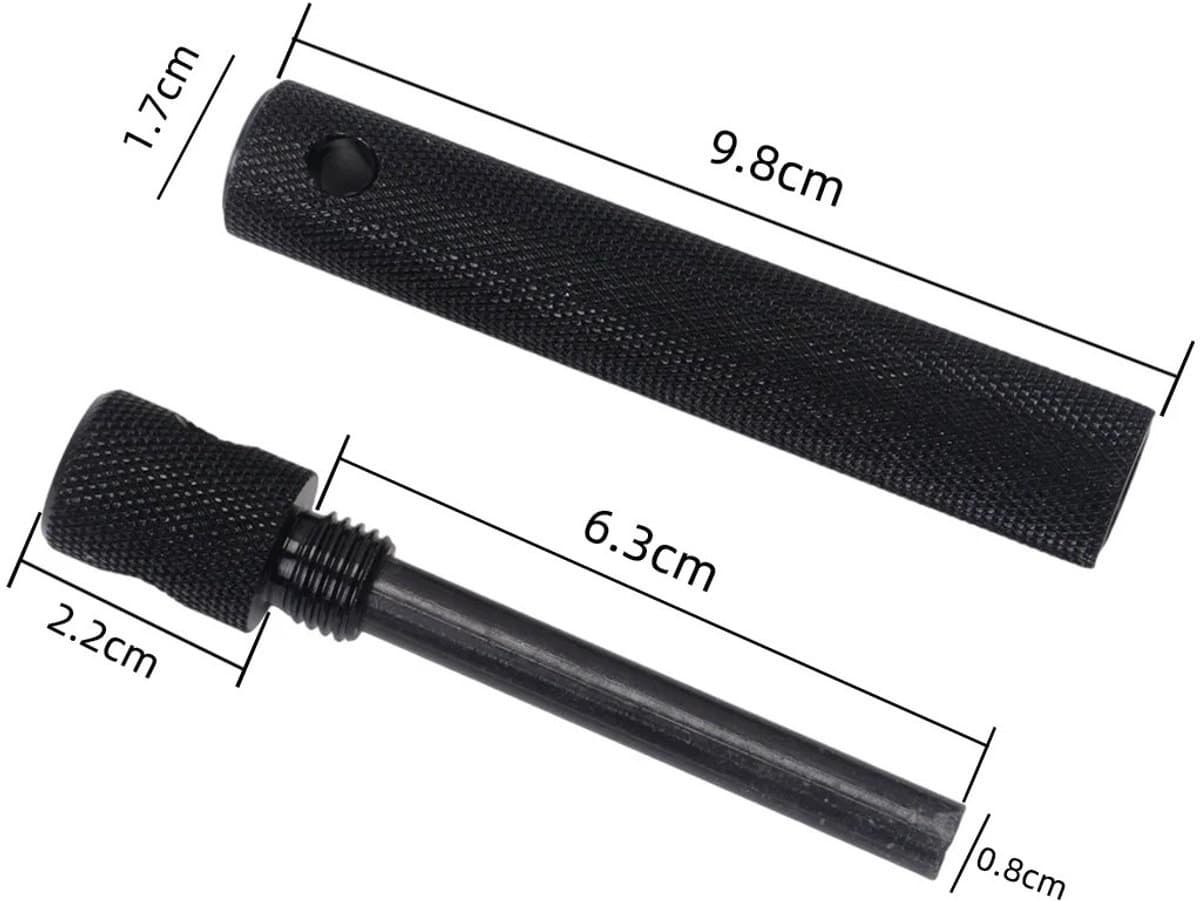
Magnesium vuurstarter (firesteel)
Vuurstarter met magnesiumstaaf en schraper, die ook bij nat weer vonken geeft; met noodfluitje.
The different methods
Method 1: A sunken fireplace
By ‘burying’ the fire, this method minimises the chance of sparks. In a fire pit, the fire stays contained, sparks are caught and the heat spreads evenly. If there is wind, this is a safer way to make fire.
Step-by-step plan:
- Dig out a pit and keep the earth for extinguishing
- Lay a layer of gravel or small stones on the bottom
- Place stones around the edge to resist gusts of wind
- Build your fire as usual, but keep it compact
???? How do you prefer to make fire?
How do you prefer to light your campfire? And do you have experience with making fire safely in a dry environment? Share your own findings or experiences in a comment below!
Method 2: A stone compartment
Stones can help prevent sparks from spreading. Build a square from flat stones. This method is best used on hard ground, where digging is not possible. Moreover, the stones absorb heat and release it slowly.
Step-by-step plan
- Lay the first layer of stones as close together as possible
- Fill any gaps with smaller stones
- Build walls 15 to 20 cm high to provide protection without restricting the oxygen supply
Method 3: Green covering
Surround your fireplace with fresh, moist, green material that is difficult to ignite. Think of fresh leaves, moss or freshly mown grass. This natural barrier catches sparks before they can reach dry vegetation.
❗️Warning ❗️
Only use completely green material. Half-dried leaves can actually become additional fuel. Replace the green covering regularly as it begins to dry out.
Method 4: A metal fire bowl
A raised metal bowl provides complete insulation from the ground. If you’re staying in the same place for a longer period, this method is ideal. The height ensures that the vegetation on the ground doesn’t heat up, whilst the metal catches all sparks. However, ensure stable support: you don’t want your fire bowl to tip over!
Advantages:
- Easy to make a fire in
- Better air circulation
- You can easily cook on it
Method 5: Water ring
Create a ring of wet material, such as old cloths and towels, around your fireplace. Lay these in a circle of 2 metres around the fire.
This method requires a lot of water, but also offers excellent protection. The wet material cools down sparks and ensures that the fire doesn’t spread to the dry surroundings. Keep extra water at hand to keep the ring moist.
Method 6: A minimal flame
In dry weather, it is wise to keep your fire as small as possible. Use a small pile of wood and only add new material when your flames have become too low for cooking or warming yourself. This requires more attention, but minimises the risks.
After the fire
Extinguish all flames completely with water. Stir through the ash and extinguish again. With your hand above the ash, you can feel if there is still warmth. If that is the case, repeat the first steps.
Check the entire area around your fireplace for smouldering remains. Even small glowing pieces can still cause problems hours later. Cover the ash with earth.