

In the Netherlands it’s still not officially allowed, but in Belgium since 17 April you may connect approved plug-and-play solar panels and batteries. But what use is such a system? To what extent can you supply your home with electricity if the regular electricity grid fails, as with the power outage in Spain?
The nationwide power outage has affected millions of people in Spain and Portugal. The food in the fridge spoils, the air conditioning and internet no longer work,… At least five people died on Monday 28 April 2025 as a result of the power outage. The ventilator of a 46-year-old woman in Valencia failed, after which she died, in Galicia a family of three died from carbon monoxide poisoning after using a generator in the cellar for his ventilator.
When we heard that, we wondered in the editorial office what we would do in such a situation? I previously wrote this article about it, but couldn’t the new solar panels be a major game changer?
We selected 3 plug-and-play solar panels
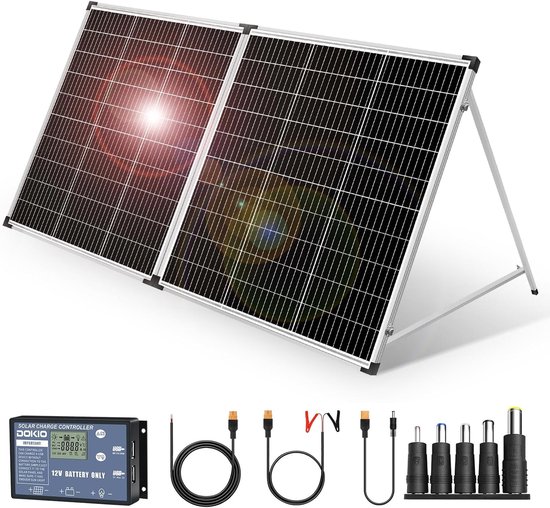
Zonnepanelen pakket voor thuisgebruik
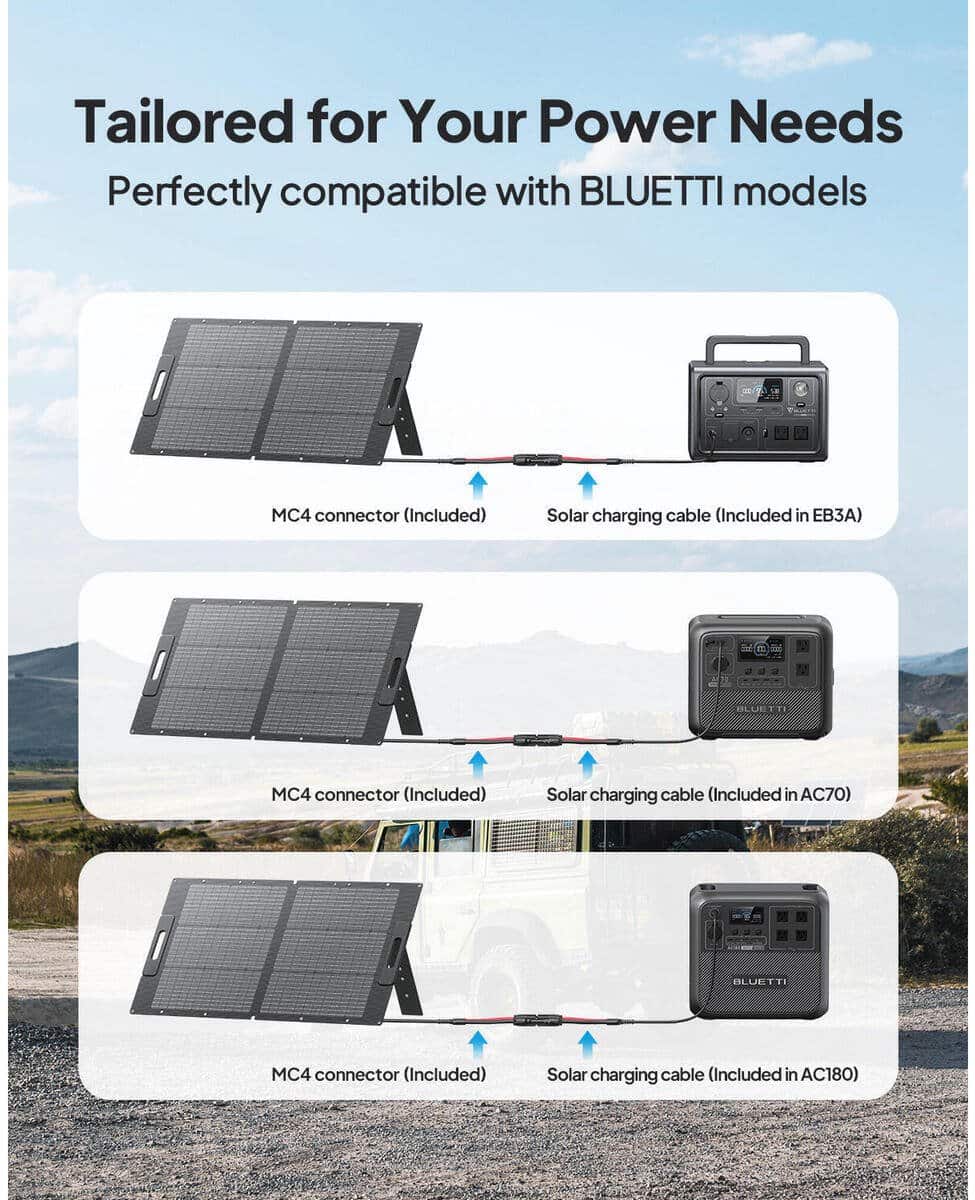
PV100 opvouwbaar zonnepaneel (100 W)
Draagbaar zonnepaneel van 100 W om een powerstation onderweg of tijdens een stroomuitval bij te laden.
Plug-and-play solar panels
The basics
Plug-and-play solar panels are simple, ready-to-use systems that can be connected without professional installation. They usually consist of one or more solar panels, an inverter and sometimes a battery. The great advantage is that you can simply connect them to a socket via a plug. The energy produced by the solar panel is used directly by the appliances in your home.
There are also home batteries that work via the plug. Read more about this here:
Most standard solar panels and plug-and-play solar panels automatically switch off during a power cut. This is a safety measure to prevent electricity from being fed back into the grid. This can be dangerous for people working on the grid.
What about power cuts?
To be able to use your plug-and-play solar panels during a power cut, you need a system with ‘island functionality‘. Klimaatproductenkiezen.eu explains it like this:
“Island functionality or island operation occurs when you have made provisions so that you can have electricity available despite not having a connection to the public electricity grid.”
This can be at various times:
- Temporarily due to a power cut
- When an electricity connection is not available, in a camper or garden shed
Solar panels with island functionality
There are plug-and-play solar panels with island functionality. These can isolate themselves from the electricity grid and can function independently. As a result, they offer several advantages:
- Independent power supply during grid outage
- Possibility to keep critical equipment functioning
- No loss of generated solar energy
Not all plug-and-play systems have island functionality. Pay particular attention to this when purchasing if you want to use the system during a power cut. In Belgium and the Netherlands, it is still not permitted to connect inverters in island mode to the public grid. Permission for this is almost never granted to residential buildings.
The different systems on the market
Balcony solar panels
These are the simplest plug-and-play systems, designed to be placed on a balcony or patio:
- Capacity: typically 300-600 Watt
- Cost: €500-1000
- Yield: 250-500 kWh per year
These systems usually don’t have a battery and therefore cannot function during a power cut, unless they are specifically equipped with island functionality.
Portable solar systems with battery
These compact systems combine solar panels with a portable battery:
- Capacity: 200-2000 Watt
- Battery storage: 500-2000 Wh
- Cost: €800-3000
These systems are ideal for emergencies and can power various appliances, such as:
- Lighting
- Smartphones and laptops
- Small fridges
- Medical equipment

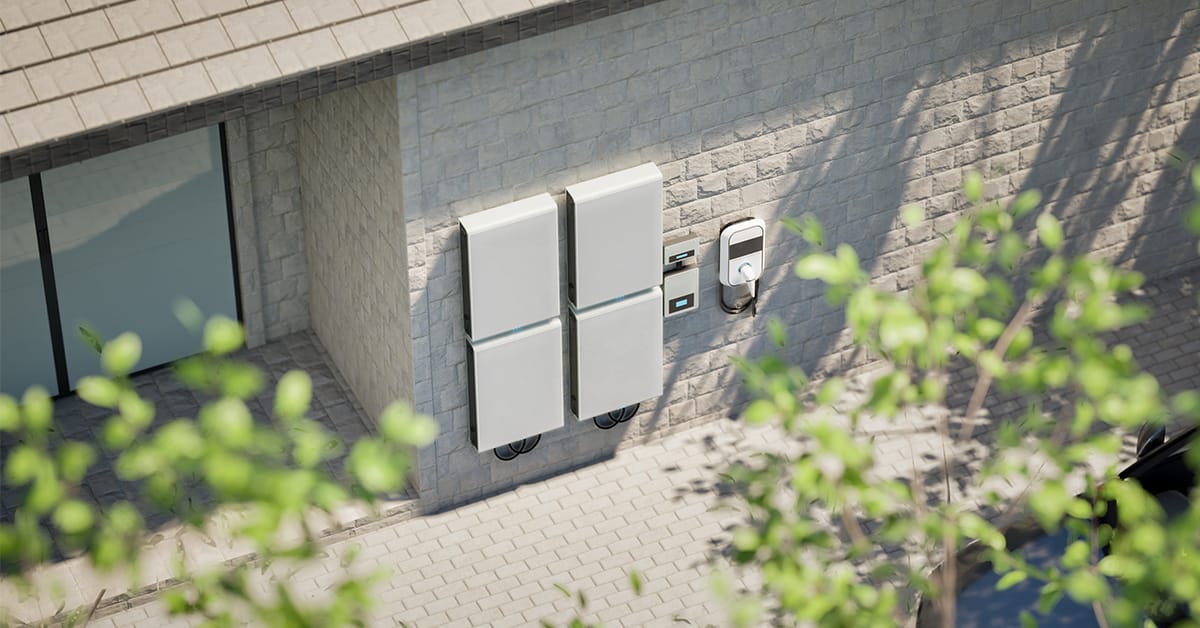
Home batteries with solar panels
The most comprehensive solution combines larger solar panels with a substantial home battery:
- Solar panel capacity: 800-3000 Watt
- Battery storage: 2-10 kWh
- Cost: €2000-10,000
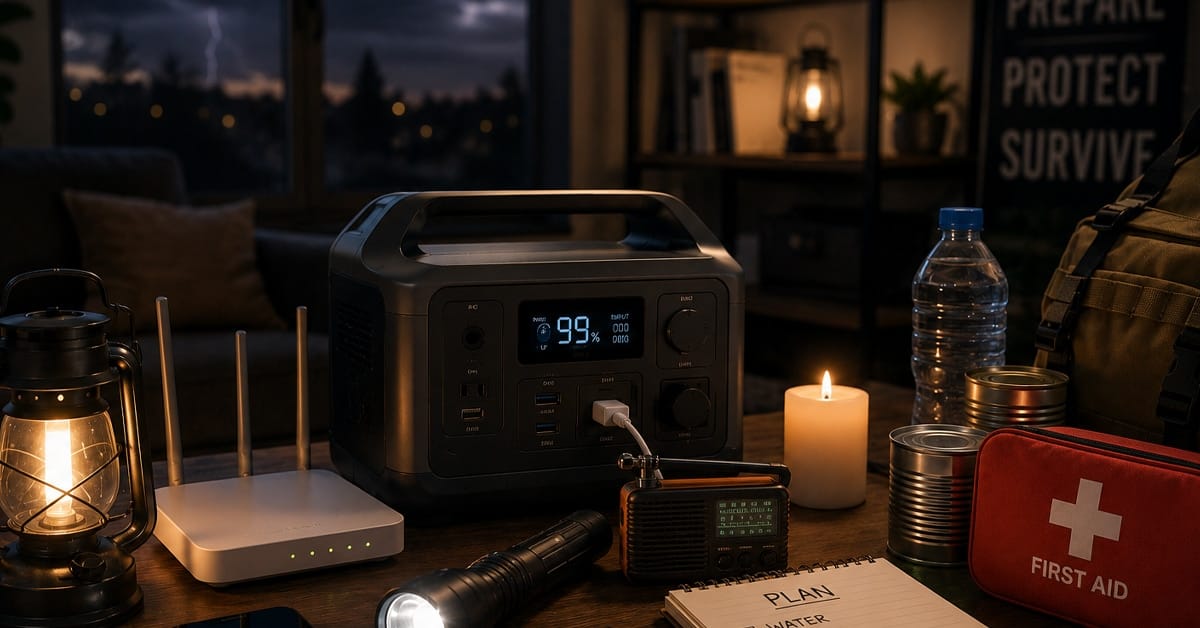
These systems can support a large part of an average household during a power cut, depending on the available solar energy and storage capacity.
Practical use during a power cut
What can you expect?
During the recent power outage in Spain, some areas were without electricity for quite a while. With a full plug-and-play installation with battery and island functionality, you would have had in such a situation:
- Maintain basic lighting
- Keep communication devices charged
- Use small to medium-sized appliances
- Maintain limited cooling for food
The exact capacity naturally depends on the size of your system and the available sunshine.
Energy prioritisation
During a power cut, it is essential to set priorities:
- First priority: Communication (telephone, radio)
- Second priority: Lighting and essential medical equipment
- Third priority: Cooling for perishable goods
- Fourth priority: Comfort (heating/cooling, entertainment)
An average household consumes about 8-15 kWh per day. A medium-sized plug-and-play system can deliver between 1-4 kWh per day, depending on the season and weather conditions.
Points to consider when purchasing
Legal requirements
In Belgium, plug-and-play systems must meet specific safety requirements:
- Be approved according to Belgian standards
- Maximum power of 800 Watt per circuit
- Anti-islanding function for systems without battery
- CE marking
In the Netherlands it is not yet officially permitted, but comparable legislation is expected to come.
Technical considerations
When purchasing, these are important points to pay attention to:
- Island functionality: Essential for use during power cuts
- Battery capacity: Determines how long you have power without sun
- Charging time: How quickly the battery is full again
- Output power: How much power the system can deliver at maximum
- Expandability: Possibility to add more panels or batteries later
Conclusion
The recent legislative change in Belgium that permits plug-and-play solar panels and batteries opens up important possibilities for self-sufficiency during power cuts. However, it is not sufficient, as an off-grid system remains necessary. Although these systems cannot cover your complete energy needs, they offer a valuable buffer during crisis situations as we recently saw in Spain.