

Emergency blankets are an essential tool for emergency situations and outdoor activities and indispensable in any emergency kit.
What are emergency blankets and why are they important?
Emergency blankets, also known as thermal blankets or survival blankets, are amongst the most versatile and compact tools that can save lives in emergency situations. These thin, lightweight blankets typically consist of a layer of plastic with a reflective coating of aluminium foil. Although they appear simple, they play a crucial role in maintaining body heat in emergency situations.
The primary function of emergency blankets is to prevent hypothermia, a life-threatening condition in which body temperature drops below 35°C. This can occur during exposure to cold conditions, but also after an accident or trauma when someone goes into shock. Even on a seemingly mild day in the mountains, a person’s body temperature can drop rapidly.
Emergency blankets are used by emergency services, in first aid kits, by military personnel, mountaineers and other outdoor enthusiasts. Their versatility and minimal size make them a standard component of any emergency kit.
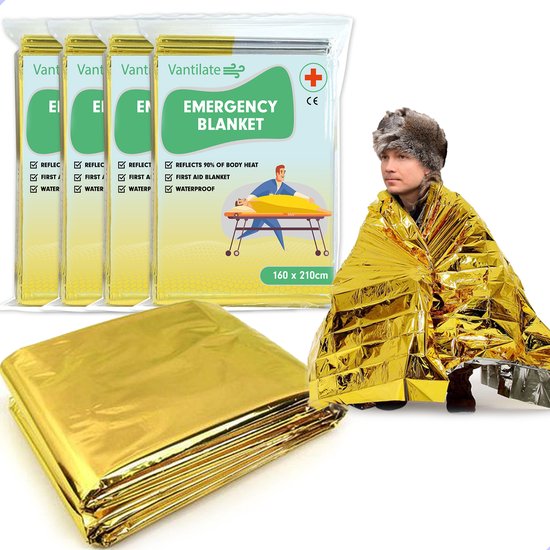
Set van 4 nooddekens: reflecteert 95% van lichaamswarmte
Different types of survival blankets
Traditional emergency blankets
The most common variant is the traditional emergency blanket, also called a ‘space blanket’. These blankets are inexpensive and readily available, but can only be used once in good condition. They have the following characteristics:
- Lightweight (usually less than 60 grammes)
- Compactly folded (approximately the size of a deck of playing cards)
- Made of Mylar (polyester film with aluminium coating)
- Waterproof and windproof
- Highly reflective (reflects up to 90 per cent of body heat)
These blankets are usually silver or gold in colour. Functionally, they differ little; the gold variant is admittedly more visible during rescue operations in natural areas. The silver ones are more discreet.
Heavier emergency blankets
There are also more durable variants suitable for repeated use. These are often somewhat sturdier and sometimes have attachment points on the outside, but are therefore heavier and less practical to carry. They are also slightly more expensive.
- Thicker material that tears less easily
- Sometimes equipped with reinforced edges
- Often slightly heavier (100-200 grammes)
- More expensive than disposable variants
Hybrid blankets
Newer innovations combine the benefits of emergency blankets with other materials:
- Double-layered blankets with a heat-reflective layer and an insulating layer
- Blankets with one side of fleece and one reflective side
- Models with reinforced attachment points for use as a shelter
How do emergency blankets work?
The principle of heat reflection
Emergency blankets work according to three important principles of heat transfer. The metallic coating reflects up to 90% of emitted body heat back to the body. This property makes them particularly effective. In addition, the blankets act as a barrier against wind, which would otherwise remove heat from the body. Finally, the blanket forms a waterproof layer that prevents heat loss through contact with cold or wet surfaces.
Effectiveness in different conditions
The effectiveness of emergency blankets has been scientifically proven. Research conducted by the Journal of Wilderness Medicine demonstrated that persons using an emergency blanket in cold conditions maintained their core temperature significantly better than without this protection.
Where do they come from?
Emergency blankets were originally developed by NASA in the 1960s as part of the space programme. The technology was intended to protect astronauts from extreme temperature fluctuations in space. The success of this innovation soon led to applications on Earth.
In 1973, emergency blankets were deployed on a large scale for the first time during rescue operations following an earthquake in California. Since then, they have become a standard component of medical emergency kits worldwide.
The basic designs have been refined over the years, but the fundamental principle has remained unchanged: a lightweight, compact solution that can save lives in emergency situations.
Applications of emergency blankets
In emergency situations
Emergency blankets can be deployed in various emergency situations:
In medical emergencies:
- Prevention of hypothermia in accident victims
- Treatment of shock
- Protection of casualties during transport
In natural disasters:
- Rapid provision of warmth to evacuated persons
- Protection from rain and wind in temporary shelters
- Visibility for rescue workers (especially gold-coloured blankets)
For outdoor activities
For outdoor enthusiasts and adventurers, emergency blankets offer multiple advantages:
- As emergency equipment: A must-have for hikers, mountaineers and campers
- As a groundsheet: A clean, dry surface to sit on during rest breaks
- As a signal flag: The reflective surface can be used to attract the attention of rescue helicopters
Unconventional applications
Besides their primary functions, emergency blankets can be used creatively.
- As a rain shelter or sun shade
- As a reflector for campfire warmth
- For collecting rainwater in survival situations
- As an improvised bandage in first aid
- As a reflector for photography in the field

Proper use of emergency blankets
Application in hypothermia
When treating hypothermia, proper application is crucial:
- Remove wet clothing if possible, or cover completely
- Wrap the blanket directly around the casualty with the metallic side facing inwards
- Cover the head, as significant heat loss occurs there
- Provide insulation from the ground by placing something underneath the victim
- Seal the blanket around the body to minimise heat loss through air flow
USE THE CORRECT SIDE
Directing the metallic side inwards is essential! This reflects body heat back to the person. If you direct the metallic side outwards, you reflect heat away from the body, which is counterproductive.
Preventive use
For optimal protection during outdoor activities:
- Use the emergency blanket as an extra insulation layer over normal sleeping bags
- Wear the blanket under waterproof clothing for extra warmth
- Create an improvised shelter by using the blanket as a ground sheet and roof covering
Storage and maintenance
For long-term usability:
- Store emergency blankets in a dry place
- Fold them carefully to prevent tears
- Check regularly for damage
- Replace disposable models after use
Purchase recommendations
What to look for when purchasing
When choosing an emergency blanket, several factors are important:
- Material thickness: Thicker blankets are more durable but also heavier
- Dimensions: Standard sizes are approximately 140 by 220 cm
- Colour: Gold is more visible, silver is more discreet
- Extra features: Some models have reinforced corners or attachment points
For different needs
The best choice depends on the intended use:
- For everyday carry: Lightweight disposable model (±£2-5)
- For regular use: Durable, reusable models (±£10-15)
- For extreme conditions: Bivvy bags or hybrid models (±£20-40)
WHERE DO I STORE THEM
Essential places to store emergency blankets:
- In every first aid kit
- In the car (glove compartment)
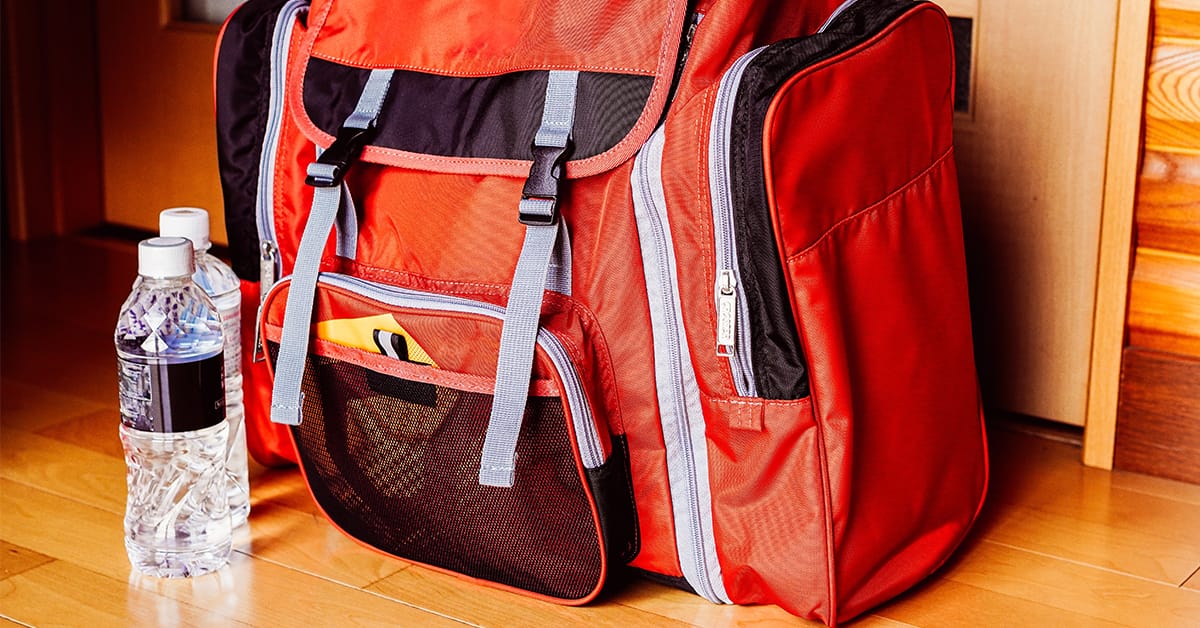
- In rucksacks for day trips
- In emergency supplies at home
- With camping equipment
Emergency blankets: small but life-saving
Emergency blankets are amongst the most underestimated but essential components of any emergency kit. Their unique combination of lightweight, compactness and effectiveness makes them indispensable for both professional emergency responders and for anyone preparing for unexpected situations. Whether it concerns protection from the elements during a mountain hike or as a first response in an accident, an emergency blanket can sometimes literally make the difference between life and death.
I recommend that everyone have at least one emergency blanket at home and an extra one in the car and in every rucksack. It is a small investment that can prove invaluable in emergency situations.