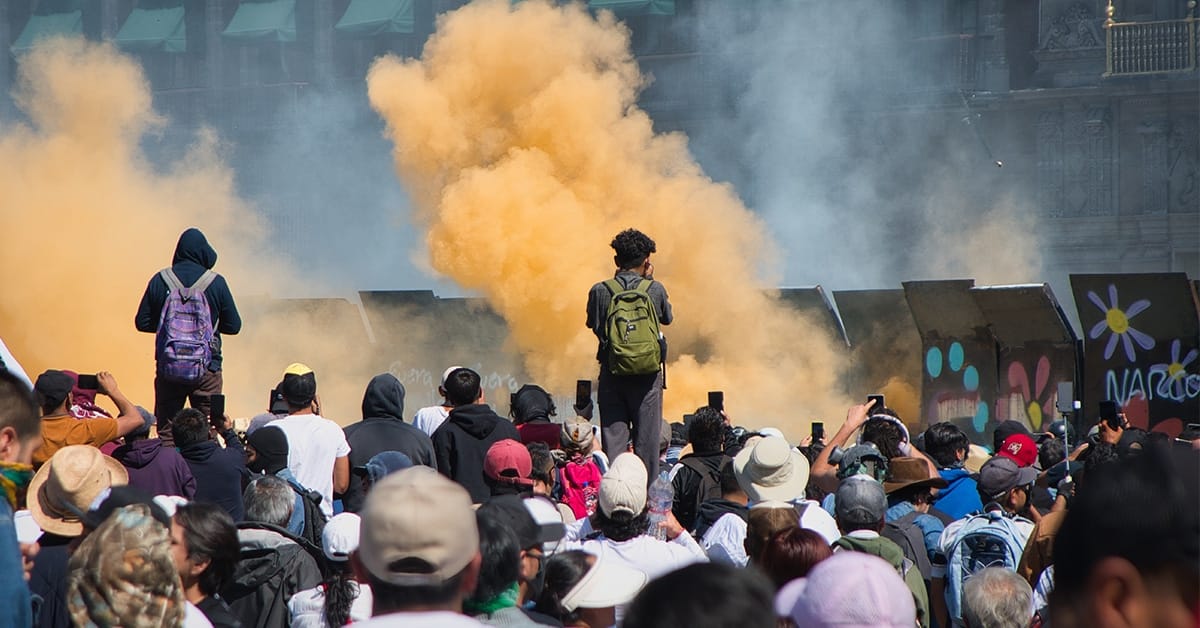
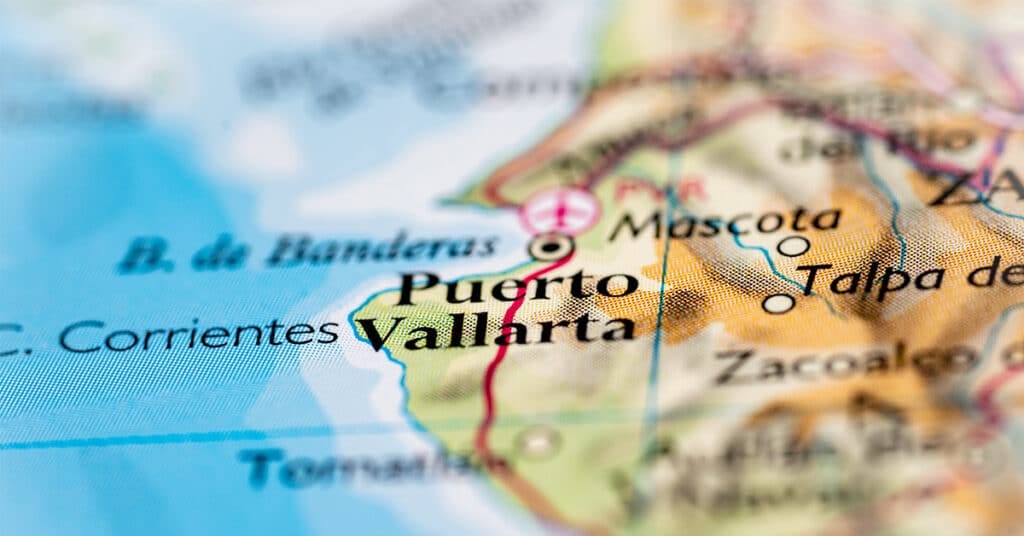
On 22 February 2026, Mexico suddenly erupted. The Mexican army killed cartel leader Nemesio “El Mencho” Oseguera Cervantes, and within hours cars were on fire, motorways were full of roadblocks and flights were cancelled. Cartel members spread across twenty states, set buses and taxis alight and erected blockades. Thousands of tourists were suddenly stranded in Puerto Vallarta, Guadalajara and other cities because they were in the wrong place at the wrong time.
Mexico is an extreme example, but far from the only one. Anyone travelling abroad needs to know that such incidents can occur. Someone on Reddit wondered what they would do if they were on holiday there. Riots following an election result, a coup, a terrorist attack, sudden political unrest: it can happen anywhere and escalate quickly. This needn’t be a life-threatening disaster if you know how to handle it.
When a holiday suddenly becomes a crisis scenario
Unrest in a holiday destination is less exceptional than we’d like to think. Thailand experienced multiple coups where tourists were faced overnight with curfews and closed airports. In Egypt, protests in Tahrir Square in 2011 escalated so quickly that airports were overwhelmed with people wanting to leave. In Turkey, a coup attempt in 2016 resulted in shootings and a state of emergency. And in Mexico this year, we again saw how quickly a domestic operation can turn into national chaos.
The pattern is always the same: the unrest starts somewhere else, but people feel the consequences everywhere. Flights are cancelled. Transport comes to a halt. Shops close. And if you haven’t got a plan, you’re on your own.
I sometimes think people see a holiday as a bubble — as if the destination temporarily suspends the rules of the world. But that’s not the case. A hotel in Puerto Vallarta can’t always protect you from burning cars outside the door.
What makes foreign unrest so dangerous for tourists?
You’re on unfamiliar territory. You don’t always know the language, you don’t know the streets, you don’t know which areas to avoid and you have no network to fall back on. You’re dependent on information that quickly becomes unreliable, on transport that may disappear and on an embassy trying to reach hundreds of fellow citizens at once.
During the Mexican cartel crisis, social media exploded with false reports — including the claim that the cartel had taken Guadalajara airport. The airport had to deny this via its official account. Those who relied on social media for information panicked for the wrong reasons or made poor decisions based on rumours.
🚨 Beware of false reporting
Disinformation is a real danger in crisis situations. It delays good decision-making and can put you in dangerous situations.
What you can arrange before the trip
Register with your embassy — always
This is the least you can do and it costs nothing. Belgium offers the Belgian Travel Register via diplomatie.belgium.be. The Netherlands has a similar system via nederlandwereldwijd.nl. If something goes wrong in the country where you’re staying, the embassy knows you’re there and can actively contact you with instructions.
In a crisis like the one in Mexico, embassies try to communicate quickly with registered nationals. Anyone not registered falls outside that network and has to work out what’s happening themselves.
Check the travel advice — even if you’ve been before
Several Americans in Puerto Vallarta said they had visited the city for years and had always felt safe there. The outbreak of violence came as a complete surprise to them. This shows that familiarity with a destination is no guarantee. Travel advice is based on current information and changes quickly.
Note: Travel advisories typically have four levels — from “normal precautions” to “do not travel”. Jalisco had been in an elevated risk category for years. Anyone who had read that would have been better prepared for what could happen.

Save crucial numbers — not just on your phone
A phone can be dead, broken or stolen. Write down the most important numbers on paper as well:
- The number of your embassy in the country of destination
- The emergency number of your travel insurance
- The customer service number of your airline
- A contact person at home who is aware of your whereabouts
The US State Department opened a 24/7 crisis line that handled hundreds of calls. Calling from the US or Canada: +1-888-407-4747. Calling from abroad, including Mexico: +1-202-501-4444. European countries have similar crisis lines — but you need to have those numbers before the crisis starts, not afterwards.
🔗 Read everything about communication here

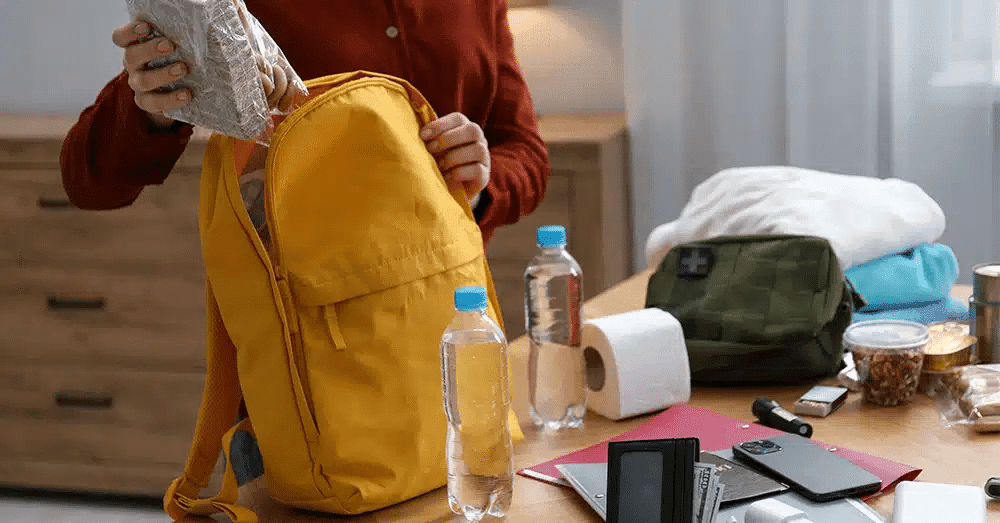
Emergency Kit – compact version
Ensure basic supplies at your accommodation
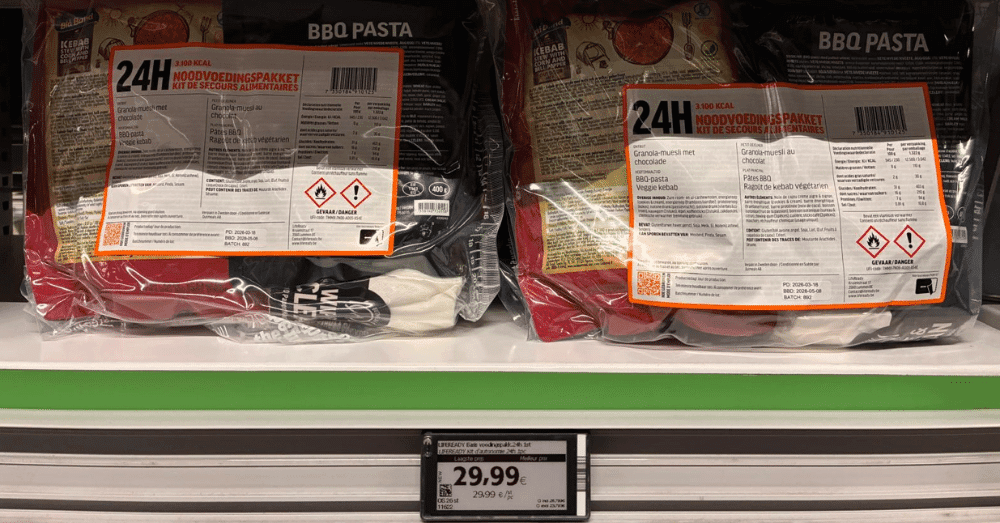
A couple in Puerto Vallarta had no food — only two oranges — because their boutique hotel had no restaurant and the whole city was closed. They got tips from a neighbour but went hungry all day.
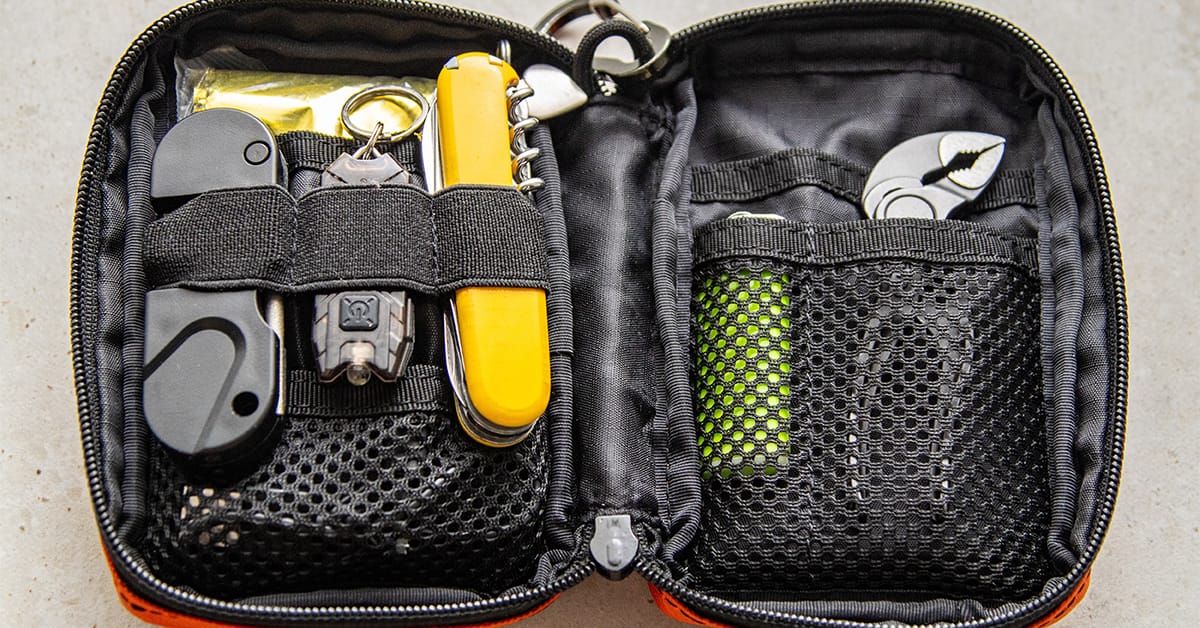
This sounds minor, but after a day without food in a stressful situation, everything becomes harder. A simple habit: always buy a few days’ worth of basic supplies when you arrive. Water, non-perishable food, any medication you need. Not because you expect a disaster, but because it’s sensible — just as you have an emergency kit at home for power cuts or other unexpected situations.
What to do when unrest breaks out
Stay indoors!
This is the hardest advice to follow. The flight reflex is strong. But driving to the airport whilst cartel members, a rioting crowd or soldiers control the streets is riskier than waiting in your safe hotel room until the unrest passes.
Tourists who had gone to the airport early in Puerto Vallarta were stuck in the terminal: no flights were leaving temporarily due to the unrest. Wait for confirmation from your embassy, your airline or the local authorities before you take a step outside. A “shelter in place” instruction means: stay where you are, lock doors and windows, and wait.
Use official information channels
Social media are dangerous in crisis situations. They spread rumours faster than facts. Use primarily:
- The official website and social accounts of your embassy
- The official communications of the airport
- Local government announcements (where possible via a reliable translation app)
- News services with an established reputation (Reuters, BBC, AP)
Keep your phone battery as charged as possible. Dim the screen, switch off unnecessary apps and only use your power bank when needed.
Communicate with people at home — once and clearly
Send one clear message to your contact at home: where you are, that you’re safe, and that you’re waiting for more information. Ask them not to constantly call back or text, as that drains your battery. Agree that you’ll make contact again once the situation is clearer.
Follow the instructions from your hotel
Hotel staff know the local situation better than you do. They have protocols for these kinds of circumstances and know which neighbourhoods are dangerous, where the safest routes are and when it’s reasonable to go to the airport.
If you still need to leave
Wait for the green light from your airline
American Airlines, United and Delta cancelled change fees for travellers travelling from or to Guadalajara and Puerto Vallarta. Air Canada initially cancelled all flights, but resumed the connection to Puerto Vallarta as early as 24 February. Most airlines offer a flexible rebooking policy in these kinds of situations — but you have to follow that up yourself and contact them.
Always save your airline’s customer service numbers before you depart. And check whether your travel insurance also covers extension of your stay, early return and cancellation in the event of political unrest or violence. These are separate clauses that aren’t included in every standard policy.
Let someone know which route you’re taking
If you decide to leave — to the airport, to another hotel, to a safer city — inform your contact person at home and the embassy. Give your departure point, destination and estimated time of arrival. That way people know where to look if you don’t arrive.
The bigger picture: lessons for every traveller
The Mexican cartel crisis of February 2026 is a brutal example, but the same logic applies to a political coup in an African country, riots after a football final in South America or a terrorist attack in a European city. The basic principles don’t change:
- Know the situation of the country before you leave
- Register with your embassy
- Always have a few days’ basic supplies
- Follow official channels, not social media
- Stay indoors until you’re certain it’s safe
- Communicate clearly with people at home
President Sheinbaum stated that “peace, security and normality are guaranteed” — but at the time she said that, thousands of tourists were still locked up in their hotels. Governments like to present the situation more favourably than it is. That’s not necessarily malicious, but it means you mustn’t completely switch off your own judgement.
Conclusion
What Mexico taught us this week is nothing new — but it’s a harsh reminder. Unrest can escalate anywhere and quickly, even in destinations you know and trust. Those who travel prepared don’t need to be afraid: but preparation begins at home, before your suitcase is packed. A registered place of stay, a few emergency contacts on paper and a modest supply in your hotel room can make the difference between waiting calmly and being completely in the dark.