It’s only when the power goes out that you notice how dependent we are on working light in the house. That’s why this week is about one simple but important question: how do you provide light when electricity isn’t available?
Why this is important
A power cut doesn’t have to be a disaster to become difficult. As soon as it gets dark, everything changes. You move less easily, cooking becomes more difficult and simple tasks suddenly take more effort.
Many people have a torch lying around somewhere, but that’s often where it stops. Batteries are flat, devices no longer work or nobody knows where everything is. Those who want to be prepared therefore ensure they have a simple and reliable system.
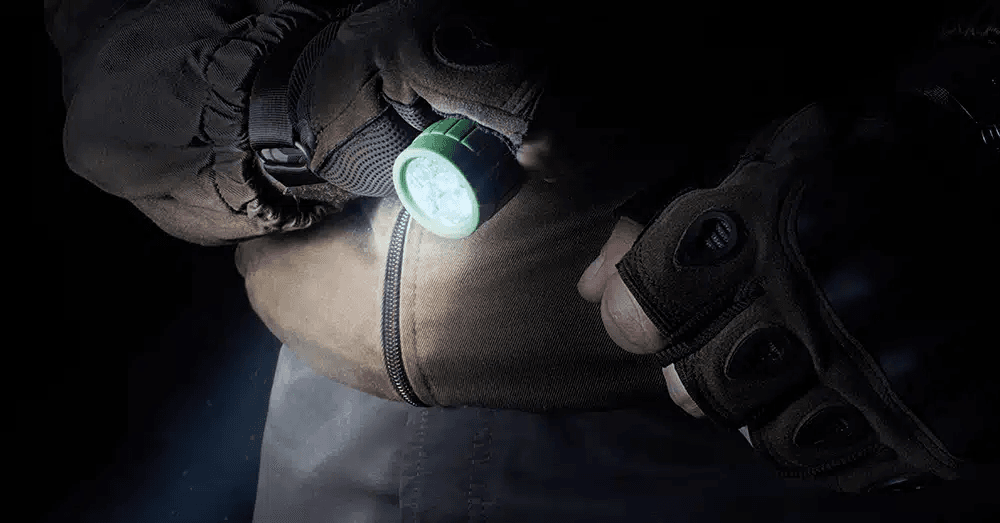
🔗 Choosing the right torch? This is what you need to look out for
Think in layers, not in one solution
Just like with clothing, it works better to combine several small solutions instead of relying on one large system. A torch for moving about, a headtorch to be able to work with free hands, a few candles as back-up and possibly a rechargeable lamp together form a strong foundation. You don’t need to build a complicated installation. What matters is that you have light quickly and safely when needed.
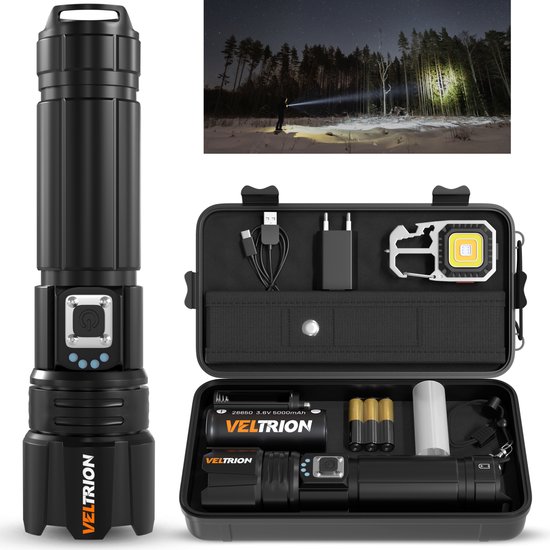
Oplaadbare LED Zaklamp met Powerbank
De VELTRION Oplaadbare LED Zaklamp met Powerbank is een betrouwbare metgezel voor elke situatie. Met een indrukwekkende lichtsterkte van 6000 lumen en een ingebouwde powerbank, ben je altijd voorbereid op onverwachte situaties. Zijn robuuste, waterdichte ontwerp maakt het ideaal voor zowel buitenactiviteiten als noodsituaties thuis. Dit product biedt niet alleen helderheid, maar ook de gemoedsrust dat je altijd stroom hebt wanneer dat nodig is.
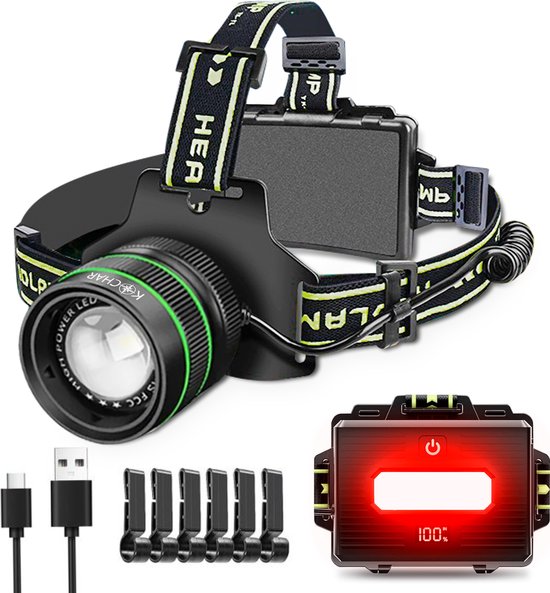
Oplaadbare hoofdlamp met bewegingssensor
Ontdek de Kochar LED Oplaadbare Hoofdlamp, een veelzijdig hulpmiddel voor elke situatie. Met 5000 Lumen en verschillende lichtstanden, biedt deze hoofdlamp helderheid voor werk en avontuur. Dankzij de handige sensorfunctie en de waterdichte constructie bent u altijd voorbereid, zelfs in onverwachte omstandigheden. De geïntegreerde powerbank zorgt ervoor dat uw apparaten ook onderweg opgeladen blijven. Een betrouwbare keuze voor wie goed voorbereid wil zijn in een veranderlijke wereld.
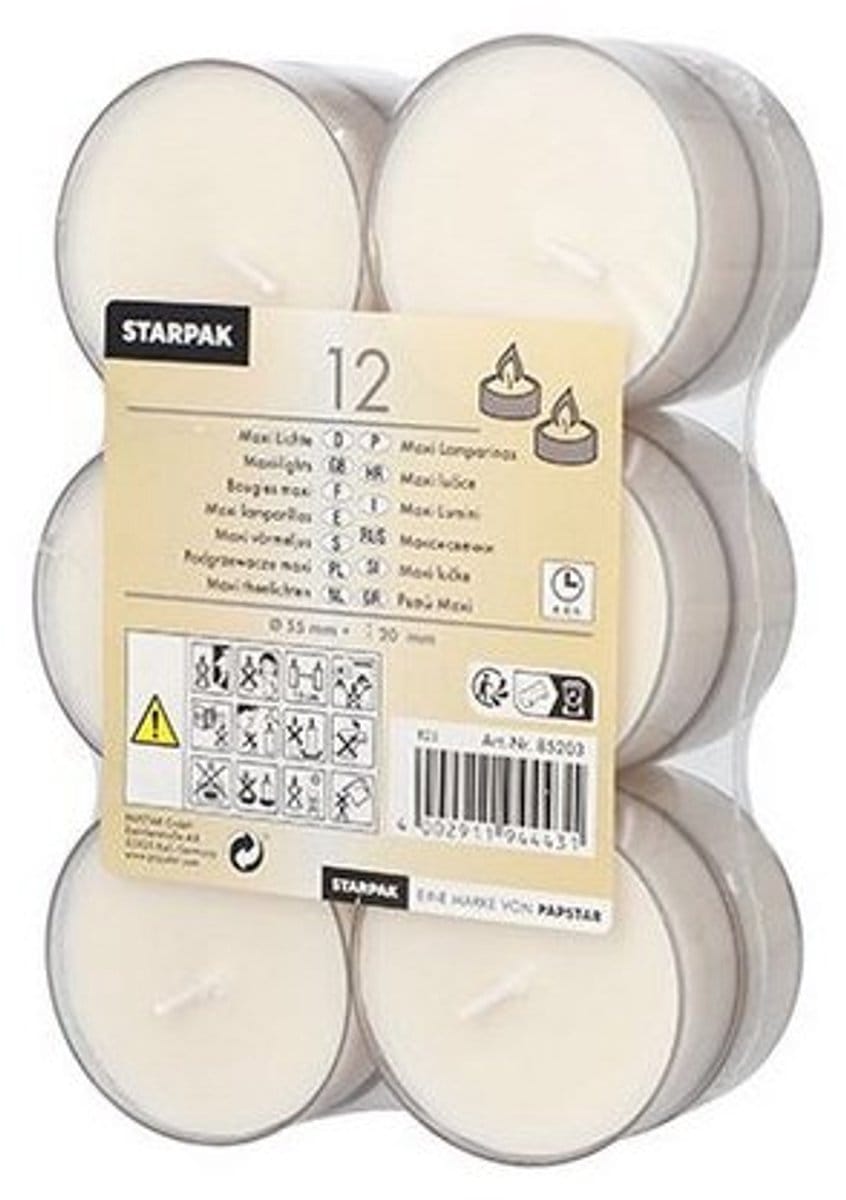
Waxinelichtjes, brandduur 8 uur
Grote verpakking theelichtjes met een brandduur van 8 uur.
Choose practical equipment
Good lighting doesn’t have to be expensive, but cheap equipment often disappoints when you really need it.
A decent LED torch with spare batteries is usually a better investment than all sorts of cheap gadgets. A simple headtorch is also surprisingly useful, especially when you need both hands.
In addition, it’s wise to have at least one light source that you can charge without a socket, for example via solar energy or a power bank.
Don’t forget safety
Candles and oil lamps create atmosphere, but also bring risks. Use them consciously and never leave them unattended.
Especially in stressful situations, accidents happen more quickly than normal. A stable, safe light source therefore always deserves preference.
What will you actually do this week?
Make an overview of what you already have at home today. Do your torches still work? Do you have spare batteries? Does everyone in the house know where everything is?
Then fill in where necessary. That doesn’t have to be much. One decent torch and a reliable back-up will take you far.
How do you ensure that you always have light?
Also actually test everything out. Not during the day, but in the evening when it’s dark. Do you have experience with this?
What often goes wrong?
Many people store their equipment scattered throughout the house. When they need something, they can’t find it.
In addition, lighting is often forgotten until the problem arises. Then batteries turn out to be flat or devices defective. Here too, simplicity usually works better than excess.
Finally
Light seems self-evident, until it disappears. Those who think about it in advance notice how simple it actually is to prepare properly.
And as with many things in this series, the biggest gain isn’t in expensive solutions, but in small systems that work reliably when you need them.
🪖 Self-sufficient in 52 weeks
Every week a small, achievable tip that you can apply immediately. No expensive survival gadgets or unachievable scenarios, but practical steps with which you better prepare your family for power cuts, chaos or unexpected crises.
Follow the series and discover how in one year you grow from zero to completely prepared. 52 weeks, 52 tips – and you’ll be stronger than 90% of the people around you.
Discover all the tips here!