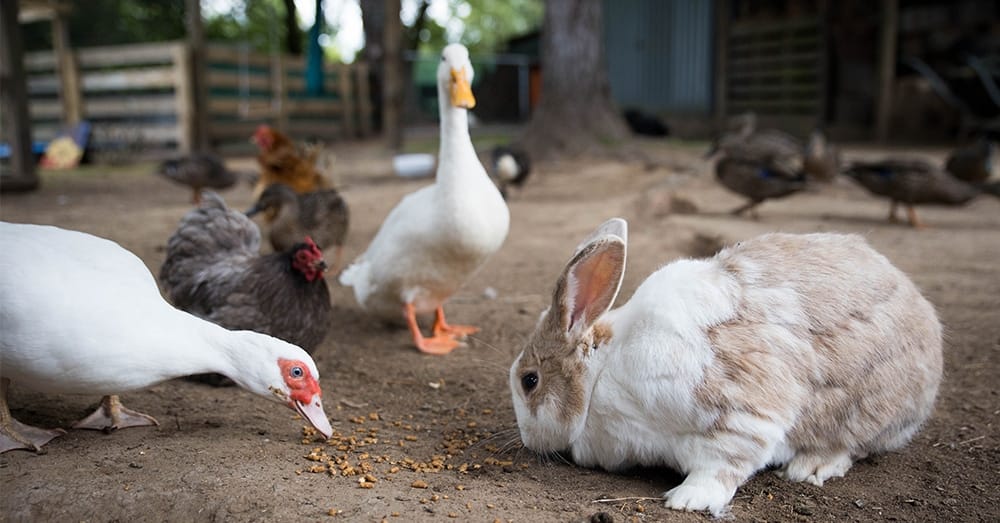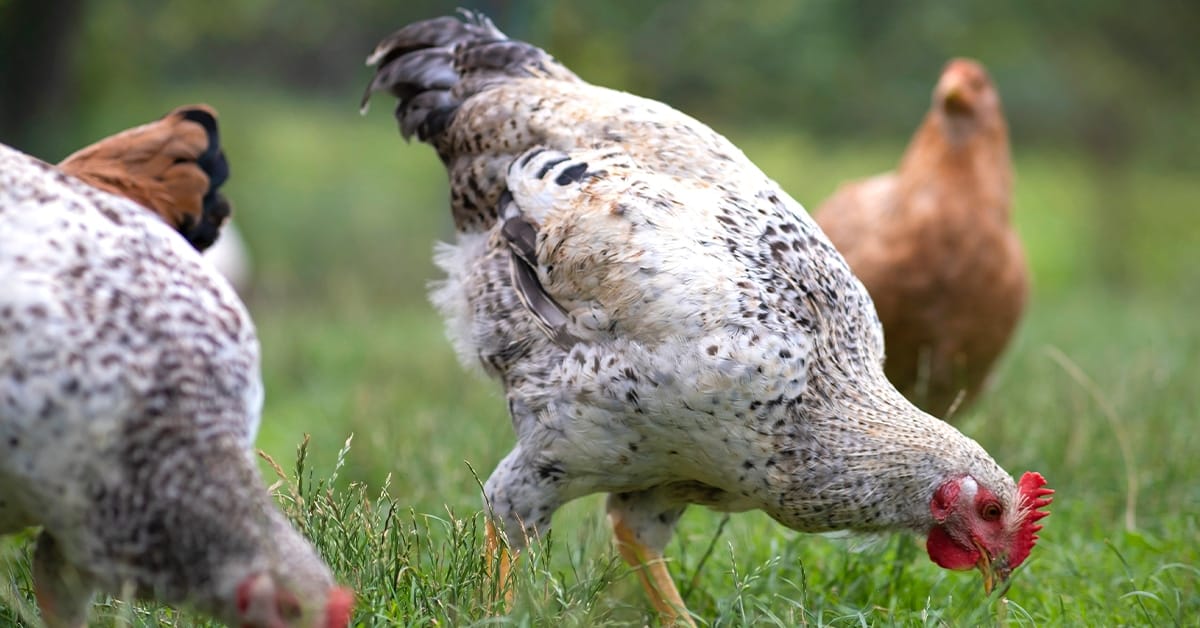
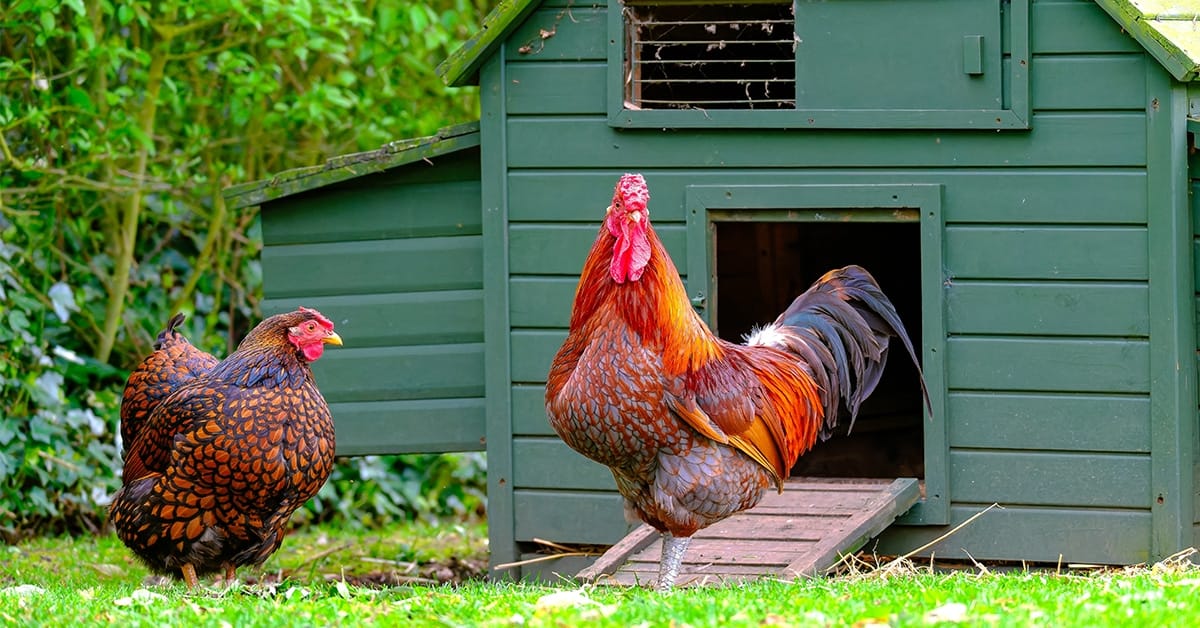
Anyone who wants to be somewhat less dependent on the supermarket will sooner or later think about a vegetable garden. But keeping chickens goes a step further: you add a living system to your garden that produces eggs, processes kitchen scraps, picks away insects and fertilises the soil. It sounds romantic, but it’s also simply practical.
A handful of hens in the back garden provides an average family with fresh eggs almost daily — without being dependent on chains, transport or price fluctuations. When egg prices in the US soared at the beginning of 2025 due to bird flu outbreaks, sometimes to more than six dollars per dozen, people with chickens in the garden were having breakfast quite calmly. That’s no coincidence. It’s the difference between a system that works for you and one you’re dependent on.
Keeping poultry does require some preparation. You need to know what’s legally permitted, how to set up proper housing, which breed suits your situation and how to keep the animals healthy. That’s not rocket science, but a bit of homework beforehand saves a lot of problems later.
😷 Be careful with bird flu
At increased risk, the authorities can impose a housing requirement. You then have to keep the poultry inside or close off the run with a net. The most current situation can be found on government websites.
What do you need to get started?
The chicken coop: the foundation
A good chicken coop consists of two parts: an enclosed night coop with nesting boxes, and a run where the chickens can forage during the day. For small bantams you calculate at least 0.25 m² night coop per animal and 0.5 m² in the run. For larger breeds you double those dimensions. The more space, the better — chickens that have enough room are healthier, get bored less quickly and peck at each other less.
Ensure the coop is easily accessible for yourself: you clean and collect eggs every day. A removable floor or hatches make that work considerably more pleasant. Also think about predators. Foxes, martens and rats easily dig underneath somewhere. So also sink the wire into the ground, or lay an apron of wire around the run on the ground. A net above the run keeps birds of prey out.
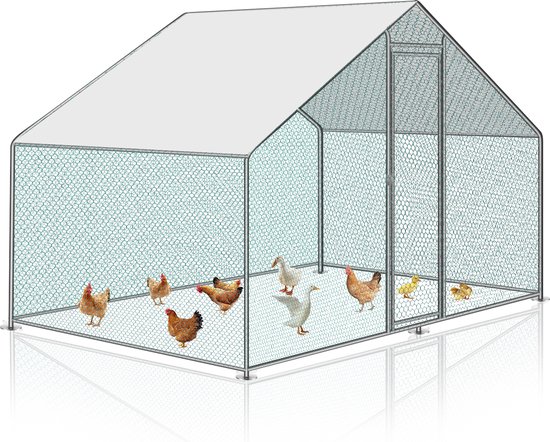
Kippenren met puntdak voor buiten
Ontdek ons kippenren met puntdak, ideaal voor buitengebruik en perfect voor een veilige en comfortabele omgeving voor uw pluimvee. Met afmetingen van 3 x 2 x 2 m biedt het voldoende ruimte voor uw dieren om vrij te bewegen. Het duurzame ontwerp, inclusief een zonneklep en veiligheidsslot, beschermt tegen onvoorspelbare weersomstandigheden en roofdieren. Dit kippenhok is een slimme keuze voor wie zich wil voorbereiden op onverwachte situaties in het leven.
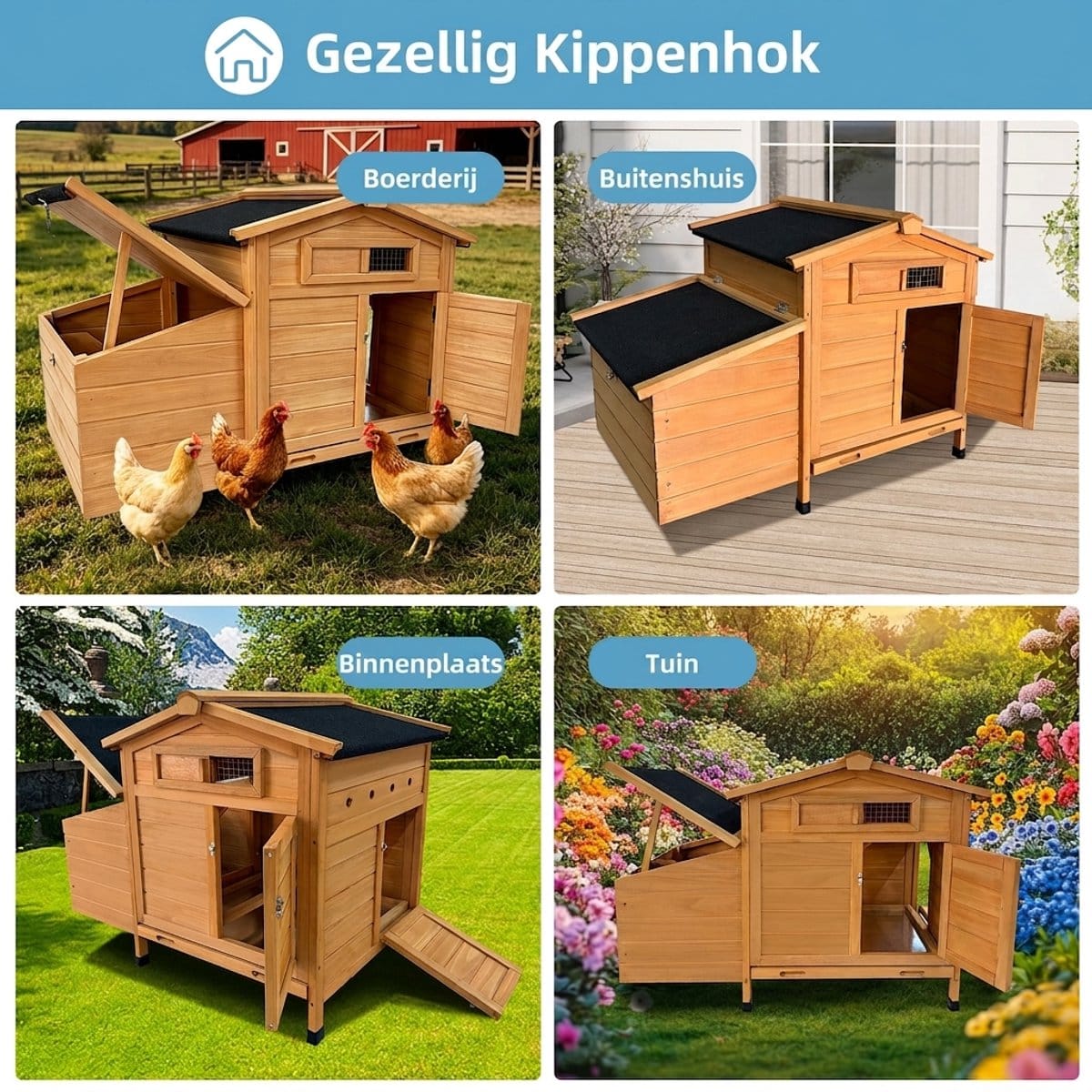
Verhoogd kippenhok met legnest
Houten kippenhok op poten met legnest en uitneembare bodem, voor een klein aantal kippen.
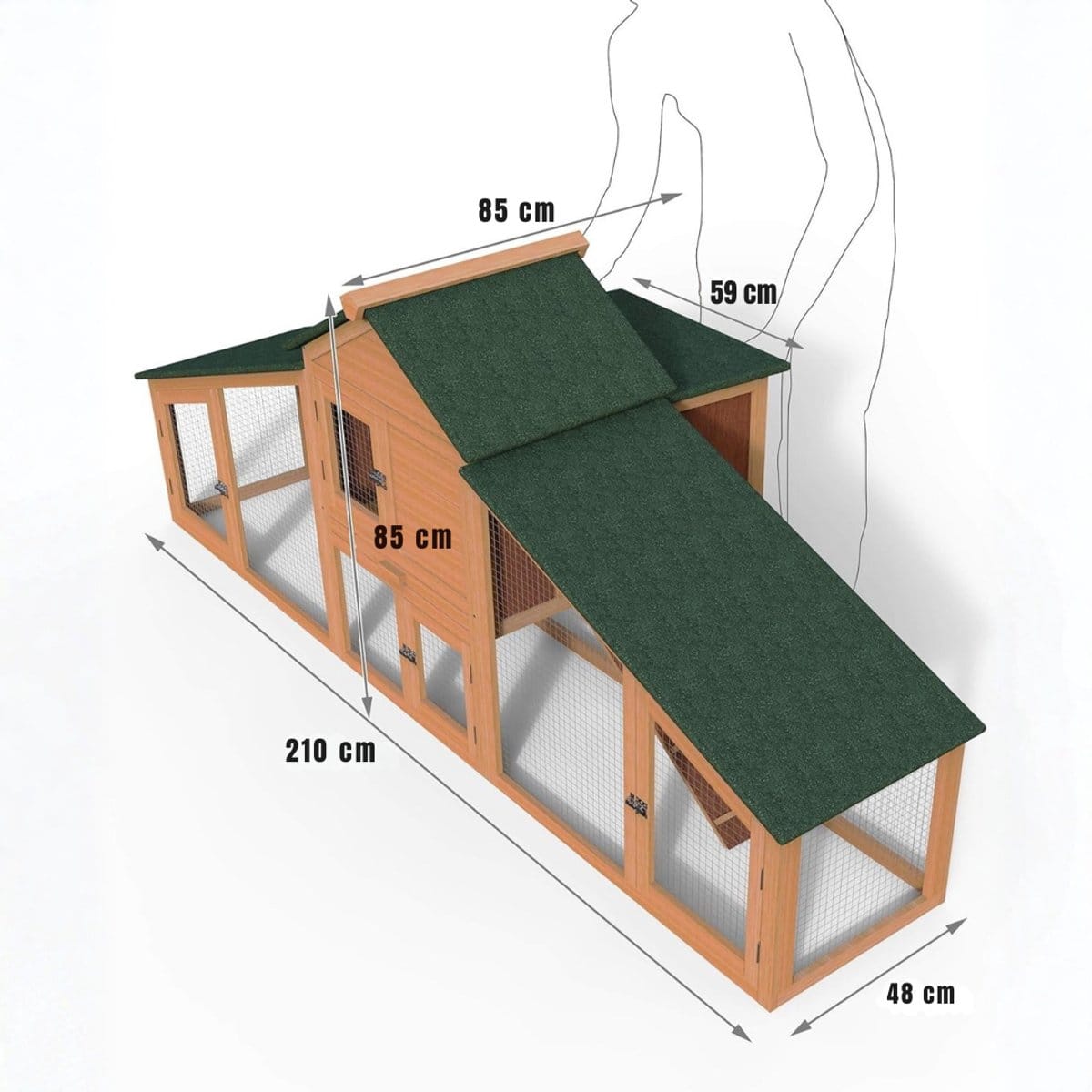
Kippenhok met ren, 2 niveaus
Kippenhok met nachthok en afgesloten ren op twee niveaus, zodat je kippen veilig buiten lopen.
How many chickens?
Start with at least three chickens — they’re social animals that thrive poorly when alone. A cockerel isn’t necessary if you only want eggs. An adult chicken lays on average two eggs per three days. Three to six hens usually lay sufficient for an average family.
Preferably choose young chickens a few months old: they’re easier to tame and start laying after about half a year.
Feed and water
Chickens are omnivores and not fussy. They eat chicken meal or pellets as a basis, supplemented with:
- Kitchen scraps such as vegetable peelings, bread and fruit
- Grass, herbs and insects if they can forage freely
- Grain as a treat
What chickens mustn’t eat: raw potatoes, onions, avocado, chocolate and citrus fruits. Fresh water must always be available — especially in summer. Feed lying about attracts rats and mice, so always clear up excess feed before dark.
Which breed do you choose?
Laying hens versus ornamental chickens
Laying hens produce many eggs but don’t live very long. Ornamental chickens lay fewer eggs but live on average five to eight years. For those who primarily want eggs, laying hens are the logical choice. Popular breeds for the hobby keeper are the Isa Brown, the Sussex and the Rhode Island Red — reliable layers with a calm character that also thrive well in a smaller garden.
Bantams for small gardens
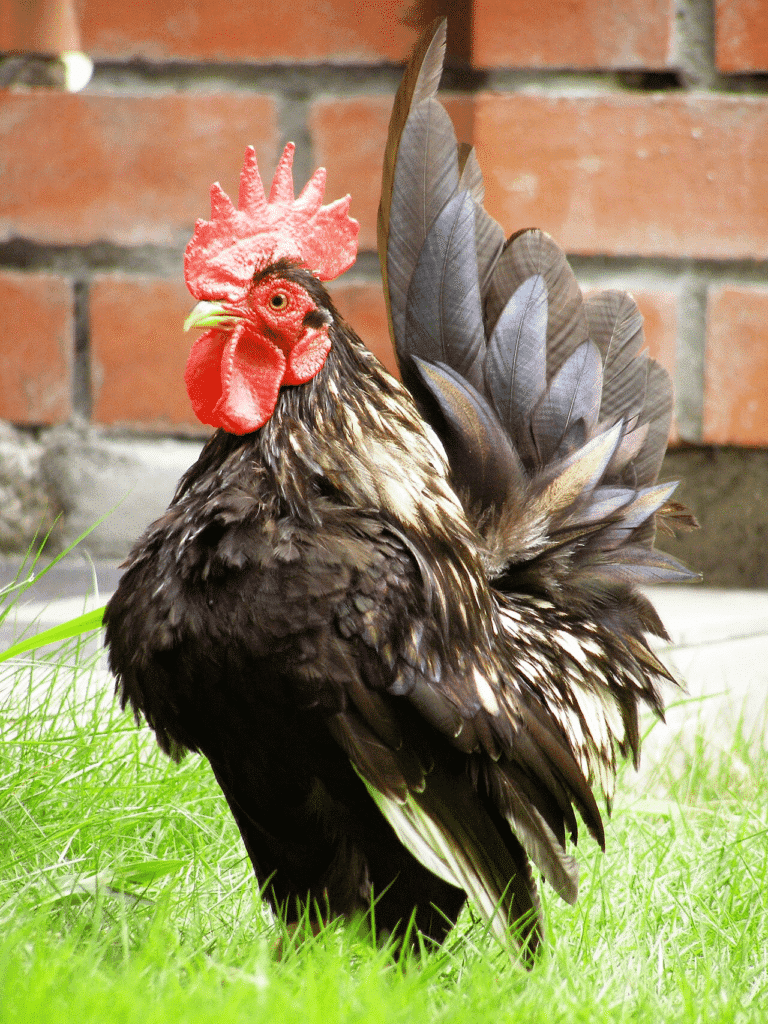
For a small back garden in a residential area, smaller, quieter breeds are often best: Seramas, Silkies, Dutch bantams and Bearded bantams take up little space and make less noise. Whilst they lay smaller eggs, they’re easier to keep and quickly find their way with children too.
I would always choose a calmer breed when in doubt. Chickens with an excitable character are nice in a large meadow, but in an average back garden they can quickly become too much — for you and for the neighbours.
What does it yield?
Eggs, compost and pest control
The most obvious advantage is the eggs. But poultry in the garden does more than that:
- Manure: Chicken manure is a nitrogen-rich fertiliser that, mixed with litter, produces excellent compost for your vegetable garden. Don’t use it fresh — let it mature for a few weeks first.
- Pests: Chickens happily pick away slugs, mosquito larvae and other insects. In a vegetable garden they’re a useful ally.
- Waste processing: Vegetable peelings, old bread and surplus from the kitchen no longer go in the bin but into the chicken — and a day later back as an egg.
An honest picture: the costs
Keeping chickens isn’t free. A decent coop quickly costs 150 to 400 euros, depending on size and quality. Chickens themselves cost 10 to 30 euros each. Then there’s the daily chicken feed: reckon on about 120 to 150 grams per chicken per day. Add to that a possible veterinary visit if something’s wrong, and you understand that home-produced eggs are rarely really cheaper than shop versions — unless you calculate over several years and a well-running system.
That said: money isn’t the only measure. Anyone who keeps chickens always has eggs at home, knows exactly what the animals have eaten and adds a meaningful element to a more self-sufficient way of life.
Health and daily maintenance
Cleaning and hygiene
Refresh the litter at least weekly. Use absorbent floor covering such as hemp fibre, flax or sand. Stable powder or lava meal helps to bind odours and discourages mites. Don’t place the coop right against the neighbours’ fence — that prevents odour nuisance and potential discussions.
Diseases and vaccination
Common diseases against which you can have your chickens vaccinated are bird flu, Newcastle disease and Marek’s disease. Have young chickens vaccinated between two and three weeks old. Keep the run clean and close it off properly to minimise contact with wild birds — that’s the most important infection route for bird flu. There’s no treatment for Newcastle disease, but vaccination helps prevent infection.
Ready to begin?
Keeping chickens is feasible for almost anyone with a bit of outdoor space, even in a residential area. It requires daily attention, a well thought-out coop and some feeling for the animals. But it also yields something in return: fresh eggs, a living part of your food cycle and a bit of independence from the shop shelves. Anyone wanting to start is best beginning with three hens, a solid coop and a chat with the neighbours — in that order. And whatever you do: check your local authority’s rules before you build or purchase anything.