Being self-sufficient sounds like you need to be able to do everything alone, but that’s a mistaken idea. Those who truly want to be prepared build a network they can rely on. This week isn’t about things, but about people. And that’s precisely the weakest point for many people.
Why this is important
In every crisis you see the same pattern: people fall back on others. For help, information, resources or simply safety. No one can do everything themselves and no preparation covers everything. That’s why it’s also important to be able to communicate with your network.
🔗 discover everything about communication here
Those who know no one stand alone. Those who have a network have
It’s not about quantity, but about reliability.
In every emergency situation you see the same thing happen: people seek each other out. For help, information, resources or simply safety. That’s not weakness, but reality. Those who have no network must solve everything themselves. That means more stress, more mistakes and less margin. Those who do have a network can divide tasks, share knowledge and respond more quickly. So it’s not only about what you have, but also about who you know.
The illusion of complete independence
The idea that you can function completely independently is attractive. But it’s not correct. You can learn to cook, purify water and preserve food. But you can’t simultaneously be an expert in electricity, medical care, mechanics and food production — and maintain that in the long term. Self-sufficiency doesn’t mean you do everything yourself. It means you understand where your strengths lie, and where you need others.
What is a useful network?
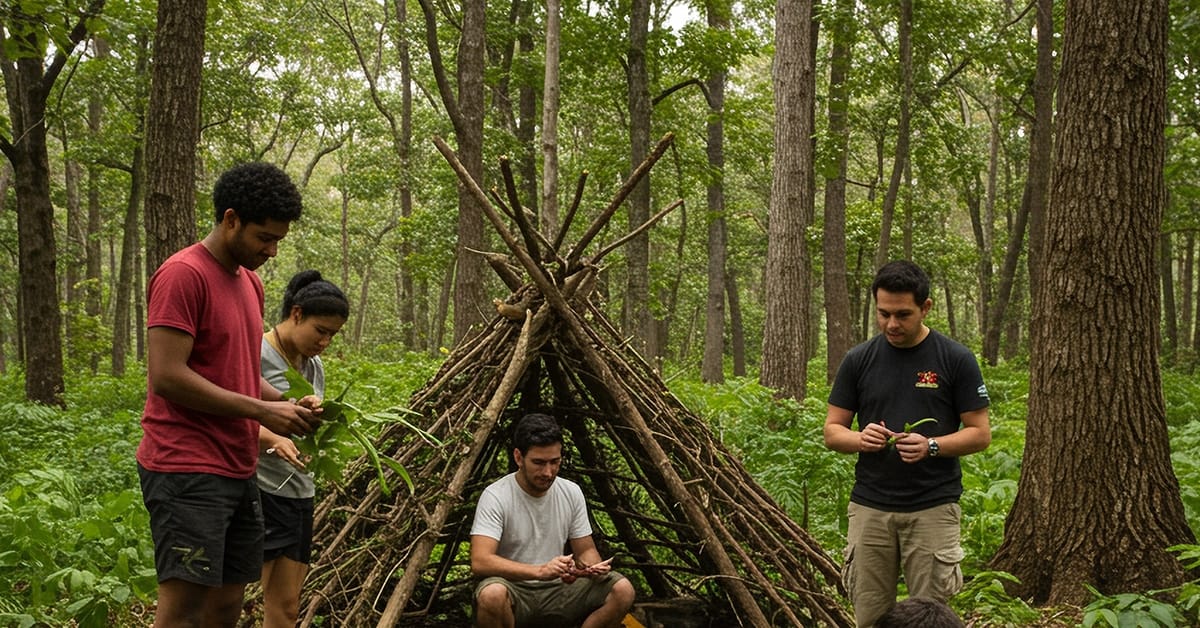
A network isn’t a list of contacts on your phone. It’s a small group of people you know and of whom you know what you can expect from them. These can be neighbours, friends or family. More important than the relationship itself is reliability. Can you count on someone when necessary? And do they know that about you too?
Additionally, complementarity plays a role. Someone with technical knowledge, someone who is practically strong, someone with basic medical knowledge — those kinds of combinations make a group stronger.
What will you do concretely this week?
You don’t need to develop a big plan. Start small and realistic. Make contact with someone in your immediate surroundings with whom you still have little interaction. That can be a neighbour, but equally someone you see sporadically. The goal is simple: getting to know each other better.
Keep the conversation normal and accessible. This isn’t about ‘prepping’, but about building trust. That begins with recognition and an initial connection. If you already have a basic network, this is the moment to strengthen it slightly. An extra conversation, a small collaboration or simply making contact again can suffice.
What should you watch out for?
Not everyone is automatically suitable to build upon. Pay attention to how people react, how reliable they are in small things and whether they take responsibility. At the same time, you must also have something to offer yourself. A network works in two directions. If you contribute nothing, it will yield nothing either.
Common mistakes
One of the biggest mistakes is thinking you need to be able to do everything alone. That leads to overload and poor decisions. The opposite also exists: trusting people you barely know too quickly. That can equally cause problems. Furthermore, many people remain stuck in theory. They find the idea of a network important, but never take the step to effectively make contact.
Finally
You don’t build a strong network the moment you need it. Then you’re too late. It develops beforehand, step by step, through simple interactions. Those who begin with this today already stand stronger tomorrow. Not because everything is solved, but because you don’t stand alone. The coming weeks we build further on this principle. Because a network is only truly valuable when you know how to use it.