
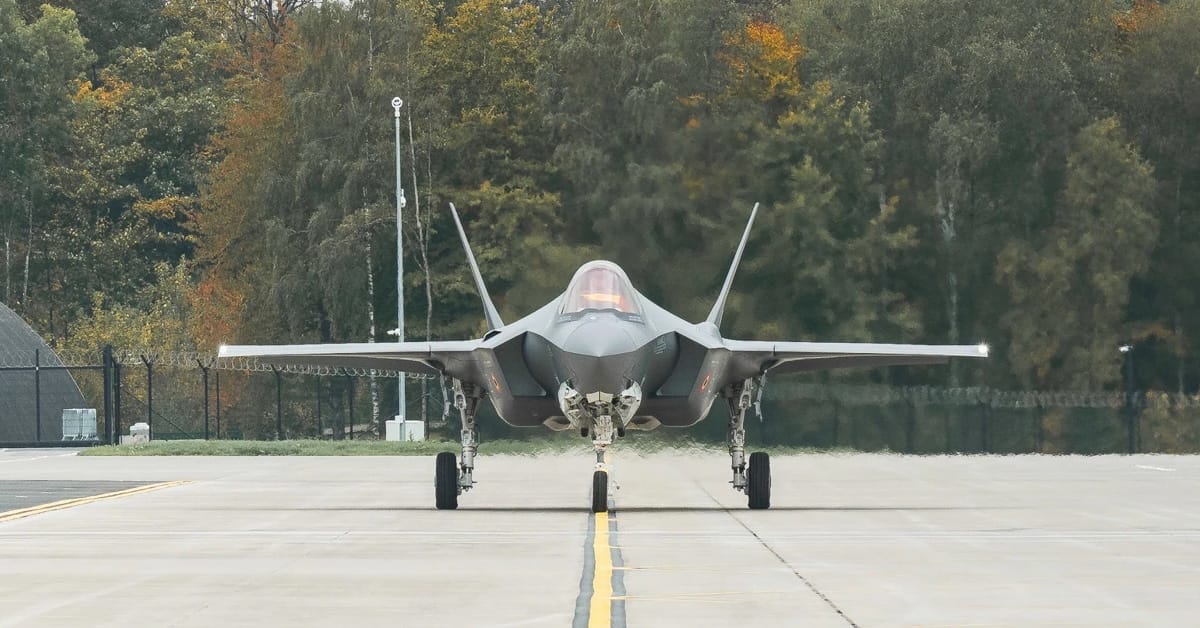
On Monday 13 October 2025, the first three F-35A Lightning II fighter jets landed at the Belgian Air Force base in Florennes. After a journey in two stages from the United States, these aircraft mark the beginning of a new phase for the Belgian Air Force. Within a few years, the country will have 45 of these advanced aircraft, replacing the ageing F-16s.
Why new fighter jets are necessary
The F-16s have served as the backbone of the Belgian Air Force for more than four decades. Although these aircraft have proven reliable, they are reaching the end of their structural service life. The current threats and technological developments in Europe and beyond require more, more modern and better capability. With the arrival of the first three F-35 fighter jets “we are making history”, responded the Chief of Defence, General Aviator Vansina, during their presentation.
In October 2018, Belgium decided to purchase 34 F-35s, with a further 11 additional aircraft later. This choice revolves around three pillars:
- Ensuring national security
- Strengthening European defence cooperation
- Guaranteeing seamless cooperation within NATO
An investment in capability and interoperability
The purchase not only ensures that the old F-16s are replaced. Today, six European allies already use the F-35s. “They confirm the excellence and reliability”, says Minister of Defence Theo Francken. More and more European countries are now ordering F-35 aircraft. “Once all orders have been delivered, no fewer than thirteen European countries will operate this fighter jet, which significantly strengthens interoperability and cooperation in terms of maintenance.” This uniformity within the alliance creates strategic advantages, which are impossible with different aircraft types – just as with many other military applications.
🎬 The Belgian military shared a livestream of the arrival of the F-35s
Technological advantage of the F-35
The F-35A Lightning II represents what military experts call a fifth-generation aircraft. This means more than speed or manoeuvrability – the entire concept behind this aircraft differs fundamentally from previous generations.
Stealth technology in practice
Due to its design and material use, the F-35 is difficult to detect by radar systems. This provides a tactical advantage in conflict situations: the aircraft can identify and neutralise threats before the adversary responds.
Information as new ammunition
What strikes me about this combat system is the emphasis on data processing. Advanced sensors gather information from the environment and present the pilot with a complete overview of the situation. This data is immediately shared with allies on the ground, at sea or in the air.
Concrete capabilities include:
- Intercepting unmanned aerial vehicles (drones)
- Carrying out precision strikes
- Real-time information sharing within coalition partnerships
- Operating in complex, connected combat environments
Lessons from Ukraine
Colonel Aviator Roeland Van Thienen, director of the F-35 programme, links the purchase directly to the reality of modern conflicts. “The war in Ukraine shows what happens without air superiority: sustained attacks, high costs and countless casualties”, he explains on the military website. “A next-generation aircraft, such as the F-35, is designed to achieve that air superiority and thus prevent trench warfare.”
Van Thienen emphasises that control of airspace is essential for all other military operations. In peacetime, the aircraft constantly guard our airspace. In addition, they play a crucial role in neutralising targets deep in enemy territory and in supporting land and sea forces.
🔗 Read also: Our military to Ukraine: how realistic is this
Cost efficiency according to the military
Van Thienen also refutes the argument about the high price tag. “More than 1,245 F-35 aircraft have already been delivered today. That is more than all current European fighter aircraft combined”, he states. The scale ensures that the unit price falls and maintenance, parts and upgrades are cheaper than European alternatives such as the French Rafale or the Eurofighter.
Florennes as operational base
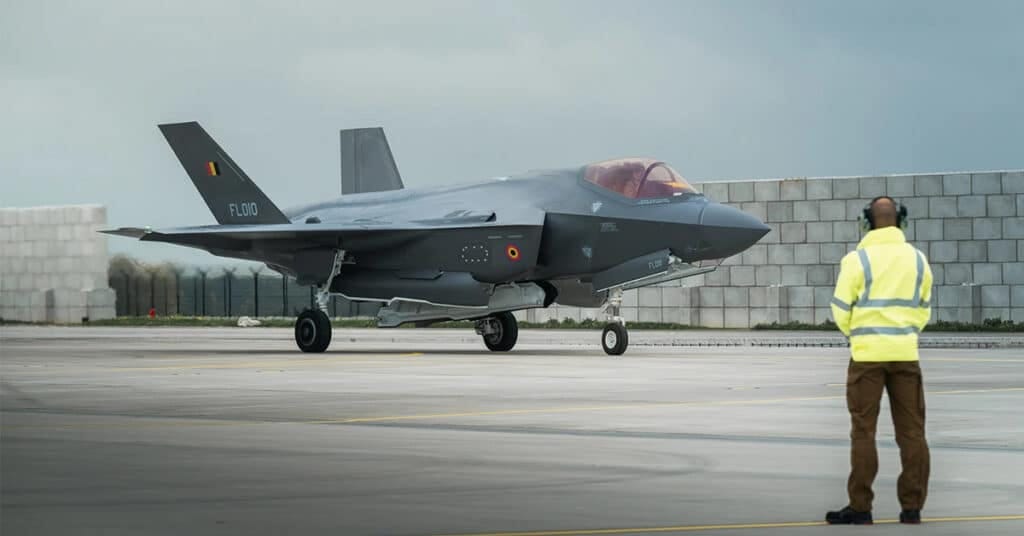
The Florennes Air Force base underwent a thorough renovation to receive the new aircraft. New buildings were erected, the infrastructure was modernised and personnel received specialised training. Initially, the intention was to display four F-35s during the presentation, but one of them broke down due to technical problems during the stopover in the Azores.
Training according to international standards
Belgian pilots and technicians train largely in the United States. This approach ensures that they become directly familiar with the procedures that other NATO partners also use. Commander ‘Cortex’ of 1st Squadron emphasises that this strengthens operational efficiency within coalitions.
By 2030, 67 pilots must be trained. Of the 45 aircraft, 8 remain permanently at Luke Air Force Base in the US for training. The Kleine-Brogel base follows in 2027 and will house the remaining ordered F-35s. That at least according to the current plan, which does not yet mention the purchase of any additional fighter jets.
Quick Reaction Alert missions
Four F-35s are given a special role: they are permanently ready for Quick Reaction Alert (QRA). These aircraft must be able to take off within minutes to intercept unidentified aircraft in NATO airspace. This permanent vigilance forms an essential part of collective defence.
The NATO context and nuclear tasks
Belgium’s choice fits into a broader European movement. Six European allies already use the aircraft, and upon full delivery, thirteen European countries will operate with it. Minister Francken emphasises: “They confirm its excellence and reliability. This significantly strengthens interoperability and cooperation in terms of maintenance.”
The nuclear umbrella
A crucial but often forgotten aspect: the F-35 can carry American nuclear weapons stationed in Kleine-Brogel. With this, Belgium helps maintain NATO’s nuclear umbrella. VRT defence specialist Jens Franssen explains: “Thus the F-35s, like their predecessors, once again contribute to nuclear deterrence. And that is the foundation of NATO’s deterrent force.”
This is one of the military capabilities for which NATO member states really look to Belgium. It is not only about protecting our own territory, but about actively contributing to the alliance’s collective deterrence strategy.
Collective security in uncertain times
The international situation is characterised by increasing tensions. Russian aggression in Ukraine and global instability underline the importance of credible defence. Chief of Defence General Vansina speaks of a “connected, agile and future-oriented Defence”. These words sum up what it is about: modern threats require cooperation between allies with compatible systems.
A new phase
The landing of three F-35s at Florennes marks a turning point. After decades with the F-16, Belgium is entering a period in which technology and cooperation are central. Many more aircraft will follow in the coming years, with which full operational capability will be achieved. Chief of Defence Vansina concluded his speech with a message to the new generation of military personnel: “The F-35 is an exceptional weapon system, but only in your hands does it become a true instrument of security and stability for Europe.”