
Why a trekking GPS is indispensable
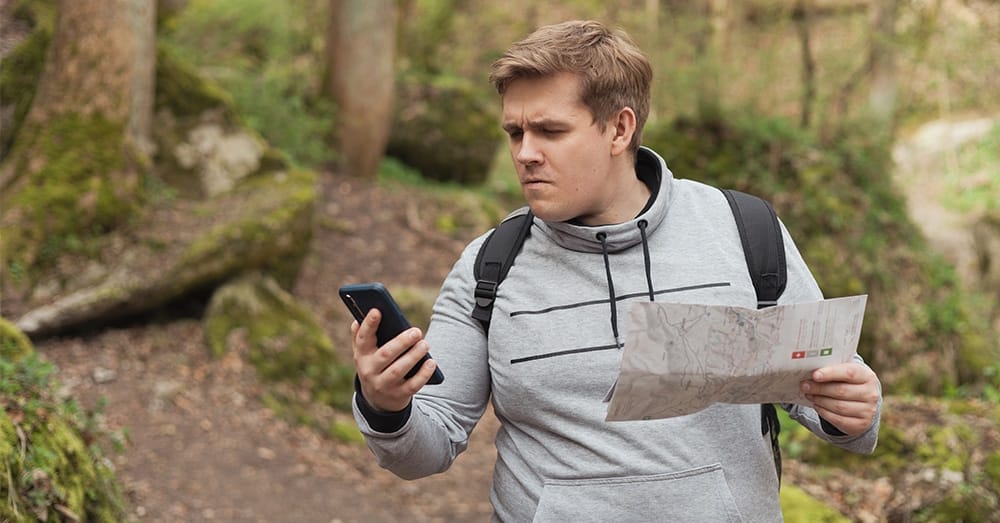
A reliable GPS is essential nowadays for anyone who regularly ventures into nature. Smartphones do have GPS functionality, but their battery rarely lasts longer than a day with intensive use. Moreover, they are vulnerable to moisture, dust and extreme temperatures. In addition, they have poorer satellite reception and you have better route guidance on a trekking GPS.
A dedicated trekking GPS, on the other hand, is built for outdoor use. These devices offer longer battery life, robust casing and often better satellite reception in dense forests or mountainous terrain. For multi-day trips or expeditions in remote areas, a GPS device is therefore indispensable. We selected five trekking GPS devices.
Garmin eTrex 32x – The best entry-level device
The Garmin eTrex 32x offers incredible value without compromising on reception and processing speed and is therefore an excellent choice for beginners. With its compact size of just 141 grams, it fits easily into any rucksack or trouser pocket.
Technical specifications
- Screen: 2.2 inch colour display with 65,000 colours
- Battery life: Up to 25 hours with 2 AA batteries
- Memory: 8 GB internal plus microSD slot
- Water resistance: IPX7
- Maps: Preloaded TopoActive Europe
Advantages and limitations
The greatest advantage is the support for GPS and GLONASS satellite systems, which means you can find your way better in difficult environments than with GPS alone. The barometric altimeter and 3-axis compass make it a complete navigation instrument.
The disadvantage is the smaller screen. Modern connectivity options such as Bluetooth and WiFi are also missing. However, for pure walking navigation, this is not a problem.
Available via Amazon: more information via THIS LINK
Garmin GPSMAP 67i – The all-rounder
For serious outdoor enthusiasts who want the best of the best, the GPSMAP 67i is a real powerhouse with a weight of 241 grams. This top model combines advanced GPS functionality with satellite communication.
Unique satellite communication
The major distinguishing feature is the built-in inReach technology. Via inReach technology, you can send and receive messages, interactive SOS alerts and location sharing worldwide. This makes the device invaluable for expeditions in remote areas.
Performance and battery life
The main differences from the GPSMAP 66i are the longer battery life, now up to 165 hours in tracking mode as opposed to 35 hours. The multi-band GNSS receiver provides even higher accuracy in challenging conditions.
Complete equipment
- Memory: Space for 250 routes and 10,000 waypoints
- Maps: 16 GB internal memory for extensive map storage
- Extras: Built-in LED torch and military standard (MIL-STD-810)
Available via Garmin: more information via THIS LINK
Garmin Montana 700 – The large screen
The Montana 700 is a real all-rounder with its large 5-inch screen and long battery life. This device can be used on a motorbike, in the car, on a boat and of course also handheld whilst walking.
Large touchscreen advantage
The 5-inch touchscreen is 50% larger than on previous Montana models and makes viewing maps much more pleasant. The glove-friendly screen also works in cold weather.
Versatility
- Weight: 397 grammes (heavier but with lithium-ion battery)
- Battery life: More than 18 hours in GPS mode
- Expedition mode: Up to 330 hours at minimal consumption
- Maps: Preloaded TopoActive Europe
The Montana is particularly suitable if you’re looking for a device that can be used for multiple purposes. For pure walking, the size and weight can be disadvantageous.
Available via Amazon: more information via THIS LINK
Garmin Oregon 750t – The photographer
Although the Oregon series is no longer in production, stock is still available and it remains an interesting option for those who like to take photographs whilst trekking.
Built-in camera
The 8-megapixel autofocus camera with GPS/GLONASS satellite reception is the unique feature of this model. Each photograph is automatically provided with GPS coordinates.
Wireless connectivity
- WiFi, Bluetooth and ANT+ for easy synchronisation
- Smartphone notifications via Bluetooth
- Live geocaching with automatic cache updates
- 3-inch touchscreen with dual orientation
I do notice that the battery problems some users experience reduce its appeal. For most users, the newer models are a better investment.
Available via Garmin. More information via THIS LINK
Garmin InReach Mini 2 – The satellite communicator
Strictly speaking, the InReach Mini 2, with a weight of just 100 grams, is more of a communication device than a full GPS, but it does deserve a place on this list because of its compact size and emergency functions.
Emergency communication
In case of emergency, you can send an interactive SOS message to the Garmin International Emergency Response Coordination Centre. This 24/7 staffed centre can coordinate emergency assistance worldwide.
Basic navigation functions
- TracBack function to navigate back to starting point
- Digital compass for course information
- Battery life: Up to 14 days in tracking mode
- Water resistance: IPX7
Subscription required
An important point is that you need an active satellite subscription for all communication functions. This makes the device particularly interesting for regular users or specific expeditions.
Available via Amazon. More information via THIS LINK
Which GPS suits you?
The choice depends on your specific needs:
For beginners: The eTrex 32x offers excellent basic GPS functionality at a competitive price.
For expeditions: The GPSMAP 67i with satellite communication is unbeatable for safety in remote areas.
For versatile use: The Montana 700 works excellently if you want one device for different activities.
For emergencies: The InReach Mini 2 as a supplement to your smartphone for pure safety.
All mentioned devices support modern satellite networks and offer reliable navigation. Thanks to multi-band technology, these devices maintain satellite connection even in less ideal locations, such as under dense forests or in narrow gorges.
Conclusion
A good hiking GPS is an investment in your safety and comfort during outdoor activities. The Garmin eTrex 32x offers the best value for money for occasional users, whilst the GPSMAP 67i is the ultimate instrument for serious adventurers. Don’t forget to also purchase a protective case and spare batteries – a GPS that fails at the wrong moment can be life-threatening.