
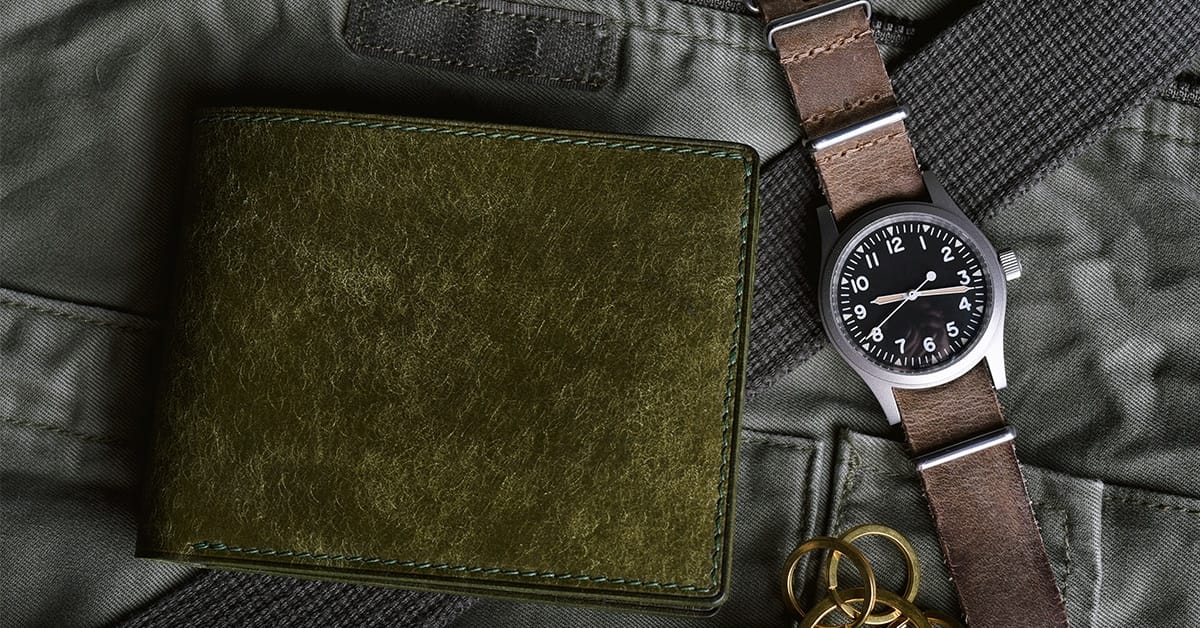
Knowing the time is enormously important. It is in daily life for your work, your bus, train or social appointments and so on. Today, most people rely on their mobile phone for this purpose. But what if things around you become less ‘everyday’? Think of a power cut, flood or worse. Or if you simply want to go camping away from civilisation? Then you obviously need… a wristwatch. And more specifically: a field watch.
A ‘field watch’ then, or a field watch. The origin of this type of watch dates back to WWI and WWII. In fact: wristwatches only became popular after WWI, because many soldiers started wearing them in the trenches. Much more convenient, they found at the front, to turn your wrist for a moment when bullets are flying over your head instead of having to pause using your hand to fish a fragile pocket watch out of your coat. After the wars, the use of the wristwatch remained in fashion.
What should a ‘field watch’ do then? Well, it must first and foremost be easy to read, of course. You must be able to see the time directly at a glance. So no Roman numerals or elaborate engravings, just practical utilitarianism. Secondly, it must be robust: it must be able to take a knock and not easily break or go wrong. Thirdly, it must have some water resistance. If you need to wade through a stream or river, you don’t want to do that with your grandfather’s dress watch. So those are all things that a modern mobile phone cannot do, even if you can watch Netflix on it and play Pokémon Go with it.
🧠 No ‘smart’ watches
The popular ‘smart’ watch or smartwatch actually falls outside consideration as well. Even if it is very sturdy, it needs to be charged very often. What do you prefer? A smartwatch that you need to charge regularly, or a ‘dumb’ watch that goes for a very long time without charging?
What are the options then? Well, you can broadly go in three directions, and each direction has advantages and disadvantages. For each direction we provide two concrete examples, but there are dozens of wristwatches per category.
The mechanical-analogue field watch
Option one is the most classic. A robust mechanical/automatic watch. That means the movement drives the hands, not by means of a battery or a set of transistors, but based on springs that are tensioned in cooperation with gears. Depending on whether it is an automatic or a ‘hand winder’, the watch gets energy respectively through your wrist movements or because you ‘wind it up’ via the crown. That of course means you are completely independent of electricity or batteries. However, it is less accurate. Expect 5-30 seconds deviation per day.
Important in this category, by the way, is the water resistance. A mechanical movement is more vulnerable than an electronic one – so preferably you choose a watch with a ‘screw-down crown’. That means that before and after setting the time, you respectively screw the crown off and onto a thread. This helps to keep water and dust out of your watch.
The absolute classic
The absolute classic amongst field watches: with the Hamilton Khaki Field Expedition Auto you get Swiss-American quality on your wrist. The sapphire crystal will ensure that your lens never scratches and the steel case can easily take a knock – or in emergencies: dish one out. The watch has a diameter of 41mm, which is substantial, but also not so large that it becomes ostentatious. Important: it has 100 metres water resistance through a screw-down crown, something which the even more classic (and smaller) Khaki Field Mechanical does not have.
🔗 Discover everything about the Hamilton Khaki Field Expedition Auto here
Modern, but equally robust
Do you want something more modern but equally robust? Then you can opt for the Boldr Venture. Boldr is a ‘microbrand’ from Singapore, but no less reliable for that. And instead of a Swiss automatic movement you get a Japanese and reliable NH35 specimen inside. On top of that: 200 metres water resistance, scratch-resistant sapphire crystal and an equally steel case – with a more compact diameter of 38mm. That can be significant if you prefer to wear something more subtle on your wrist. Available in numerous colours.
🔗 The watch is back in production and you can reserve it here
The quartz-analogue field watch
The second category is closely related to the first, but uses a more modern movement powered by a battery, or even more impressive: a solar cell. The dial is therefore equally analogue, but under the bonnet there is a more modern drive. That means it keeps time more accurately, but equally that here you are dependent on batteries. Conversely, a quartz watch is generally less fragile. Two examples below.
The quality bargain
The Expedition North Titanium from the American Timex is not a steel, but titanium field watch. That means equally impact resistant, but you feel virtually no weight on your wrist. Also included: sapphire glass and 100 metres water resistance through a screw-down crown. It also comes in three colours and wears compactly with 38 mm diameter. Small disadvantage though: every 3-4 years you will need to change the battery. Costs little money or effort, but it must be done.
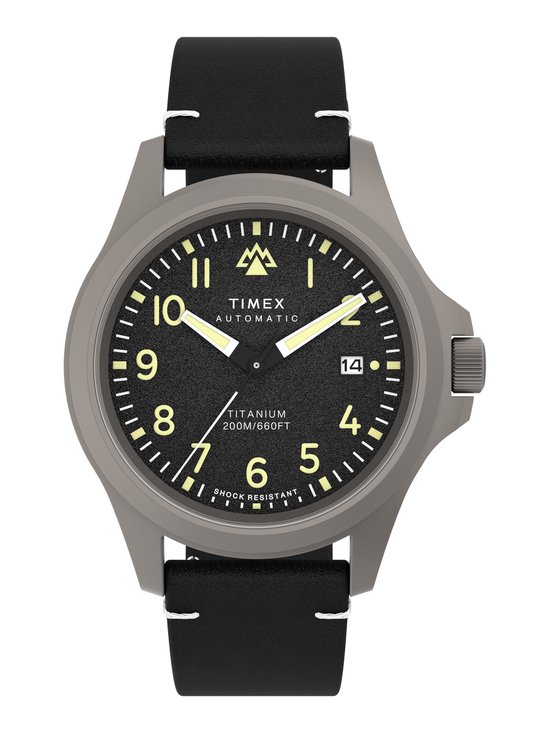
Timex Expedition North Automatic – Ø 41 mm
Trendy but resilient
- The trendy yet durable alternative: the Urbanist Solar from RZE. Like Boldr, RZE is a ‘microbrand’ from Singapore. In fact, some skilled people from Boldr helped found RZE. The Urbanist Solar is in turn one of their most compact field watches in their repertoire with a 36mm diameter. The ‘prairie tan’ edition gives the most conservative colours, with tones of black and khaki. But those who want to stand out can go for pastel blue or even pink. Bonus: the watch has a solar cell. That means never replacing a battery. Disadvantage: no screw-down crown. But with sapphire crystal and 100 m water resistance. And this Urbanist also has a titanium case.
🔗 More information about the Urbanist Solar can be found here
The classic-digital field watch
Today, many people walk around with a smartwatch. Very handy: it is connected to your mobile phone and can show you notifications and it measures your heart rate, your sleep rhythm and so on. But before the era of Apple Watches and Garmins there was the era of LED and LCD watches, which made the 1980s so iconic. And those watches are still being made and those watches don’t need to be plugged into a charger every 5 days. Yet they have many more functions than a classic-analogue watch. Think of a stopwatch, an alarm, multiple time zones or a ‘lap’ timer. And they were and are also made as field watches.
The King of field watches
The absolute king of digital field watches: the G-Shock from Japanese Casio is a line with name recognition that is almost greater than Casio itself. Legend has it that Casio engineer Kikuo Ibe was heartbroken when he dropped his father’s watch on the way to school. In the early 1980s, he set out to create a watch that a lorry could drive over. Not figuratively, actually! He succeeded with the G-shock.
There are dozens of G-shocks to choose from. They are all brilliant and as a rule water-resistant to 200 metres. If you must choose? The DW-5600RL-1ER. All the functions are there as written above and a solar cell and it is radio-controlled. Your watch thus follows a nearby atomic clock every day. If you are stranded on a desert island, there is a good chance that this watch will outlast you!
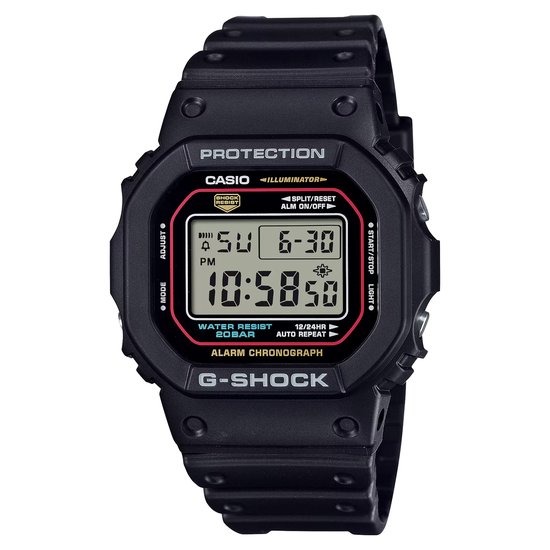
Casio G-Shock DW-5600RL-1ER
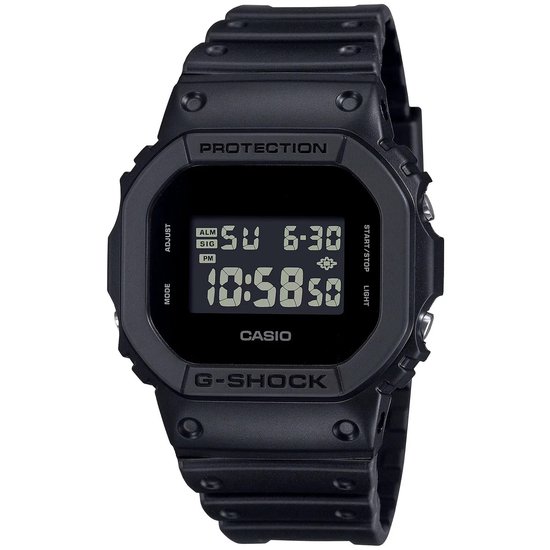
G-Shock DW-5600UBB-1ER
– Behuizing gemaakt van kunststof
– Horlogeband gemaakt van resin, met gesp
– Digitaal uurwerk
– 20 ATM waterdicht, geschikt om mee te duiken.
Wordt geleverd in originele G-Shock horlogedoos en 2 jaar offiële garantie.
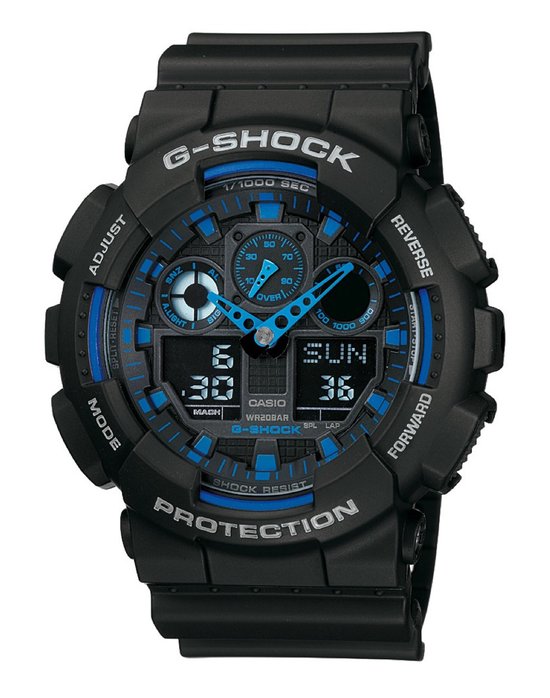
Casio G-Shock GA-100-1A2ER
Dit horloge van Casio heeft een zwarte band gemaakt van kunststof. Het G-Shock horloge heeft een sportief design met een analoge en digitale tijdsaanduiding met meerdere functies. Zo is het mogelijk om meerdere alarmen in te stellen en zie je de wereldtijden in het display. Het merk Casio staat voor functionaliteit, technologische ontwikkelingen en natuurlijk kwaliteit. Het horloge heeft een diameter van 50 mm en is voorzien van mineraalglas.
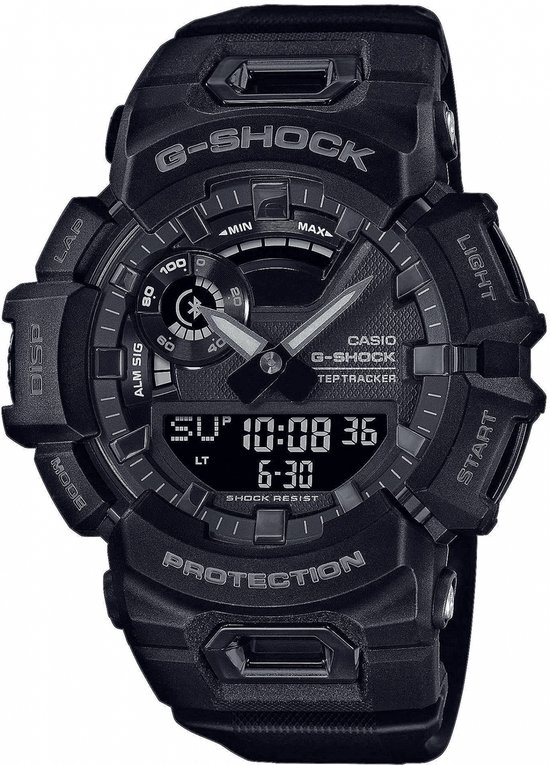
Casio G-Shock G-Squad GBA-900-1AER
– Behuizing gemaakt van kunststof
– Horlogeband gemaakt van resin, met gesp
– Heeft een 24 uurs (dag/nacht) weergave
– Automatische kalender weergave
– Voorzien van mineraalglas, krasbestendig
– 20 ATM waterdicht, geschikt om mee te duiken.
– Breedte van de behuizing is 49 mm
– Dikte van de behuizing is 16.6 mm
Wordt geleverd in originele G-Shock horlogedoos en offiële garantie.
The great rival
There is no king without a rival. Coca-cola has Pepsi. G-Shock has the Ironman from Timex. Loved by both soldiers and athletes, the Ironman does more or less the same as the G-Shock, but often at slightly more attractive prices. However, the Ironman is usually somewhat less equipped with gadgets. A solar version once existed, but has been discontinued. Nor is there a radio-controlled Ironman. But the watch remains no-nonsense, robust and reliable.
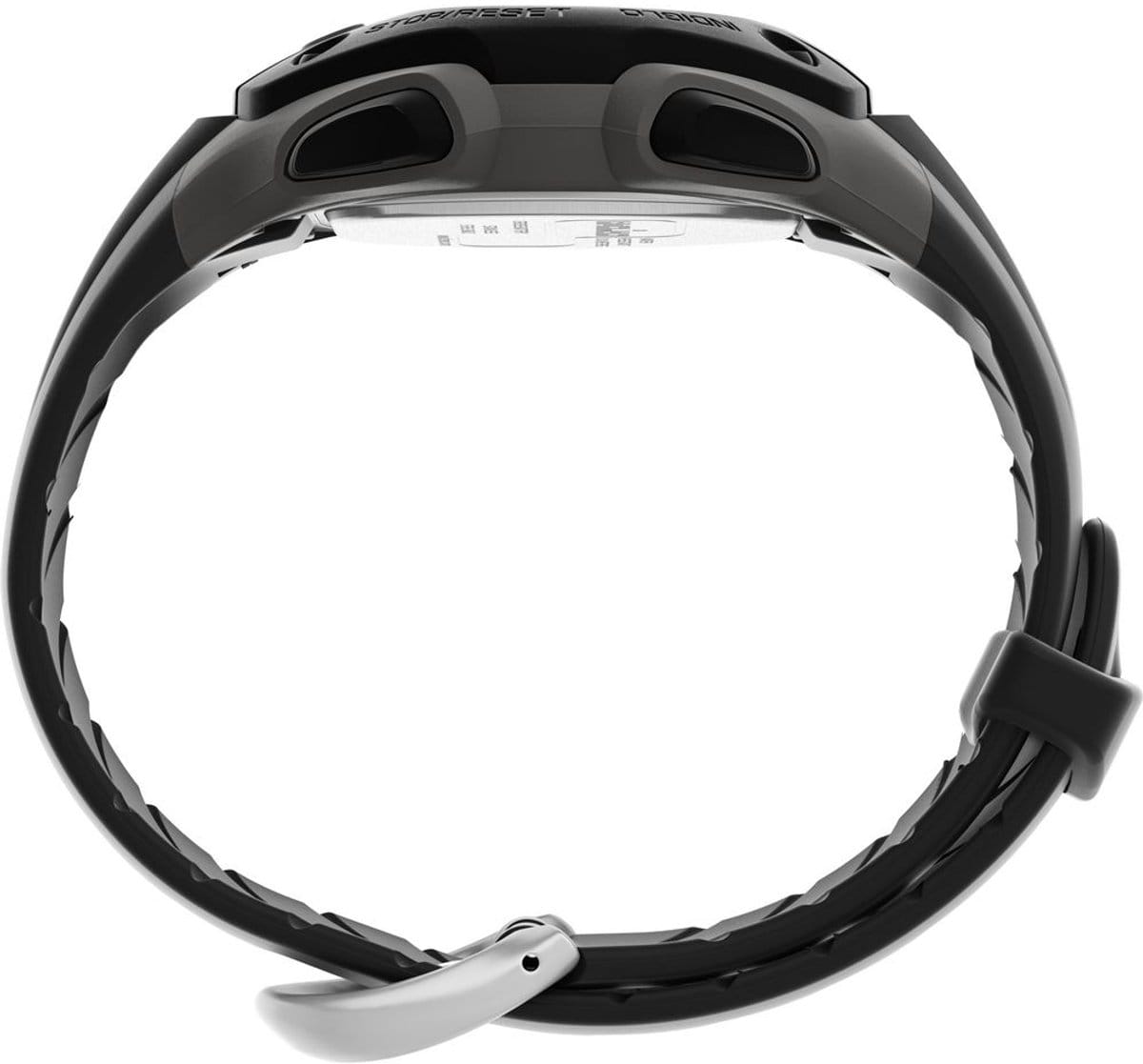
Ironman Classic 30 (T5E901)
Robuust digitaal horloge met stopwatch, alarm en Indiglo-verlichting, waterdicht tot 100 meter.
Whatever you prefer, all the examples above can (withstand) things that a mobile phone but also a smartwatch cannot. But feel free to continue searching if the six examples above do little for you. There are literally hundreds of field watches, but ultimately you only need one for when the proverbial hits the fan (or: ‘when sh*t hits the fan’ as they so nicely say in English). And it can be just as useful on your next camping trip when all is quiet on the home front.