
Why recognising gold is crucial for your financial security
Fake gold bars, counterfeit coins and lead-filled replicas are appearing ever more frequently in the market. In times of economic uncertainty, when more and more people are turning to precious metals, the opportunities for fraudsters are also growing. If you want to buy gold or other precious metals, make sure you can verify that it is real gold.
Basic knowledge about gold that every buyer must have
Purity grades and hallmarks
Gold is supplied in various purity grades, expressed in carats or fineness:
- 24 carat: 99.9% pure gold (999 fineness)
- 22 carat: 91.7% gold (917 fineness)
- 18 carat: 75% gold (750 fineness)
- 14 carat: 58.3% gold (583 fineness)
Legitimate gold products always bear a stamp with the carat content or fineness. Is this marking missing? Then you probably don’t have real gold in your hands.
???? Watch the papers!
Buying gold? Without these documents you’re paying for nothing!
Recognising international hallmarks
Different countries use their own hallmarks:
- Switzerland: PAMP Suisse, Valcambi
- Canada: Royal Canadian Mint
- United States: American Eagle, Buffalo
- Austria: Philharmoniker
- China: Panda (note: many fakes come from China)
Visual inspection: what gives away fake gold?
Assessing colour and lustre
Real gold has a characteristic warm, yellow lustre that doesn’t fade. Fake gold often shows:
- Too bright a yellow or greenish tint
- A metallic lustre that quickly becomes dull
- Discolouration at the edges or on scratches
I recommend always viewing gold in daylight. Artificial light can distort colours and make fakes appear more genuine.
Checking weight and dimensions
Gold is extremely heavy. A genuine 1-ounce gold bar (31.1 grammes) feels considerably heavier than you’d expect. Many fake products are filled with lighter metals such as:
- Lead (lighter than gold)
- Tungsten (almost as heavy, but more expensive to imitate)
- Copper (much lighter and different colour)
A cubic centimetre of gold weighs 19.3 grammes. For comparison: lead weighs 11.3 grammes per cubic centimetre, almost half as much.
Simple home tests for gold recognition
The magnet test
This is the quickest and simplest test you can perform at home:
- Hold a strong magnet against the gold
- Real gold is not magnetic and won’t be attracted
- Is it attracted? Then it contains ferromagnetic materials
CAUTION: This test doesn’t completely rule out fakes. Some imitations also use non-magnetic metals.
The water displacement test
This method checks the density of the material:
- Measure the exact weight of your gold piece
- Fill a measuring jug with water and note the level
- Lower the gold and measure the water displacement
- Calculate the density: weight divided by volume
- Gold has a density of 19.3 g/cm³
The ice test
A surprisingly effective test that uses gold’s thermal conductivity properties:
- Place an ice cube on the gold piece
- Real gold conducts heat very well
- The ice melts quickly on contact with real gold
- With fakes the ice melts more slowly or not at all
Advanced verification methods
The acid test (with caution)
Warning: This test may damage the gold and requires caution.
You need:
- Gold testing acid (available from jewellers’ suppliers)
- Gloves
- Safety goggles
- Well-ventilated space
Procedure:
- Make a small scratch in an inconspicuous place
- Apply a drop of testing acid
- Real gold doesn’t change colour
- Fakes turn green, blue or black
Electronic gold testers
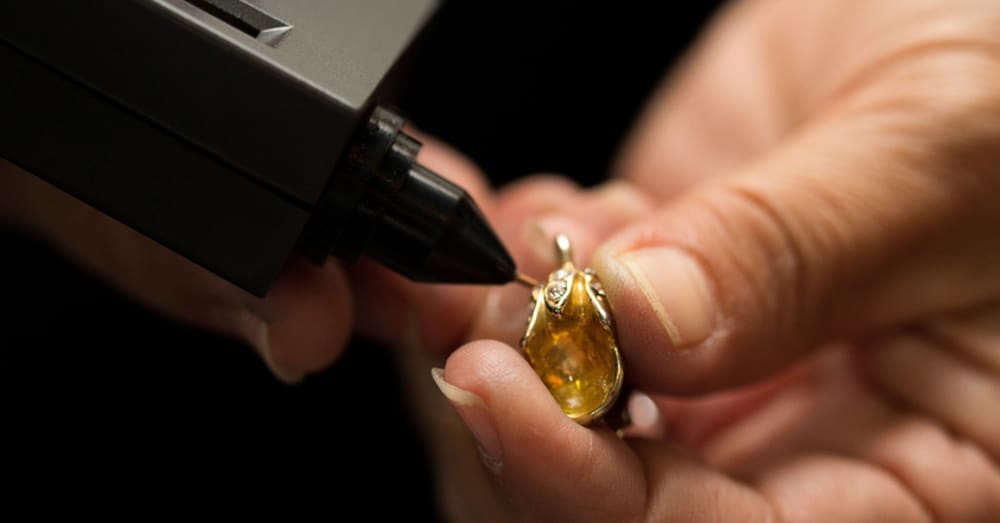
Modern electronic testers measure conductivity and can determine purity within seconds. These devices cost between 100-500 euros, but are very reliable for regular users.
Advantages:
- No damage to the gold
- Quick results
- Suitable for different carat contents
- Professional accuracy
Recognising common fraud tricks
Online marketplaces
Platforms such as Marktplaats and eBay are bursting with fake gold offers. Red flags:
- Prices far below the gold price
- Seller has no clear address
- No certificates or guarantee letters
- Poor photos or stock photos
- Pressure to decide quickly
Street vendors and “emergencies”
Fraudsters approach people with stories about financial distress and offer gold at bargain prices. Many of these “emergency sales” turn out to be completely fake.
False certificates
Professional-looking certificates are easy to forge. Always check:
- Official stamps and watermarks
- Contact details of the issuing authority
- Certificate numbers (phone the issuer)
- Spelling and grammar
Never rely on certificates alone. Always perform your own tests, even with official-looking papers.
Where you can buy gold safely
Authorised gold dealers
Only buy from registered dealers with:
- Official licences
- Physical address and shop
- Good online reviews
- Buyback guarantee
- Transparent pricing
Banks and credit institutions
Some banks still sell physical gold.
Advantages:
- Guaranteed authenticity
- Official documentation
- Secure storage possible
- Professional advice
Disadvantages:
- Higher margins
- Limited supply
- Bureaucracy when buying and selling
Storage and documentation of your gold
Keeping proof of authenticity
Document each purchase thoroughly:
- Purchase receipt with date and price
- Certificates and hallmarks
- Photos of front and back
- Test results and measurements
- Seller details
Safe storage at home
If you keep gold at home:
- Use a safe or vault
- Spread across multiple locations
- Tell no one about your possession
- Consider insurance
- Take regular photos for documentation
What to do if you suspect fraud?
Steps upon discovering fakes
- Stop trading: No further transactions with the seller
- Document everything: Photos, messages, payment receipts
- Contact authorities: Police and AFM/FSMA
- Warn others: Reviews and reports on platforms
- Seek legal advice: For large amounts
Recovering from fraudsters
The chance of full recovery is often slim, but try via:
- Chargeback for credit card payments
- Platform dispute committees
- Legal expenses insurance
- Court proceedings as a last resort
Future developments in gold verification
The technology is constantly evolving. New developments include:
- Blockchain certification: Unforgeable digital identity for each piece of gold
- Smartphone apps: AI-powered recognition via camera
- DNA marking: Microscopic unique markers in the gold
- Spectroscopy: Portable devices for chemical analysis
These innovations are making it increasingly difficult for fraudsters to successfully sell fakes.
Conclusion
Recognising real gold requires knowledge, experience and the right tools. Start with simple tests such as the magnet and ice test, but invest in professional verification methods for regular purchases. Remember that prevention is always better than cure: only buy from reliable dealers and never rely on a single test. Your financial future depends on the authenticity of your gold reserves, so take the time to do it properly.