
Why location sharing is more essential today than ever
Modern smartphones offer us possibilities that generations before us didn’t have. Sharing your location with trusted people can be a crucial safety line – if you do it properly. I notice myself how these kinds of technologies are becoming increasingly commonplace in my social circle. It’s not about paranoia, but about smart precautions that can save your life without restricting your daily freedom.
The dramatic events surrounding Lisa (17) near Amsterdam have woken us all up once again. An ordinary night out that ended in tragedy confronts us with an uncomfortable truth: safety is never guaranteed. Lisa managed to alert the emergency services when she felt threatened, but help came too late.
What methods are available for location sharing
WhatsApp live location: the simplest option
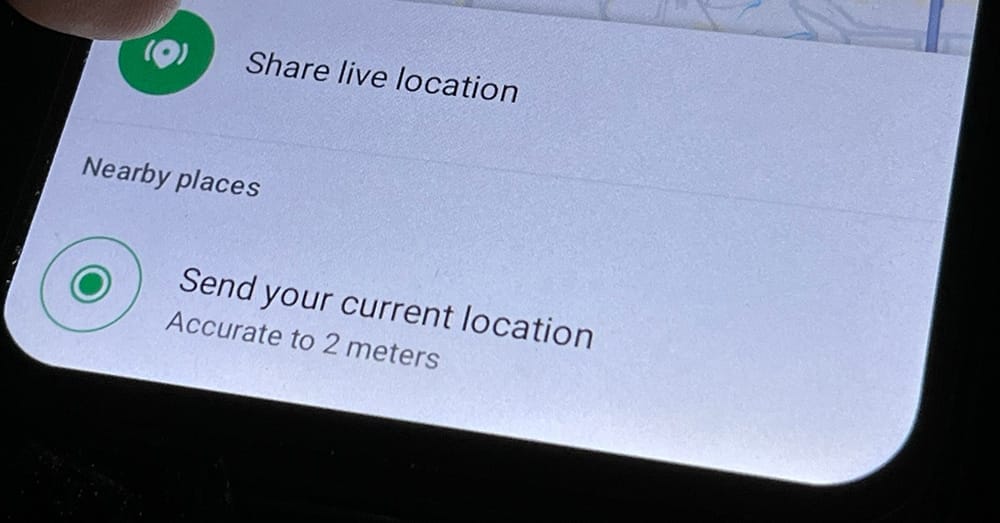
WhatsApp offers a built-in feature to share your live location. Through a chat, you can easily share your location, both as a snapshot and in real-time for a certain period. The major advantage is that virtually everyone already has WhatsApp installed.
You decide for yourself who you share your location with and for how long – from 15 minutes to 8 hours. Afterwards, the sharing stops automatically. WhatsApp does not store this location history. The person with whom you shared your location cannot therefore look up again where you’ve been: once the timer expires, the access disappears.
Google Maps: extensive possibilities
Through Google Maps, you can share your location, even when you have the app closed at that moment. In this way, various things become traceable, including the recent location of the device, the battery level and the arrival and departure time.
This system works worldwide and integrates seamlessly with other Google services. For families who regularly want to be able to check each other’s location, this is often the most complete solution.
Apple’s Find My: for the Apple ecosystem
iPhone users have access to Find My, which is deeply integrated into the Apple ecosystem. This app is built into all Apple devices and works seamlessly with your Apple ID. You can share your location with other Apple users and even find your devices if you’ve lost them.
🏷️ AirTags: discreet tracking for important belongings and people
Apple’s AirTags offer a clever addition to location sharing with people. These small discs can be attached to keys, bags or other valuable items. Through the Find My network of millions of Apple devices, you can find lost items, even if they’re far away.
For personal safety, AirTags are interesting because you can discreetly give them to children (in their school bag) or elderly people. Do note: Apple has deliberately built in anti-stalking features. If someone else’s AirTag is near you for too long, you’ll get a notification. This protects against misuse, but also means that AirTags aren’t suitable for covert tracking.
An AirTag in your car can help with theft, although you must hide it well. Thieves now know that they need to look for these small trackers that last for months on one battery.
Specialised family apps
Apps like Life360 specifically target families. They offer extensive features such as location history, arrival notifications and even driving behaviour monitoring. For families, Life360 is an option, although this does collect more personal data than the simpler options.
Protecting privacy when sharing location
Limit access to the minimum
Go to Settings > Privacy > Location Services > and choose which location access you allow for each app. Not every app needs constant access to your exact location. It’s wise to regularly check which apps have access. For extra safety: regularly check who has access to your location.
Exact location vs. approximate location
Many apps work fine without knowing your precise position. A weather app needs your town name, not your home address. By disabling exact location, you only share your approximate location within a few kilometres.
Temporary vs. permanent access
For one-off appointments, temporary location sharing is often sufficient. For one-off meetings, sharing a fixed point often works better. Drop a pin in Maps at the agreed location and share it via messages.
Practical tips for safe location sharing
Choose your circle carefully
Only share your location with people you completely trust. Family and very good friends are logical choices, but think carefully before giving other people access just like that.
Communicate your plans
Even with location sharing, it’s wise to communicate your plans. “I’m going to the centre, will be home around 22:00”, provides context that a dry location pin lacks.
Have backup options ready
Make sure your phone is always charged and consider a power bank for longer outings. A flat battery makes all safety technologies useless.
- Discover also: The 5 best outdoor power banks
Test the functionality beforehand
Try out the location sharing function in a calm situation, so you know how everything works when you really need it.
Warnings and pitfalls
Battery consumption
Watch your battery consumption. Location sharing uses power, especially with apps that give real-time updates. Plan for this on longer outings.
False sense of security
Location sharing is a tool, not a miracle solution. It never replaces basic precautionary measures such as situational awareness and avoiding risky situations.
- Discover also: Legal self-defence: know your options!
Abuse by ex-partners
Think for example of situations where you don’t want people to follow you. Do you want your boss to know that you’re somewhere other than at the office during working hours? Or what if an ex-partner keeps following you?
Legal aspects: what is and isn’t allowed
Sharing your own location is always permitted. But tracking others without their permission can have legal consequences. With tools like mSpy, quite a lot of information can be collected without the other person knowing. This raises ethical questions: is it okay to track someone’s location without their explicit permission?
For parents, an exception applies regarding their minor children, but here too transparency is important for a healthy trusting relationship.
The future of location sharing
Modern smartphones are becoming increasingly clever at balancing functionality and privacy. Developments such as temporary location sharing, approximate locations instead of exact positions, and better control over who has access when, make these technologies safer.
Sharing locations comes down to finding a balance between convenience and safety. It’s super handy to be able to quickly see where someone is, but this must not come at the expense of someone’s privacy and sense of security. Recent tragedies show that we must embrace modern means to protect ourselves, but always with respect for privacy and personal autonomy.