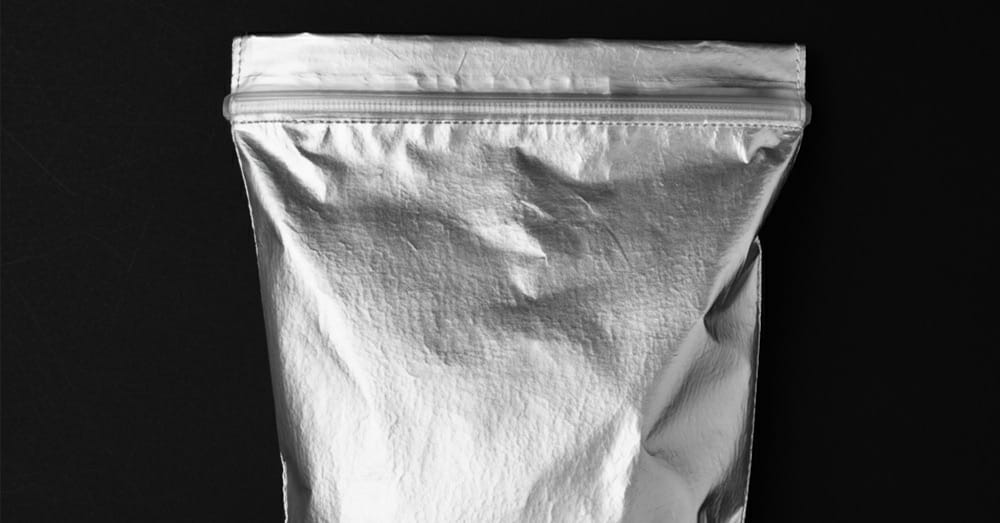
There’s a fairly good chance that you already know Mylar without realising it. The shiny inside of a bag of coffee, crisps or dried soup? That’s the same material. Mylar is a polyester film with an ultra-thin aluminium layer in between, and it’s precisely that combination that makes it so special: gas, moisture and light cannot get through it.
For people building up a food reserve, Mylar is one of the most reliable options on the market. Not because it’s technologically impressive, but because it simply works. Mylar bags can extend the freshness of products up to 25 years if you seal them properly and combine them with oxygen absorbers. The material was originally developed by DuPont in the 1950s and was even used by NASA because of its exceptional barrier properties.
Anyone wanting to build up an emergency supply for themselves or their family really can’t avoid considering Mylar bags. At the same time, they’re not a miracle cure: you must use them correctly to get the maximum benefit from them.
How do Mylar bags work?
The material examined from the inside
Mylar consists of two layers of plastic with a very thin layer of aluminium in between. That metal makes the material impermeable: gas and moisture cannot penetrate the bag. The outer layer is printable and sturdy, the inner layer is food-safe and BPA-free. Together they provide a seal comparable to industrial food packaging.
What distinguishes Mylar from ordinary plastic bags or freezer bags is that aluminium layer. Light — particularly UV light — attacks vitamins and fats. Mylar blocks that completely. Ordinary (transparent) bags don’t do that.
The enemies of long-term food storage
Food spoils due to three factors: moisture, oxygen and light. A Mylar bag tackles two of them directly (moisture and light), but for oxygen you need an additional aid.
Oxygen absorbers are small sachets filled with iron powder. They effectively remove all oxygen from a sealed environment such as a Mylar bag. The iron powder reacts with the oxygen present, preventing aerobic bacteria and fungi from growing. After sealing the bag, you’ll notice that it draws in slightly — that’s normal, the oxygen is simply being consumed.
Note: oxygen absorbers work quickly. As soon as you open the packaging, you only have an hour or two before they’re exhausted. Quick action is therefore essential.
Tip: Oxygen absorbers are not the same as silica gel (the familiar desiccant sachets). Silica gel absorbs moisture but leaves oxygen alone. Both have their uses, but for long-term food storage, an oxygen absorber is the right choice.
What types of Mylar bags are there?
Flat bags without closure
The most basic variant. You fill the bag, add an oxygen absorber and seal it with an iron or heat sealer. The ideal sealing temperature is between 160°C and 170°C for thinner bags of 3.5 mil, and between 190°C and 220°C for thicker bags of 7 mil. Once properly heat-sealed, these bags will last for decades if you store them in the right way.
This type is particularly suitable for large quantities of dry products: wheat, rice, porridge oats, beans, sugar. It’s best to place them afterwards in a sturdy plastic container to protect them against rodents and physical damage.
Ziplock Mylar bags
These bags have a resealable zip at the top. Handy for daily use or for products you access regularly, such as herbs, coffee or dried fruit. They offer excellent protection against moisture and light, but for truly long-term storage (more than six months) it’s still advisable to seal the zip with an iron as well.
Stand-up pouches
These bags have a wide, pleated bottom so they stand upright. Practical if you want to arrange them in a cupboard without everything falling over. They’re available with or without a zip, and also in combination with a transparent window — although the latter then offers less light protection.
Thickness grade: mil as a measure
Mylar bags are classified by thickness, expressed in mil (thousandth of an inch). For home food storage, these rules of thumb apply:
- 3.5 mil – suitable for short to medium-term storage (a few months to a few years), lighter products
- 5 mil – good middle ground for most applications
- 7 mil – for long-term storage, resistant to more physical force and vermin
I would always choose at least 5 mil myself when it comes to emergency storage. The extra cost is modest and you’re simply buying more certainty.
What do you store in Mylar bags?
Suitable products
Dry, lean foods such as oats and grains can be stored for years in a low-oxygen environment. Dried vegetables are likewise preserved for years. Specifically, these include:
- Rice, wheat, barley, porridge oats
- Dried beans, lentils, chickpeas
- Sugar, salt
- Dried fruit (with low fat content)
- Flour, cornmeal
- Herbs and spices
- Coffee and tea
- Milk powder and egg powder
What you’d better not use
Foods with a high fat content, such as meat, nuts and pulses, will no longer be palatable in just 3 to 12 months, regardless of how they’re stored. Fat becomes rancid, and no packaging can completely prevent that.
Also avoid products with a moisture content above 10%. Botulism is a real risk with moist products in a low-oxygen environment. Dry is the golden rule.
‼️ Note
Sugar and salt don’t need an oxygen absorber — they’re already naturally well preserved. An oxygen absorber in a bag of sugar will also cause the sugar to clump together.
How to use Mylar bags step by step?
Preparation
Make sure your food is bone dry before you start. Also check your Mylar bags for tears or poor seams — cheap examples can show defects here. Get everything ready: bags, oxygen absorbers, iron (or heat sealer) and a wooden slat as a base.
Filling and sealing
- Fill the Mylar bag with your dry product and leave sufficient space at the top (at least 5 cm).
- Add an oxygen absorber — 300cc absorbers are large enough for bags up to approximately 25 x 40 cm, whilst 2000cc absorbers are suitable for large bags of 35 x 50 cm or more. Mylar Shop
- Push as much air as possible out of the bag.
- Seal the bag with an iron on high temperature. Move slowly and check that the seam is completely closed.
- Store the filled bags in sturdy plastic containers in a cool, dry and dark place.
A simple way to heat-seal the bag is with an iron: leave a generous margin at the top and make it completely flat before you iron.
Mylar bags alongside other storage methods
Mylar bags are not a replacement for tinned food or preserving jars, but they complement each other well. Tinned food is heavier and more expensive per unit, but easier to handle. Preserving jars are reusable but fragile and let light through unless you store them away.
For large quantities of dry basic food — the kind you want to store for a longer period — Mylar bags are simply more efficient than most alternatives. They’re light, compact, inexpensive and if you use them correctly, they’ll last for decades.
A combination of methods is always sensible. Use tinned vegetables for short to medium term, Mylar bags for your large grain supplies and preserving jars for home-made preserves. This way you also spread the risk if one method fails.