
Learn how to safely spend the night in your car if you’re stuck for hours due to breakdown, poor weather conditions or other incidents.
Prepare for car emergencies
Imagine: you’re driving along a deserted mountain road in the evening when your car suddenly breaks down. Or: you’re stuck on the motorway, surrounded by stationary traffic, because of wildfires – as people recently experienced in France. Then it’s best to be a bit prepared to make a not so comfortable night still bearable.
The most important priorities in your vehicle
Maintain your body temperature
In cold weather
When spending the night in your car, hypothermia or undercooling poses one of the greatest threats. Your body loses heat much faster in a cold vehicle than in a heated space. Because cars are not well insulated, the temperature often quickly approaches the outside temperature. If your car still works, you can start your engine occasionally. Emergency services often give 10 minutes per hour as a guideline. However, watch out for the following things:
- Zorg dat de uitlaat (indien je een brandstofmotor hebt) vrij is van sneeuw of andere obstakels
- With electric cars it’s safer to heat the car – some makes such as Tesla even have a ‘Camp Mode’ – but make sure your battery doesn’t run flat!
- If possible, open a window very slightly for ventilation
- Don’t sleep with the engine running
- In extreme cold, an emergency blanket or ‘space blanket’ can help
Other measures to retain heat:
- Wear multiple layers of clothing
- Use blankets, coats or newspapers as insulation
- Move your fingers and toes regularly
- Avoid alcohol: this gives a feeling of warmth
In heat
In extreme heat, ventilation is crucial: open windows if your air conditioning doesn’t work and park in the shade if possible. In a hot car, wear light clothing, but also avoid direct sun. Wet cloths on your wrist or neck may help.
Ventilation and oxygen supply
A car is not a hermetically sealed car, but in extreme cold people often want to close all openings – or open them completely. That’s not a good idea. Always ensure controlled ventilation by opening your windows strategically. A tip: condensation on your windows = insufficient airflow. A suffocating atmosphere = more fresh air needed.
Visibility for emergency services
Make yourself findable – if you want to. Turn on your hazard lights (but watch out for a flat battery), hang a coloured piece of textile on your mirror or aerial and use your horn to attract attention when you hear other vehicles approaching. During the day, a mirror or reflective surface can also help to attract attention.
???? Do you want to remain discreet?
Sometimes people want to spend the night in their car as discreetly as possible. These tips are useful for that:
- Industrieterreinen of grote gratis parkeerplaatsen waar geen controle is, zijn vaak geschikt.
- Avoid tourist areas where parking is monitored.
- Dark window coverings or sunshades to prevent people looking in
- Arrive late at your sleeping spot and leave early
Practical: how to sleep effectively in a car?
The best place to sleep
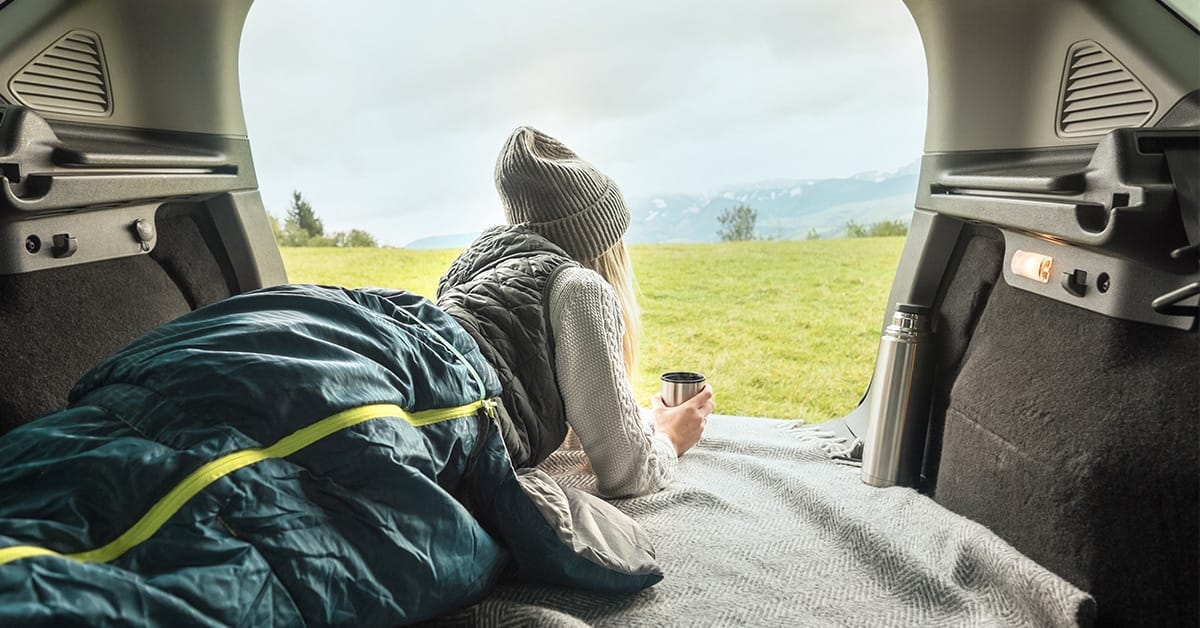
If you have a large car and little luggage with you, you can fold down the back seat and sleep in your boot. Otherwise, the driver’s seat, which you can fully recline and lower, also offers a good solution.
Car seats, headrests – even spare parts – can serve as extra support or insulation. Floor mats can be placed under your body for additional comfort.
If you have plenty of space in the boot, but especially if you know in advance that you’ll have to sleep in the car, it’s handy to bring a number of real sleeping items. Think of:
The best equipment for your car
A number of things are very important to have in your car when you’re in need. We list them below.
Mandatory requirements
According to the law, there are a number of essential documents that you must always have in your car:
- Driving licence
- Insurance certificate
- Registration certificate
- MOT certificate
In addition, it is mandatory to carry some safety items:
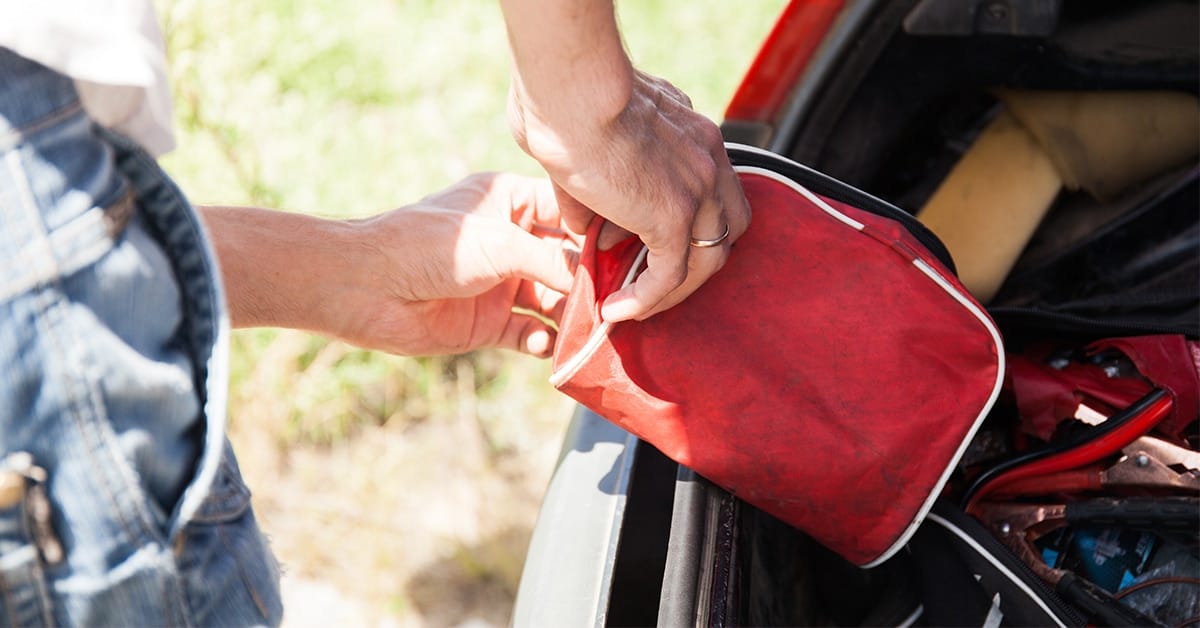
- First aid kit with plasters, sterile dressings and other necessities
- Fire extinguisher (must be within reach and not out of date)
- Warning triangle, to be placed in case of breakdown or an accident
- Fluohesje, minstens één per voertuig
- It is strongly recommended to have a high-visibility vest for all passengers
Recommended emergency kit
A well-prepared emergency kit helps you with breakdowns, emergencies or extreme weather conditions, making you less dependent on external help. Those who are prepared for the worst are also better able to help other people.
In addition to the mandatory equipment, it is wise to keep extra emergency provisions in your car. The National Crisis Centre recommends including the following items in your emergency equipment:
- Bottles of water and non-perishable food (for example cereal bars)
- Torch and spare batteries
- Jump leads for vehicles with a combustion engine
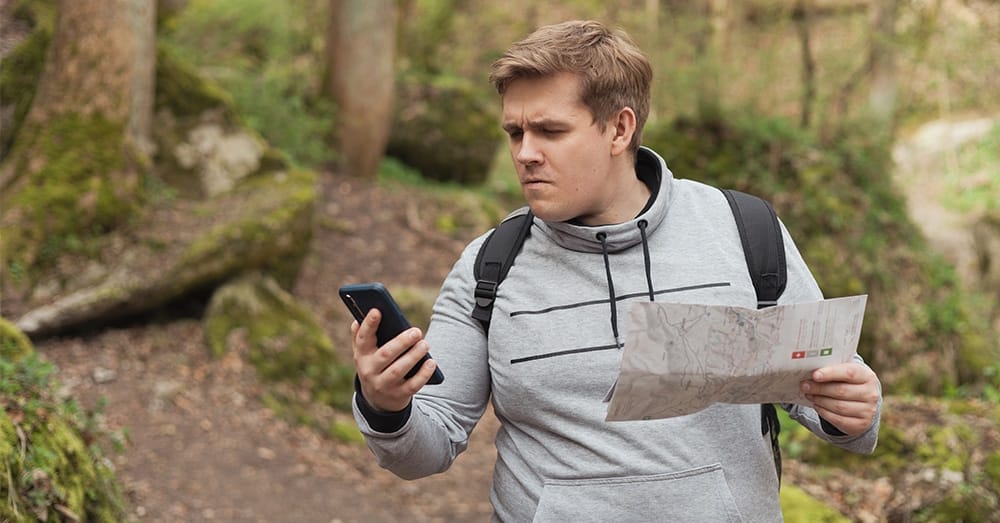
- GPS device or road maps: a GPS device is certainly more reliable than any smartphone in remote areas
- Penknife
- Spare wheel or tyre repair kit and a jack
- Duct tape
Communication
In addition, communication is also very important! Make sure your phone is charged before you leave. Power banks or car chargers are essential. Also keep important telephone numbers on paper – phones can break or run out of battery. A whistle can help attract attention without straining your voice.
Different scenarios
???? Do you have experience sleeping in the car?
Have you ever had to spend the night (unexpectedly) in your car? Or do you know how to do it? Share your own findings or experiences in a comment below!
Car breakdown in remote locations
Stay with your vehicle – this is usually safer than seeking help on foot. Make yourself visible and wait for help. Use your car as shelter from weather and wind. Call emergency services as soon as you have reception.
Stuck in traffic jams or snow
Don’t run your engine continuously – this wastes fuel and can be dangerous. Use the time to contact family or friends. Share food and water with fellow road users in the same situation if possible.
Extreme weather conditions
During storms, hail, or tornadoes, your car provides protection. Stay low in the vehicle and away from windows. In floods, only leave your car if the water rises to dangerous levels – cars can float in surprisingly little water.
Avoid common mistakes
Manage panic
Panic leads to wrong decisions. Make a plan, stay calm, and think step by step. Many people leave their vehicle too early and end up in even more dangerous situations. Accept that some situations take time to resolve.
Regulate energy consumption
Avoid running the engine continuously. This wastes fuel and creates dangerous exhaust fumes. Use heating or air conditioning only when strictly necessary and always ensure ventilation.
Seek help at the right time
Don’t wait too long to alert emergency services. Call 112 as soon as you realise your situation is serious. Give your exact location and describe your circumstances clearly. Use GPS coordinates if you’re not sure of your location.