What is a home battery and why is it becoming increasingly relevant?
Anyone with solar panels knows how it works: during the day you produce more electricity than you use, and most of that surplus goes to the grid. In the evening, when the panels are no longer generating, you simply buy that same electricity back — often at a higher price. A home battery, also called a home accumulator or energy storage system, solves that problem: you store the excess solar energy during the day and use it yourself in the evening or at night.
A home battery has an average storage capacity of 8 kWh. As an average household consumes around 9.6 kWh per day, your home could be powered for almost a full day thanks to the stored energy.
But there’s more to it than just being more economical with self-generated electricity. In Europe, concern is growing about the stability of the electricity grid. The blackout in Spain and Portugal in April 2025 suddenly left millions of people without power — and made many people in Belgium and the Netherlands realise how vulnerable our energy system actually is. For those who value energy independence, a home battery is therefore more than a financial investment: it’s a buffer.
At the same time, honesty is required. The financial viability of a home battery is still uncertain for many households today, and there are sellers who eagerly exploit this. In this article we lay all the cards on the table: how it works, the types, the costs, the emergency power function and the nuances.
How does a home battery work?
From solar panel to socket
The operation is essentially simple. During the day, your solar panels generate electricity. What you don’t use immediately is converted by an inverter and stored in the battery. As soon as the sun sets — or in cloudy weather — the battery returns that stored energy to your household. The inverter also ensures that the direct current from the battery is converted into alternating current that your appliances can handle.
An inverter is present with every home battery and converts the direct current from the solar panels into alternating current, so that electrical appliances can run on self-generated energy. Some home batteries have a built-in inverter — such as the Tesla Powerwall — others depend on an external hybrid inverter that you purchase separately or already have.
Smart charging and discharging
More modern systems go beyond simply “charge when the sun shines, discharge when the sun sets”. A smart home battery is controlled by an Energy Management System (EMS) that uses algorithms to optimise charging and discharging moments based on current energy tariffs and historical consumption patterns.
Those with a dynamic energy contract can benefit from cheap night-time electricity tariffs: the battery charges when electricity is cheap and supplies back when the price peaks. That’s interesting, but I wouldn’t use this as the main motivation for purchasing a home battery — energy prices are volatile and the “trading” on the so-called imbalance market carries risks that manufacturers rarely mention.
Types of home batteries
Not every home battery is the same. You can distinguish them based on technology, size and installation method.
Fixed systems with professional installation
These are the classic home batteries: large units that are installed by a certified electrician, usually in the garage, cellar or plant room. They are connected to the fuse box and form an integral part of your energy installation.
An average system costs between €4,000 and €6,000, including installation and VAT. The price depends on the brand and capacity, and many battery systems can be expanded later.
🇨🇳 Be careful with Chinese brands
The Patriot previously wrote about the security risks of Chinese inverters. Brands such as Huawei and Growatt are technically sound, but the geopolitical context deserves attention when making a choice.
Plug-in batteries
An intermediate category that is rapidly becoming more popular: plug-and-play home batteries typically have a storage capacity of 2 to 3 kWh per unit and don’t require an installer for basic use. You plug them into a socket and they communicate with your smart metre.
Examples are the Marstek Venus, Growatt Noah, HomeWizard Plug-In Battery and Zendure SolarFlow — this latter model was previously discussed here. A plug-in battery may supply up to 800 watts per socket.
Plug-in batteries are affordable (from €1,100 to €2,500), but also limited in power and capacity. They’re a good first step, but not a replacement for a full system.
🔗 discover more about the Zendure SolarFlow 800 pro 2 here
🔗 discover more about plug & play systems here
Be careful when purchasing: You need to be cautious with home battery sellers who approach you by telephone or at the door. There are increasing reports of misleading sales where sellers put pressure on you to agree to an overpriced quote. Don’t impulsively accept such offers and first do thorough research yourself into different models, prices and payback periods.
The financial side
This is the part many sellers prefer to be vague about. The financial viability of a home battery is uncertain today for most Belgian and Dutch households.
Payback period
According to an analysis by energy specialist Koen Kuijper, the payback period for a home battery is approximately 16 to 23 years. At present, it’s not possible to recoup the investment within the expected lifespan of around 15 years. The costs of a real ‘full’ home battery don’t yet outweigh the expected savings during the period of use — although this could change quickly as batteries become cheaper.
That’s a fairer picture than the 5 to 10 years that manufacturers sometimes claim. Despite a falling price per kWh of storage capacity, the payback period for most households remains around 10 years or longer.
There are scenarios where it happens faster. Advanced systems that trade smartly on the energy market show payback periods of 4 to 6 years, but this requires a dynamic energy contract and specialised software. The shortest payback periods are achieved via the imbalance market, but this carries risks and requires specialised control.
Home battery as emergency power supply
This is perhaps the most relevant part. During a power cut, you don’t want to be dependent on the grid. And here’s an important nuance that many people miss.
Standard home batteries also fail
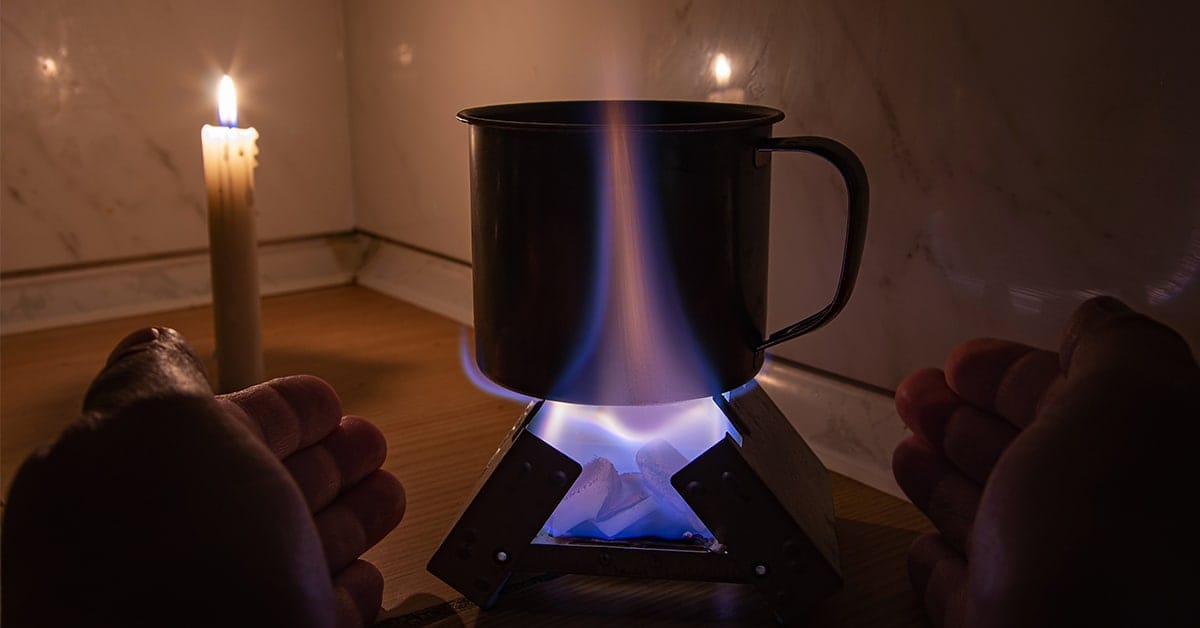
A standard home battery also fails during a power cut. This has everything to do with safety: when engineers from the grid operator are working on the cables, no installation may continue to feed electricity back into the grid — otherwise that is life-threatening for the technicians on site.
In other words: you have solar panels, you have a home battery, the power goes out… and you’re sitting in the dark, just like the rest of the street. Unless you’ve specifically chosen a system with an emergency power function.
🔗 this is what you need during a power cut
What do you need for emergency power?
For emergency power you need two important components: an inverter that is suitable for island operation (off-grid operation), and an automatic switch — also known as a back-up box or gateway — that disconnects the home from the grid during a power cut. Only then may the battery supply power.
There are three levels:
- Emergency socket — a single socket on the battery to which you can connect critical devices. Cheap and simple.
- Partial back-up — the output of the battery is connected to a specific circuit in the distribution board, so that selected devices continue to work during a power cut.
- Full back-up — the home battery takes over the complete power supply of the house. This requires a larger battery capacity, additional equipment and a higher initial investment.
Which appliances to prioritise?
During a power cut you want to make choices. The most important priorities are the fridge and freezer to protect perishable food, lighting, communication devices such as router and modem, medical equipment if applicable, and security cameras and alarm systems. Large electricity consumers such as a heat pump, electric hob or washing machine are less essential in an emergency situation and draw too much power.
How long can you last?
The duration of the power supply depends on the capacity of the battery and the consumption of the connected devices. Generally, home batteries can supply power for several hours to even several days. If the system is connected in a micro-grid configuration, you are completely independent as long as you generate at least as much as you consume each day.
In winter that last point is a real consideration: solar panels then produce considerably less. For back-up purposes a battery from 30 kWh is not unusual. You can also choose to charge the battery via the electricity grid to, for example, 80%, so that you have sufficient reserve before a power cut occurs.
How do you choose the right home battery?
Calculate the capacity you need
Multiply the output of your solar panels by 1 to 1.5 for the required capacity. If you have 10 panels of 400 Wp, that’s 4 kWp — and you need a home battery of 4 to 6 kWh. Based on your daily consumption: take 60 to 80% of that as a guideline for the battery capacity.
Technology: LFP vs. lithium-ion
Most modern home batteries use lithium iron phosphate (LFP) cells. LFP batteries can be recharged very often without wearing out quickly, although there is always gradual ageing. Classic lithium-ion batteries degrade faster through intensive use. LFP is safer, lasts longer and has become the standard choice for residential applications.
Checklist when purchasing
When choosing a home battery, these are the questions you must be able to answer: does the capacity match your consumption and the output of your panels? Does the system have an emergency power function, and if so, partial or full? Is the inverter compatible with your existing installation? How long is the warranty — Tesla, Huawei, BYD, AlphaESS and SolarEdge offer 10 years as standard. Are there CE, TÜV or VDE quality marks present? And who installs it, and is there local service in case of problems?
Conclusion
A home battery is not a magical solution for every household, but for those who have solar panels and are thinking about energy independence, it is a logical next step. The financial payback period is realistically longer today than sellers want to admit — but the energy transition is in full swing and the parameters are changing rapidly with the abolition of the netting scheme in the Netherlands. Anyone buying a home battery purely for the emergency power function must know that this requires a specific configuration with the right inverter and switch: an ordinary home battery won’t help you during a blackout. Get proper information, compare multiple installers and don’t let yourself be rushed by aggressive salespeople. A battery lasts 15 years — that choice deserves the necessary peace of mind.