Drought-resistant crops in your garden
We can expect another very dry period during the growing season, making growing vegetables yourself somewhat more difficult. Choosing the right crops is therefore becoming increasingly important to ensure adequate food provision. In this article, we discuss how you can avoid drought. We also list a number of easy-to-maintain plants
- Mediterranean herbs
- ‘Dry’ vegetables
- Cereals and grasses
???? Experience with gardening yourself?
Do you have experience with gardening? How do you deal with drought? Do you collect water during wet periods, or have you switched to drought-resistant plants? Share your own findings or experiences about this in a comment below!
Mediterranean herbs
Thyme, rosemary and lavender
There is a small group of herbs that have roughly the same characteristics and these are:
- Sage
- Thyme
- Oregano
- Rosemary
- Hyssop
- Lavender
These Mediterranean herbs originally come from warm, dry areas and have adapted perfectly to little water.
Thyme is an absolute must. Thyme is a perennial plant that feels most at home in calcareous and fairly dry, well-drained soil. You can harvest all year round and it has a robust flavour that combines well with all sorts of dishes.
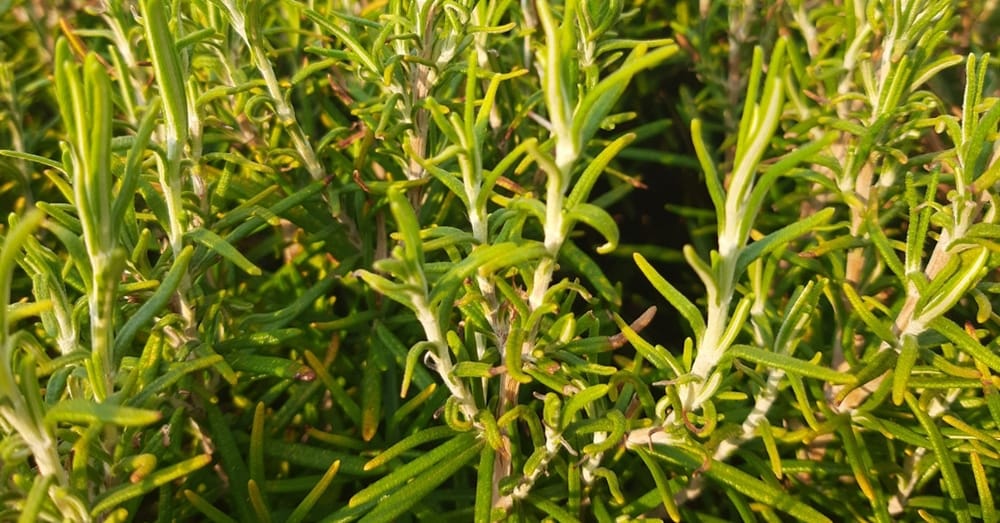
Rosemary can grow more than a metre tall and because the plant is hardy, you can harvest all year round. Perfect for those who want to be self-sufficient and always have fresh herbs within reach.
BOL.COM sells ready-made grower’s pots with various types of garden herbs. View them below.
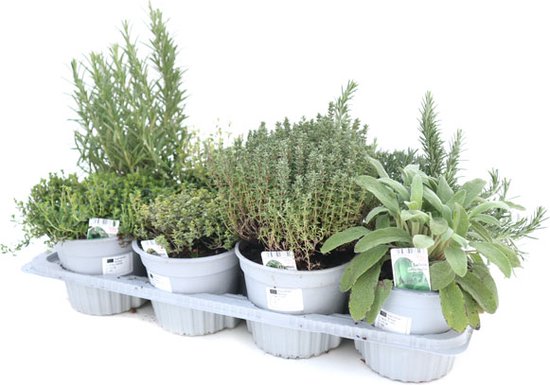
8 x winterharde, droogtebestendige tuinkruiden
Je ontvangt 8 kwekerspotjes, doorsnede 14 cm, met soorten winterharde tuinkruiden. We sturen de mooiste kruiden van het moment die we direct hebben aangekocht op de veiling. Denk bijvoorbeeld aan tijm, salie, rozemarijn, , oregano, etc.
Lesser-known but valuable alternatives
And slightly lesser known but certainly no less valuable are wood calamint (Calamintha sylvatica), curry plant (Helichrysum italicum) and green santolina (Santolina viridis). These herbs offer flavour diversity and are just as drought-resistant as their better-known cousins.
Vegetables that defy drought
Traditional drought-resistant vegetables
Drought-resistant vegetables are often varieties that mature quickly. This makes them ideal for rapid food production in difficult circumstances. Some crops (such as old French butterhead and batavia varieties, parsnip, burdock, chard, etc.) root more deeply and can therefore better withstand drought.
Cherry tomatoes are an excellent choice. Cherry tomatoes grow and root more vigorously than beefsteak tomatoes. They produce lots of fruit on little water and are ideal for those who want maximum yield from limited space.
Chard is an underrated vegetable that roots deeply and needs little water. It provides vitamin-rich leaves throughout a long season.
Modern alternatives from agriculture
In Flemish agriculture, considerable experimentation has already taken place with drought-tolerant crops such as soya, chickpea, sorghum, alfalfa. These crops offer new possibilities for home growers.
Quinoa has been tested positively in Herent and in West Flanders. Quinoa is a drought-resistant crop due to its deep root system. It is a complete protein and can be a valuable addition to your food supply.
Chickpeas are an excellent protein source that thrives in dry conditions. They also enrich the soil with nitrogen.
Cereals and grasses for the future
Reconsidering traditional cereals
Perennial ryegrass (Lolium perenne), for example, a crop with good fodder quality, can be improved in terms of drought through breeding. But there are better alternatives available.
Tall fescue is a grass species that performs better in drier periods. For those who keep livestock or simply want grass that stays green during dry summers, this is an excellent choice.
Experimental crops
More grapes, kidney beans, sweet potatoes, chickpeas and also genetically modified drought-resistant cereals are being cultivated. Although genetically modified crops are controversial, these experiments do show which characteristics are valuable.
Sorghum is a traditional grain that can withstand drought excellently. It can be used as livestock feed or for human consumption and grows well in our climate.
???? Want to know more about heatwaves?
A heatwave can damage not only your plants. An extreme heatwave can cause your body to become unbalanced within hours if you’re not careful. Therefore read this article:
Practical tips for drought-resistant cultivation
Soil preparation and water management
Ground cover plays a crucial role. Ground cover helps retain moisture in the soil by reducing evaporation. Use mulch, straw or gravel around your plants.
For Mediterranean herbs: The soil should be fairly sandy and poor in nutrients. Too much manure makes plants more susceptible to drought.
Making smart plant choices
Choose miniature varieties where possible. Miniature varieties do well. They need less water and produce more quickly.
Plant herbs in dry, calcareous or rubble-rich, well-drained soil, in full sun. A south-facing location against a wall provides additional heat storage.
Collecting water
What can also help to get through dry periods is collecting sufficient water during wet periods. Install a water butt. With that water you can easily feed all your plants when there isn’t sufficient rainfall.
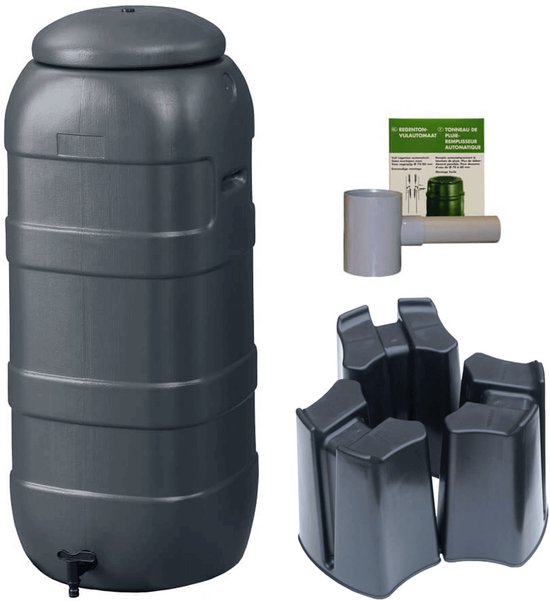
Regenton – Antraciet 100 L + Voet + Vulautomaat
Recognising natural drought resistance
Signs of drought-resistant plants
Look out for plants with silvery-grey leaves – these reflect sunlight. Mediterranean plants are adapted to the dry summers and mild winters of their native region. They often have silvery-grey leaves to reflect the heat, and fragrant, oil-containing leaves to retain water.
Succulent leaves are another sign. Sedum are known for their ability to store water in their leaves and stems.
Indigenous solutions
Look at what grows spontaneously. If you see how the indigenous cousin fat hen succeeds here in heat and drought, this is certainly a good lead. Wild plants from your own area are often best adapted to local drought periods.
Seasonal planning for drought resistance
Timing is everything
Early sowing of fast-growing crops can avoid drought periods. Plant in March and April what you can, so that you harvest before the summer becomes really dry.
For perennial plants: plant them in autumn so they have the winter to develop roots before the first dry summer arrives.
Rotation and diversity
This ensures risk and financial diversification, more diversity and rotation and thus better control of diseases and pests. Alternate drought-resistant crops with other crops to keep your soil healthy.
Plan different crops that can be harvested at different times. This way you have fresh produce throughout the season, even during dry periods.
Conclusion
Drought-resistant crops are no longer a luxury, but a necessity in our changing climate. From Mediterranean herbs to experimental grains: the choices are wide and accessible. Start with proven options such as thyme, lavender and cherry tomatoes, and gradually experiment with newer alternatives such as quinoa and chickpeas. With the right crops and techniques you can maintain a productive garden even during dry periods that contributes to your self-sufficiency.