

We are accustomed to clean drinking water from the tap, but what if that falls away? When you are in nature you could drink from a river, but without purifying that water it is a risk that no one should take.
The water from a crystal-clear stream in the Ardennes may look ‘pure nature’, but it can still be full of bacteria, viruses, parasites, chemicals and other contaminants.
Previously we discussed various ways to make drinking water yourself. But which of these are sufficient to safely drink from a river? Fortunately, there are various methods to purify this water, so that it is safe to drink. In this article we will go deeper into the following techniques:
- Water filters such as filter straws and gravity filters
- Chemical purification agents in powder and tablet form
Watch here how a personal water filter works in nature.
The risk of unpurified water
Invisible threats
Surface water can contain various types of contamination that cannot be observed with the naked eye. For example, a clear and fresh river can still contain pathogens. The three main categories are bacteria, viruses and protozoa. In addition, there can also be human contaminants in the water. Think of fertilisers, pesticides, heavy metals and microplastics from, for example, agriculture and industry.
- Want to know more about the risks of contaminated water? Read the general article here: 6 ways to make drinking water yourself.
Do you still become infected by a bacterium or virus from river water? Then think of these first aid tips.
???? Do you have experience with purifying water yourself?
We also like to learn from your experiences! Have you ever filtered water during a camping trip? What obstacles did you encounter?
Share your own findings or experiences about water purification in a comment at the bottom!
Differences between water types
Not every water source is equally polluted. The purification method you choose must depend on the type of water.
- High-altitude mountain streams: Water from high-altitude areas, far from human habitation, is usually less polluted. Here, a basic filter that removes bacteria and protozoa is often sufficient.
- Rivers and canals in populated areas: This water may contain chemical contaminants in addition to micro-organisms. Here you need more advanced purification methods.
- Standing water: Ponds and marshes often contain more organic material and pathogens than flowing water. Extra caution is required.
Assessing how clean river water is
Visual
Visually assessing (river) water is only a first step. Look out for the following indicators:
- Water must be clear, not cloudy or discoloured
- There should be no unnatural odour around the water (chemical, rotten, sulphurous)
- No visible algae growth, oil traces or foam
- No dead fish or other animals nearby
- Check the surroundings for sources of pollution: industry, agriculture, sewage discharge,…
Test kit
If you really want to be sure whether the river water is drinkable, you need test strips or kits that test for bacteria, pH value, nitrates and chemicals. However, these tests are limited, do not test for every form of contamination and therefore do not provide a 100 per cent guarantee. When in doubt, it is best to treat the water as if it is impure.

17 in 1 drinkwater testkit
How to purify river water
These are the steps you must take to make river water safe for drinking. Below I will discuss a step-by-step approach:
- Collect water from the fastest flowing parts of the river. Avoid standing water or places close to buildings.
- Test the water if necessary (see above).
- Sedimentation: Leave the water to stand for 12 to 24 hours so that heavy particles can settle – if time is not a problem.
- Pre-filtration: Pour the water through a cloth or coffee filter, so that larger particles and suspended matter remain out of the water.
- Filtering: Use a water filter to remove bacteria and protozoa (see below for more information).
- Desinfecteer het gefilterde water verder:
- Boiling for 1 minute kills pathogens
- Use water purification tablets or a UV treatment
- Improving taste: After chemical treatment, you can improve the taste by aerating the water (shaking in a partially filled bottle) or adding a vitamin C tablet.
Below we will go into further detail on the two important parts of water purification: filtration and disinfection.
Filtration: the most efficient approach
Filtering is probably the most commonly used method to make water from rivers and canals drinkable. There are various types of filters, each with their own applications.
Types of filters
There are various types of (mechanical) water filters: pump filters, gravity filters and drinking straw filters. In addition, there is a difference between filters with and without activated carbon. Read more about this in the article below:
6 ways to make drinking water yourself.
In this article you will find more about the different filtering methods. We will summarise the differences once more:
- Pump filter: You pump the water manually through a filter. Ideal for filling your water bottle on the go.
- Gravity filters: These work on gravity and are useful for campers who want to purify their water overnight.
- Filter straws: Extremely compact and light; with these you can drink directly from a water source.
17 in 1 drinkwater testkit

LifeStraw persoonlijke waterfilter

Draagbaar kampeerfiltratiesysteem
Chemical purification
Please note: these mechanical filters are not always able to remove viruses from the water. To really drink safe river water, you must either use a filter with activated carbon, or combine the filter with chemical purification.
Chemical purification agents such as tablets or drops based on chlorine or chlorine dioxide are compact and easy to use. We have selected some suitable chemical purification agents.
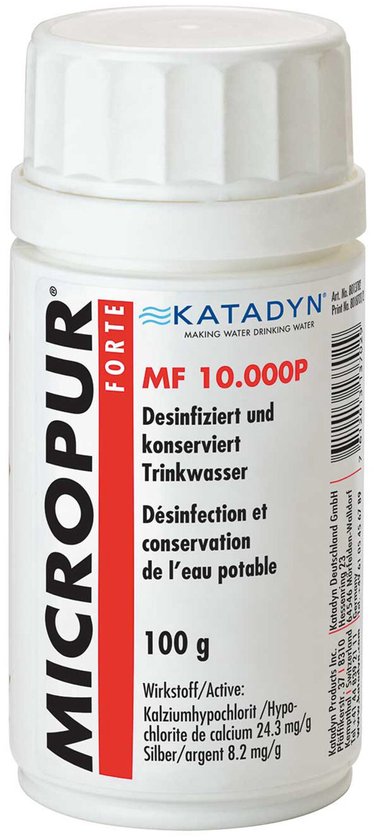
Katadyn Micropur Forte Zuiveringspoeder
Met het Katadyn Micropur Forte Zuiveringspoeder zorg je eenvoudig voor veilig drinkwater, vrij van schadelijke bacteriën en virussen. Dit poeder, dat chloordioxide afgeeft, is perfect voor buitenactiviteiten zoals wandelen en kamperen. Het verandert de smaak of geur van water niet, waardoor je altijd een verfrissende slok hebt. In een onzekere wereld biedt dit product gemoedsrust, zodat je voorbereid bent op onverwachte situaties.
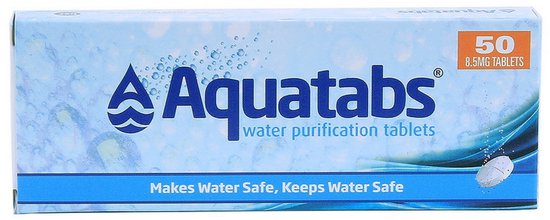
Aquatabs waterzuiveringstabletten | 50 stuks
Aquatabs waterzuiveringstabletten zijn een praktische oplossing voor het veilig maken van drinkwater. Met 50 tabletten in één verpakking, zijn ze eenvoudig in gebruik en effectief tegen bacteriën en virussen. Dit product is ideaal voor wie voorbereid wil zijn op onverwachte situaties, zoals natuurverschijnselen of stroomuitval, en biedt de gemoedsrust dat schoon water altijd binnen handbereik is.
Practical applications
Daily trips and walks
For short walks in nature, a lightweight microfilter is usually sufficient. Such filters are compact, easy to use and effective against most contaminants you encounter in natural areas.
Multi-day expeditions and survival trips
For longer trips it is advisable to combine multiple purification methods. A microfilter for daily use, supplemented with water purification tablets for emergencies, offers the best protection.