On a forum for people thinking about preparedness, an honest complaint recently appeared: a Redditor’s wife simply didn’t want to eat from tins. And honestly? She has a point. Because anyone who only fills their emergency stockpile with tins of baked beans and watery sweetcorn has a problem — not only if things ever go wrong, but also because that stockpile will simply never get used. Long-life food that’s also genuinely tasty: it exists, and it’s less complicated than you think.
Why taste really matters in your stockpile
An emergency stockpile is only useful if you actually use it and replenish it. The principle is called FIFO — First In, First Out: you eat what’s going to expire first and top up. That only works if you buy products you’d normally eat anyway. If you buy things you don’t like, they’ll sit unopened until they expire anyway.
But there’s another reason why taste matters. In a stressful situation such as during a power cut, a storm period, or something more serious, good and tasty food is one of the few things that keeps morale high. It’s no coincidence that “comfort food” appears on every serious list of emergency provisions. A jar of peanut butter, some chocolate or a bag of coffee: it sounds trivial, but in difficult circumstances it makes a difference.
Tinned food: better than its reputation, but be selective
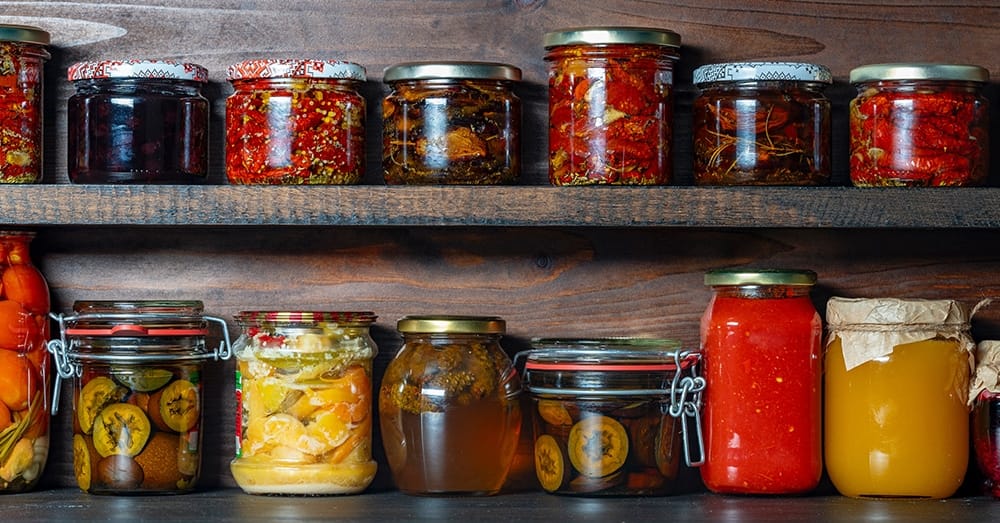
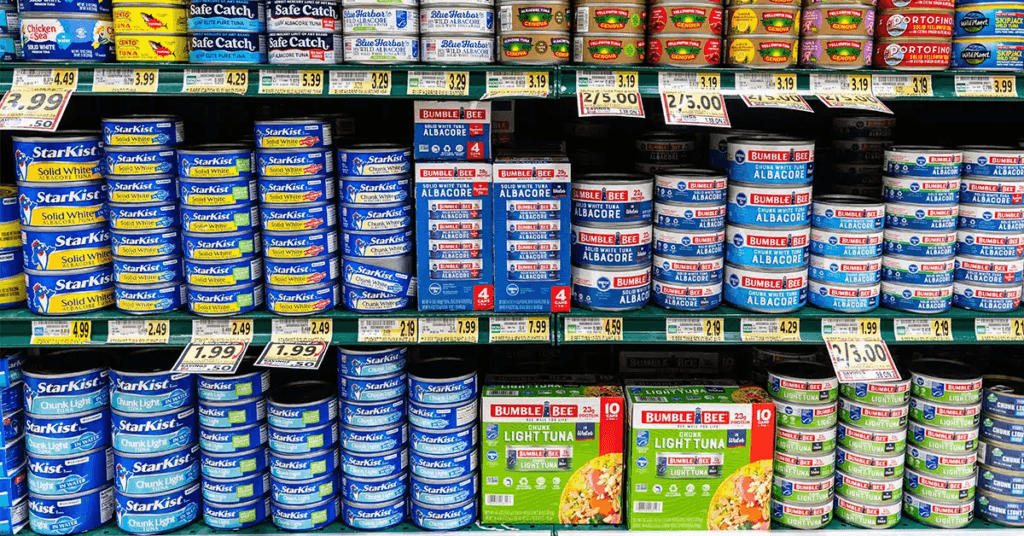
Tinned food has a shelf life of two to five years on average, and often longer in practice. The great advantage is that it already contains moisture, so you don’t need extra water for it. The disadvantage: quite a lot of tins do indeed taste of very little. The solution lies in the selection.
Tins worth having:
- Tomatoes (peeled or chopped): the basis of dozens of meals. Passata in tetra pak works excellently too.
- Pulses (chickpeas, lentils, haricot beans): versatile, nutritious and perfectly tasty if you season them.
- Tuna or mackerel in olive oil: much better than in water. Ready to eat, even cold.
- Coconut milk: for curries, soups and rice dishes. Long-lasting and flavoursome.
- Tinned soup: a ready-made hot meal that you simply heat up. Choose varieties with little salt.
- Fruit in juice (pineapple, mandarins, peaches): a nice alternative to fresh fruit.
Note: Check tins regularly for dents, rust or bulging lids. A bulging lid is a sign of spoilage and reason to throw the tin away.
Dry basic products: the backbone of every stockpile
Dry products are cheap, light, take up little space and keep for years when stored correctly. That makes them ideal.
Rice and pasta: filling and versatile
White rice is a classic for good reason. Stored well — dry, dark, cool — it keeps for five to ten years, sometimes longer. Brown rice contains more fats and doesn’t keep as long, something to bear in mind.
Pasta takes up little space, needs little water to cook and even fits in a rucksack.
Porridge oats: underestimated powerhouse
Porridge oats deserve a permanent place. It’s cheap, filling, and you can prepare it with water. You don’t even need to use heat: put it in water or milk and wait overnight — overnight oats work without fire too. A disadvantage: the instant varieties from the supermarket are heavily processed. Preferably choose ordinary flakes.
Dried pulses: longest shelf life, most nutritious
Dried lentils, chickpeas and beans keep for years and are packed with protein and fibre. The disadvantage is that they require water and cooking time. Therefore combine dried pulses with some tins as an immediate option.
Flavour enhancers: the difference between eating and enjoying
This is the category people most often forget, and also the category that makes the most difference. The most boring pot of rice becomes bearable — or even nice — with the right herbs and sauces. You can also choose to grow herbs yourself.
What definitely shouldn’t be missing:
- Salt and pepper: obvious, but you need more than you think.
- Stock cubes or powder: transform water and rice into something edible.
- Olive oil or vegetable oil: essential for preparation and a concentrated source of calories.
- Soy sauce, tabasco, pesto in a jar: long-lasting and immediately add character to a dish.
- Garlic powder, cumin, paprika powder, turmeric: a small selection of dried herbs makes a big difference.
- Honey: very long-lasting (actually indefinitely if it stays dry) and versatile as a sweetener or bread spread.
- Peanut butter: energy-rich, long-lasting, and simply delicious for most people.
Dried fruit and nuts: snacking without electricity
Nuts and dried fruit are the ideal snacks in an emergency stockpile. They contain lots of calories per weight, you don’t need to prepare them, and they’re simply tasty for most people too. Almonds, walnuts, cashews, raisins, apricots, dates: all long-lasting when stored dry.
A bag of mixed nuts or dried fruit is also handy as an energy boost in between, without having to cook anything. That’s not an unnecessary luxury in an emergency situation.
Freeze-dried and dehydrated food: when is it worthwhile?
Freeze-dried meals such as those from Trek’n Eat or Forestia keep for years and taste, surprisingly enough, often quite good. The principle is simple: add hot water, wait a few minutes, and you have a hot meal. They generally contain few artificial additives and preserve nutritional values better than tinned food.
The disadvantage is the price. Reckon on five to fifteen euros per meal. For occasional use or as a supplement to a broader stockpile they’re worthwhile. If you rely on them entirely, it becomes expensive. I see them more as a handy addition than as the basis of a stockpile.
Alternative: Homemade dehydrated meals — soups, stews — can be prepared with a food dehydrator and are considerably cheaper. That does require a bit more time and preparation.
Comfort food: don’t forget the psychological aspect
This appears on every serious list of emergency provisions, but people still skip it. Chocolate, biscuits, coffee, tea, a jar of jam: these are the things that give a small lift in an unpleasant situation. They keep for a long time, take up little space and cost hardly anything extra.
Coffee (in ground form or as instant) keeps well in an airtight container. Tea keeps practically indefinitely. Chocolate with a high cocoa percentage keeps longer than milk chocolate. They’re small things, but they make the difference when you’re without electricity for days.
This is how to store it
Even the best products spoil if you store them incorrectly. A few rules of thumb:
- Dry and dark: moisture and light are the biggest enemies of shelf life.
- Cool: a cellar temperature (10-15°C) is ideal. Avoid the vicinity of a boiler.
- Airtight: pasta, rice and oats are best stored in well-sealable jars or containers. The original packaging is often not airtight enough for the long term.
- Rotate: use older products first and top up. This way you always have a fresh stock without waste.
- Check regularly: a quick check on best-before dates and the condition of tins every six months.
Conclusion
A good stockpile starts with products you actually want to eat. Anyone who only chooses what lasts longest but tastes least pleasant has a cupboard full of tins they never touch. Choose products that fit with your normal eating pattern, add sufficient flavour enhancers and also think about a few comfort products. That way you build up a stockpile that’s both practical and pleasant — and that you also simply use regularly.
Related articles on The Patriot: