
Why Silicon Valley is massively going underground
Reports about bunkers of billionaires appear regularly: Mark Zuckerberg investing 270 million dollars in a complex in Hawaii with an underground shelter of 465 square metres. Peter Thiel buying up land in New Zealand. LinkedIn founder Reid Hoffman openly speaking about his ‘apocalypse insurance’.
The pattern is clear. Top figures from the tech world are preparing for some form of social disruption. The question many are asking: do they know something we don’t? Or is this primarily a status game between people who have more money than they can spend?
📈 More than 50% are prepared
LinkedIn founder Reid Hoffmann says that at least 50 per cent of tech billionaires have some form of ‘apocalypse insurance’. He describes how many billionaires from Silicon Valley have set up a refuge at home or abroad — for example in New Zealand — as part of that “insurance” against possible catastrophic events.
That number seems worrying at first sight. If the people who design our digital infrastructure are preparing for its demise, that should give us food for thought.
Zuckerberg’s multi-million pound bunker
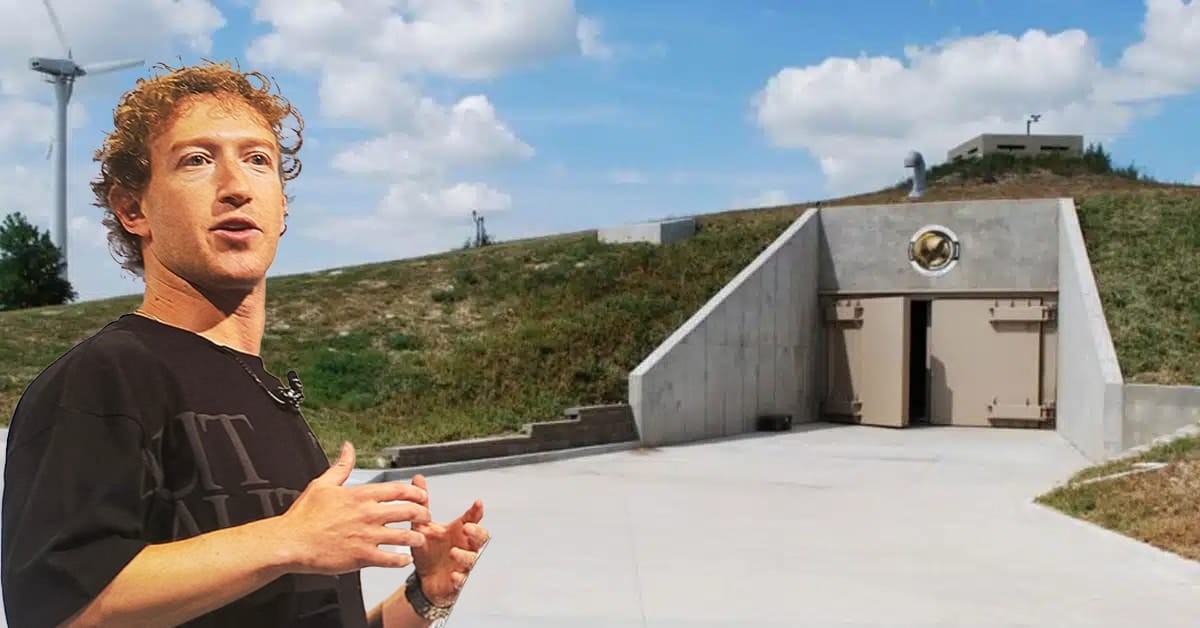
The project of Facebook founder Mark Zuckerberg on the Hawaiian island of Kauai received much attention when the plans leaked. Koolau Ranch, as the estate is called, covers more than 560 hectares. The complex comprises two villas with a total surface area of 5,300 square metres, connected by a tunnel to an underground shelter.
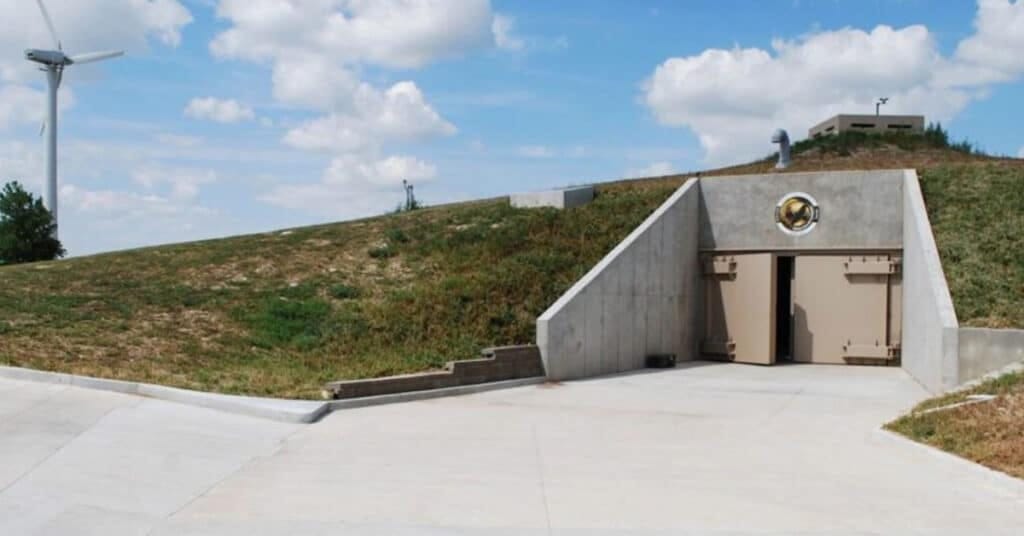
That bunker has a door made of metal filled with concrete — a construction normally only seen at military installations. The whole thing will be completely self-sufficient, with its own water and energy supply. Employees had to sign strict non-disclosure agreements, and some were dismissed after posting photos on social media.
Zuckerberg himself plays down the attention. He calls the bunker “just a small shelter” and emphasises that it’s primarily about sustainable livestock farming.
New Zealand as the ultimate refuge
New Zealand has developed into the favourite refuge for tech billionaires. The country is remote, politically stable and has a “golden visa” programme that allows the wealthy to obtain a residence permit relatively easily.
Peter Thiel, co-founder of PayPal, bought an estate there of 193 hectares at Lake Wanaka in 2015. He even received citizenship in 2011, despite having spent only 12 days in the country. His plans for a bunker-like complex were rejected by the local government in 2022 due to concerns about the impact on the landscape.
Reid Hoffman put it aptly in 2017: “Saying you’re ‘buying a house in New Zealand’ is actually a nod to an apocalypse shelter.” He estimated that about half of his fellow billionaires in Silicon Valley had taken out such insurance.
👀 Look inside a bunker!
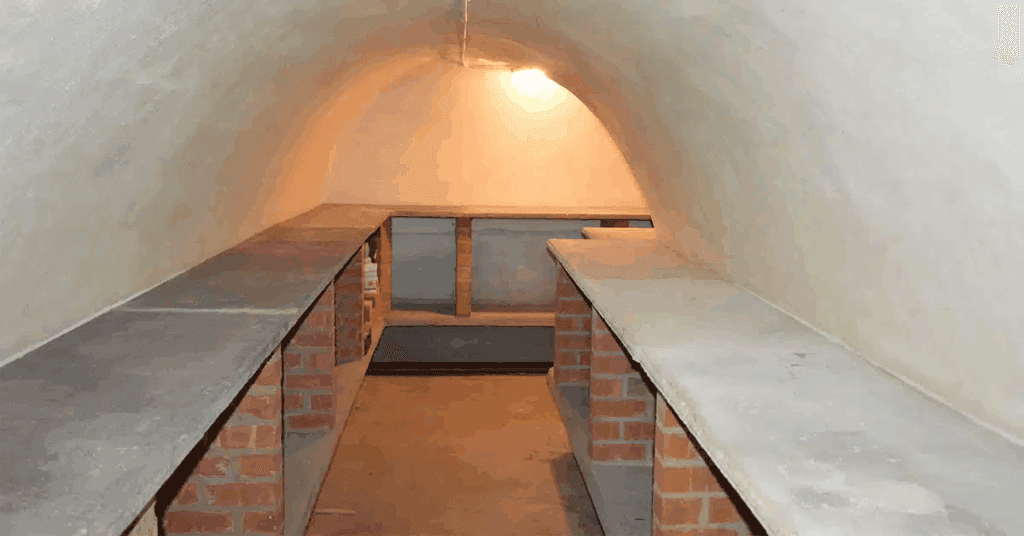
We spoke with two companies that install bunkers and also visited one. Read the article about it? You can do that here!
What drives this fear?
Official explanations vary. Some mention the rise of artificial intelligence as a concern. Others point to geopolitical tensions, climate change or pandemics.
However, there is also a critical side to the story. Sociologist Douglas Rushkoff, who conducted extensive research into this trend, suggests that many of these billionaires are primarily worried about losing their privileged position.
AI anxiety: marketing or real danger?
Concern about artificial intelligence plays a notable role in the debate. Some tech leaders paint apocalyptic scenarios in which superintelligent AI becomes uncontrollable. At the same time, these very companies are developing this technology extensively. The question therefore arises whether the fear of AI is primarily a clever marketing strategy, or a genuine concern. The scientific consensus is in any case that AGI and “superintelligence” are not imminent.
The bunker industry is flourishing
The public attention to Zuckerberg’s bunker had a remarkable effect. Ron Hubbard, CEO of bunker manufacturer Atlas Survival Shelters, reported that his phone wouldn’t stop ringing: “It caused a buying wave, as if the Third World War was coming.”
🧱 Build a bunker yourself?
Build a bunker or nuclear shelter yourself? We spoke with various manufacturers from Belgium and the Netherlands.
👀 in this article you can look inside a shelter container
Robert Vicino of bunker manufacturer Vivos saw the same thing: “Now that Zuckerberg has let the cat out of the bag, others with similar status are thinking: ‘Oh God, if he’s doing that, perhaps he knows something I don’t know.'”
The market varies enormously. Simple bunkers start at around 35,000 dollars for a concrete container. Luxury variants can cost millions and are equipped with swimming pools, fitness rooms, bowling alleys and even shooting ranges. The Survival Condo complex in Kansas — a former missile launch facility — offers flats 15 storeys below ground, complete with cocktail lounge.
Europe is lagging behind
In Europe, the situation is different. Countries such as Switzerland and Finland have extensive networks of public shelters. Switzerland has space for more than 9 million people, and in Helsinki the entire population of 900,000 inhabitants can shelter underground.
In the Netherlands and Belgium too, there has been a (slight) increase in interest in bunkers in recent years, partly because so few are publicly available. However, this may change, now that the Belgian Minister of Defence is calling for bunkers in car parks.
Should we build a bunker too?
And then we come to the key question: if billionaires are preparing for disasters, should ordinary people do so too?
The answer is more nuanced than you think. Firstly, these billionaires have resources that are unattainable for ordinary people. A bunker costing several hundred thousand euros, filled with supplies for months, is not an option for most families.
Secondly, there is no evidence that these tech leaders have access to secret information. Their preparation stems from the same news reports and concerns that we all see: geopolitical tensions, climate change, pandemics. The difference is that they have the means to take extreme measures.
Experts also point out that extreme isolation is not necessarily the best survival strategy. If you really want to survive an apocalypse, get to know your neighbours, make friends and form communities. That is a much more likely survival technique than isolating yourself completely underground.
What can you do yourself?
Instead of putting millions into a bunker, as an ordinary person you can take meaningful steps:
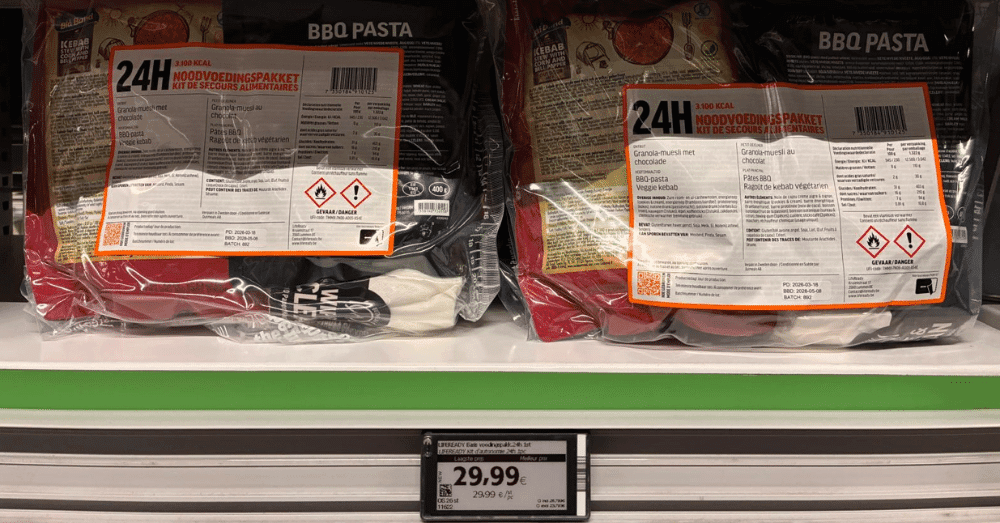
Build up supplies Keep non-perishable food, water and basic medicines at home for at least three days, preferably a week. Not out of fear, but from sensible risk management.
Read this article: Putting together an emergency kit: how to get started
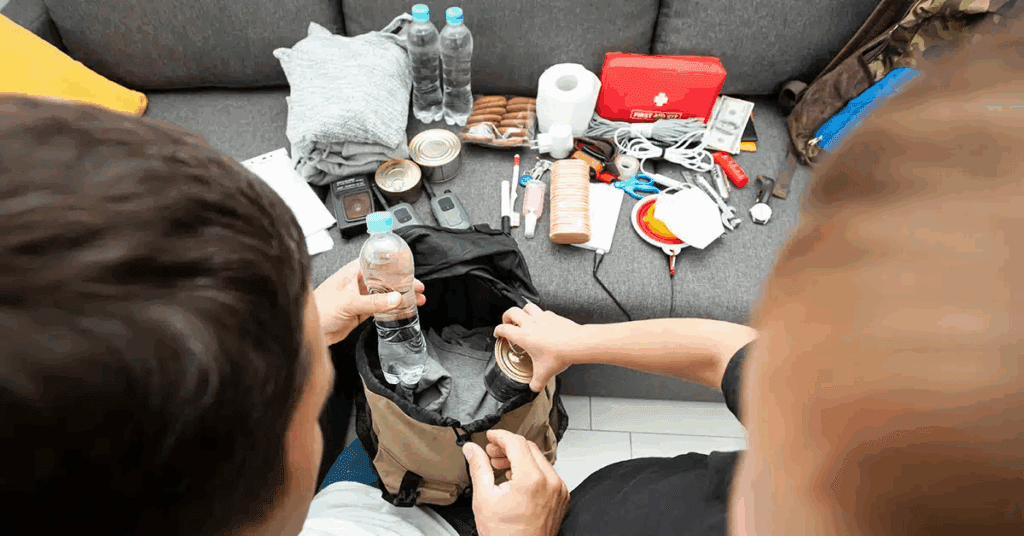
Acquire knowledge Learn basic skills such as first aid, firefighting and water filtration. This knowledge is valuable in virtually any crisis situation.
Build a local network Know your neighbours. Know who can help with what. In crisis situations, a strong neighbourhood community is often more crucial than physical supplies.
Maintain common sense Don’t get swept up in a culture of fear. Prepare for likely scenarios (power cuts, extreme weather) instead of film-like apocalypse fantasies.