

A power cut can have major consequences: we recently saw this in Spain. What should you do if the entire country loses electricity?
The impact of a power cut on daily life
Major consequences
The recent massive power cut in Spain and Portugal demonstrates how vulnerable we are without electricity. On Monday 28 April 2025, both countries were affected by a large-scale electricity outage that affected millions of people. The power failure began around midday and lasted more than 12 hours in some regions. Cities such as Madrid were plunged into total darkness, with only emergency lighting in essential buildings. Parts of southern France also experienced problems, although these were resolved relatively quickly.
The Spanish government described the situation as “very strange” and “difficult to explain”. Various agencies are investigating the cause. Initially, a cyber attack was suggested, but this is now described as unlikely. The impact was certainly enormous:
- Schools had to close
- Rail services came to a standstill
- There were concerns about possible looting in unlit neighbourhoods
And here?
When reading such news, you probably think: what if that happens here? What would I do in such a situation? Power cuts can vary from a brief interruption to a prolonged power failure lasting days. Without electricity, many important services cease to function: heating, cooling, communication, lighting, cooking and food storage all become considerably more difficult. Moreover, water and sewerage systems that run on electricity can also fail. In urban areas, power cuts can lead to traffic chaos due to failed traffic lights and stationary trains. In rural areas, people can become isolated when electronic communication devices fail.
The power cut in Spain and Portugal demonstrates that even modern Western countries are not immune to large-scale power cuts. With the help of some simple measures, you can significantly limit the consequences for yourself and your family.
Preparing for a power cut
Building up essential supplies
Good preparation begins with building up basic emergency supplies. Most experts advise having sufficient supplies for at least 72 hours (three days). This gives the authorities time to restore power or provide assistance in emergency situations. Assembling an emergency kit need not be expensive or complicated. Focus on these essential items:
- Drinking water: Keep a minimum of 3 litres of water per person per day, for at least three days
- Non-perishable food: Tinned goods, dried products and other non-perishable foodstuffs
- Medicines: Ensure a reserve of essential medicines
- Torches and batteries: Multiple light sources are essential
- Power banks: Fully charged power banks for emergency communication
- Heat sources: Blankets, sleeping bags and warm clothing for cold periods
- First aid kit: For minor injuries and medical situations
Check your supplies regularly. Replace food before the expiry date and test batteries and torches every quarter.
Alternative energy sources
For those who want to be certain of electricity, alternative energy sources are worth considering:
Emergency generators
Emergency generators provide an independent power supply when the regular grid fails. Before investing in a generator, it’s important to assess your energy needs properly and determine which appliances are essential during a power cut. Generators are available in various sizes and capacities:
- Petrol and diesel generators: Powerful but require fuel storage and outdoor use due to exhaust fumes
- Propane generators: Cleaner than petrol, but also to be used outdoors
- Solar generators: Silent and without fuel, but dependent on sunlight and usually less powerful
If you purchase a generator, first determine which appliances you absolutely need during a power cut. Calculate the total wattage and choose a generator that can deliver this capacity.
Also read here: Power cut? These plug-in batteries will help you through
Solar energy
Even without a complete solar energy system, small solar panels can be particularly useful during power cuts. These more modest solutions don’t require large investments and are ideal for charging essential devices such as phones and emergency lighting. They operate silently and require no fuel, making them a reliable option during prolonged power failures. Some practical solar options are:
- Portable solar panels: Can charge smartphones and small devices
- Solar power banks: Combine storage with charging capability
- Solar light sources: Torches and lamps that charge with sunlight

Communication during a power cut
During a power cut, communication is crucial for receiving important updates and staying in contact with loved ones. Modern communication devices are, however, heavily dependent on electricity. Mobile networks may continue to function for several hours after a power failure thanks to emergency power supplies, but will eventually fail during prolonged outages. It’s therefore important to have multiple communication methods at hand:
- Hand-cranked or battery-powered radio: For emergency messages and updates
- Fully charged phones and power banks: For essential communication
- Paper list of important telephone numbers: If digital contacts are not available
- Arrangements with family: Determine in advance where and how you can find each other
Modern mobile networks often have emergency power supplies, but these can fail after several hours. During a power cut, limit your phone use to essential communication.
What to do during an unexpected power cut
First actions during a power failure
If the power suddenly fails, it’s important to remain calm and proceed systematically. A power cut may be the result of a local problem in your home, a neighbourhood problem, or a larger regional outage such as we recently saw in Spain. By following the right steps, you can identify the cause and limit possible damage when the power returns.
- Check if it’s a local outage: See if the neighbours are also without power
- Switch off large appliances: This prevents damage from voltage surges when the power returns
- Leave one light on: This way you’ll notice when the power returns
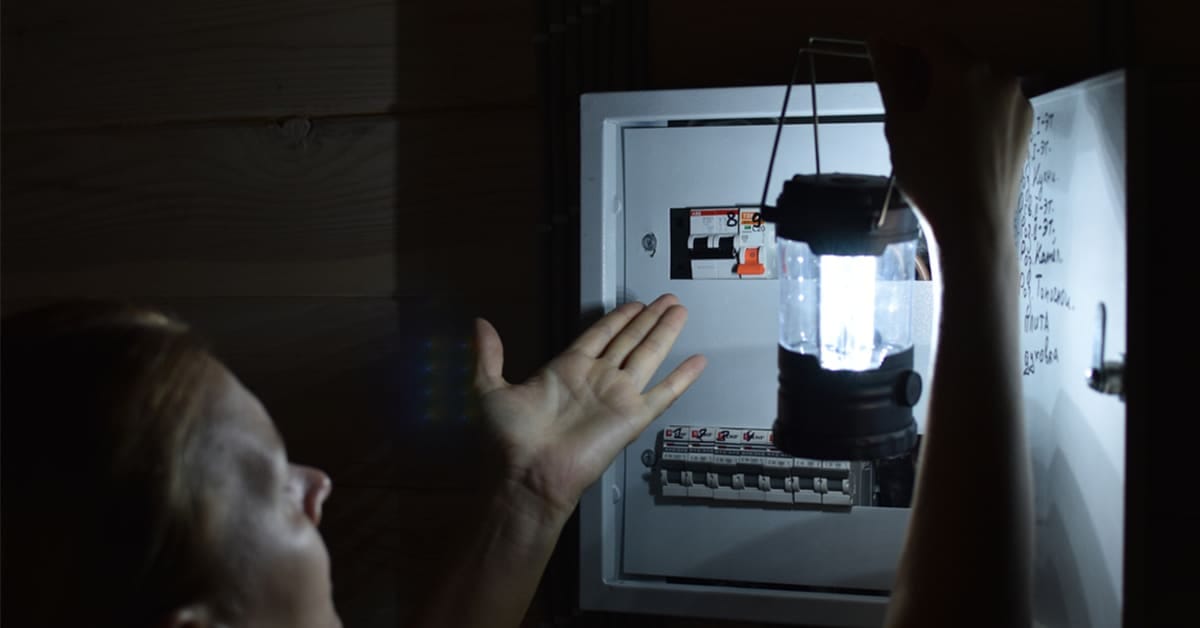
- Check the fuse box: Perhaps a fuse has blown
- Inform your network operator: Report the outage via their fault number or app
Dealing with fridges and freezers
During a power cut, you must pay extra attention to fridges and freezers to prevent food spoilage. One of the biggest challenges during a power failure is preserving food. Perishable goods often represent a significant investment that you don’t want to lose. With the right approach, you can minimise food waste and prevent becoming ill from spoiled food.
- Keep doors closed as much as possible: A closed fridge keeps everything cool for approximately 4 hours
- Freezers can stay cold for 24 to 48 hours: Depending on how full they are
- Use a thermometer: Food above 4°C is no longer safe after 2 hours
- Consume perishable goods first: Start with dairy and meat
Alternative heating and cooling
During a prolonged power cut, the temperature in your home can become problematic. Modern heating and cooling systems are almost all dependent on electricity, even if they run on gas. Without power, your home can cool down rapidly in winter or become uncomfortably warm in summer. It’s not only about comfort, but especially about the health of vulnerable people, the elderly, young children and people with health problems.
Managing the indoor temperature is not only a matter of comfort, but also of health, especially for vulnerable people such as the elderly, young children and people with health problems.
In winter:
- Concentrate on one room: Close doors of unused rooms
- Use alternative heating sources: Such as propane or wood-burning stoves
- Wear layers of clothing: Multiple thin layers insulate better than one thick layer
- Use sleeping bags and blankets: Especially at night
In summer:
- Open windows for cross-ventilation: Create an airflow through the house
- Use hand fans or battery-powered fans: For personal cooling
- Drink sufficient water: Dehydration worsens heat problems
- Seek out cool spots: Cellars or north-facing sides of buildings
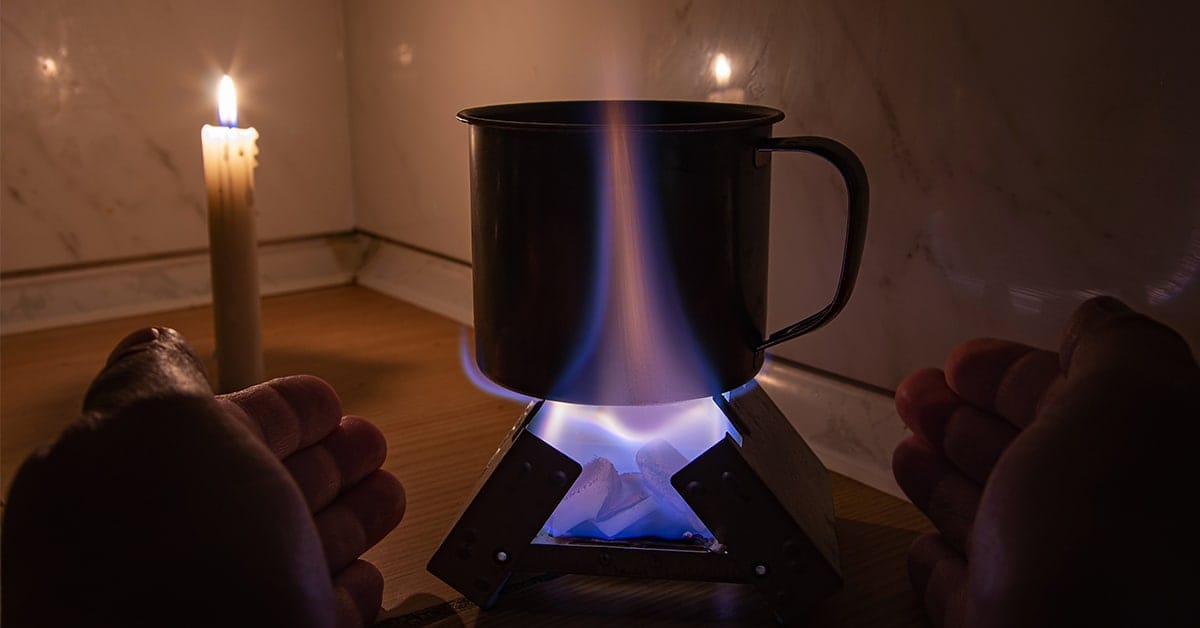
Take care with alternative heating sources! Ensure adequate ventilation to prevent carbon monoxide poisoning. Never use barbecues, camping stoves or generators indoors.
Improvising without preparation
If you’re not prepared for a power cut, you can still do various things to manage the situation. Improvisation is a valuable skill in emergency situations: think creatively and make use of what you have.
- Use your car as an energy source: Charge phones via the USB port or 12V connection
- Visit public places: Shopping centres, libraries or town halls often have emergency power
- Make use of non-electrical appliances: Gas appliances, manual tin openers, etc.
- Improvise light sources: Tea lights in a heat-resistant holder can provide temporary light
Preventing and limiting power cuts
Structural measures
For homeowners, there are various ways to reduce the likelihood of power cuts or limit their impact. Prevention is always better than reacting to a crisis. By investing in your electrical system, you can not only increase reliability but also improve the safety of your home. Some measures are simple to carry out yourself, whilst others require the expertise of a qualified electrician.
- Regular electrical inspections: Have your electrical system checked for weak points
- Surge protection: Protect sensitive equipment against voltage surges
- Tree maintenance: Prune trees around power lines
- Upgrade to modern fuse boxes: These offer better protection and control
Off-grid solutions
For those who wish to be completely independent from the electricity grid, various sustainable energy solutions are available. These systems not only make you immune to grid-related power cuts, but also reduce your ecological footprint and can be cost-saving in the long term. The initial investment is admittedly substantial, but with rising energy prices and increasing frequency of extreme weather conditions, energy independence is becoming increasingly attractive.
- Complete solar energy system: With sufficient storage capacity in batteries
- Wind energy: As a supplement to solar energy
- Micro-hydro systems: For locations with running water
- Hybrid systems: Combinations of different energy sources
These solutions require a substantial investment, but offer long-term benefits in terms of energy security and sustainability.
Conclusion
Power cuts can affect anyone, as we recently saw in Spain and Portugal. By being prepared, you can significantly limit their impact. Building up basic supplies, investing in alternative energy sources and making emergency plans are not excessive measures, but sensible precautions. I think it’s important not to panic during a power cut, but to remain calm and act methodically. With the right preparation, a power cut can change from a crisis to merely an inconvenience.