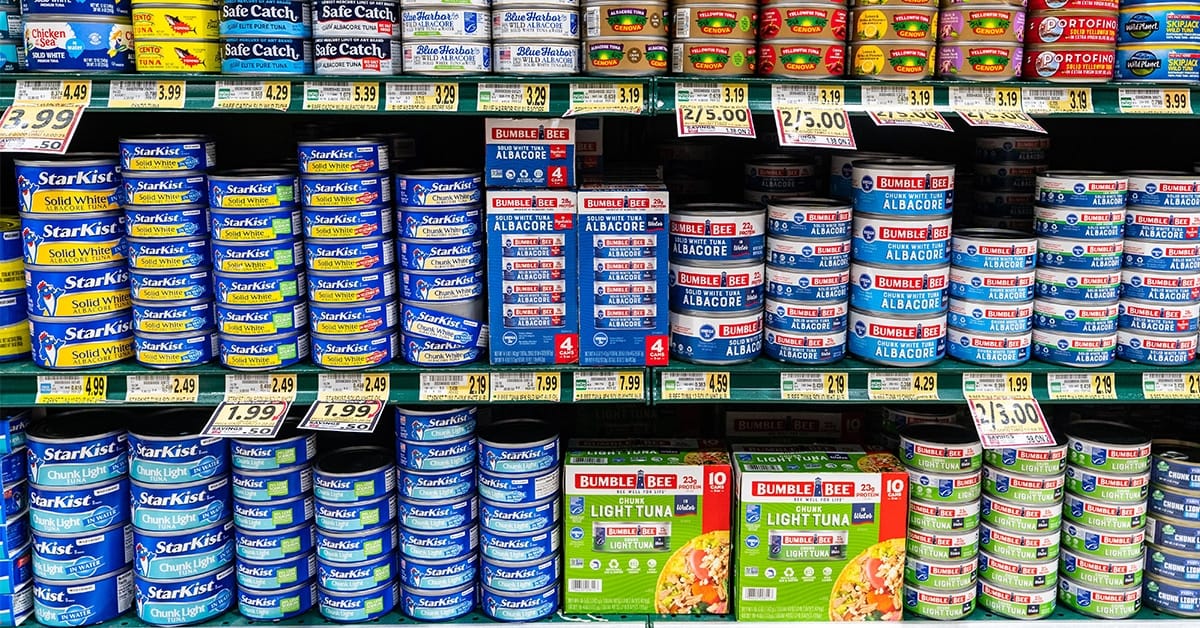
Somewhere in almost every kitchen drawer or pantry there’s a tin of tuna. It’s the sort of product you buy without thinking much about it, that you open when there’s little else in the house, and that never really disappoints. But as soon as you look more consciously at the shop shelves, you notice how much choice there actually is. Water or oil? Skipjack or white tuna? Chunks or flakes? Cheap or quality brand? I’ve set out all those questions here — not to identify one winner, but to help you choose what’s most useful for you.
What is tinned tuna actually?
Tinned tuna is fish that is cooked or steamed before tinning, then packed in a liquid (water or oil) and hermetically sealed. During the production process the tin is heated, killing bacteria and keeping the contents fresh for years — without refrigeration, without preservatives, without fuss.
That sounds simple, but it’s a fairly well thought-out preservation process. The result is a product that remains nutritious, is compact to store and is ready to eat without any preparation. In the Netherlands 98 per cent of all tuna consumed is eaten from a tin. Fresh tuna is more the exception than the rule on the table. In Belgium the figures are comparable – worldwide tinned tuna is said to account for around 67 per cent of total tuna consumption.
What makes tinned tuna interesting as a food source is not only its shelf life, but also the essential nutrients it contains:
- It is one of the most protein-rich products you can find in the supermarket.
- Omega-3 fatty acids
- Selenium
- Vitamin B12
A tin of tuna doesn’t cost much at all. For anyone thinking about a smart stock at home — for busy days, for situations when you can’t get to the shop, or simply as the basis for a quick meal — it’s hard to find better value for money than tinned tuna.
The fish species behind the tin
Not every tin of tuna contains the same fish. On the European market you mainly find three types:
Skipjack (Katsuwonus pelamis) is the most caught tuna species worldwide. Around 56 per cent of all tuna caught worldwide is skipjack. The flesh is darker in colour, has a rather pronounced and robust fishy flavour, and easily falls apart into flakes. That makes it less suitable if you want large pieces, but perfect for sauces, pasta or sandwich fillings. Many culinary chefs overlook skipjack because of the dark pieces of flesh, but the small and tender pieces are perfect for tinning.
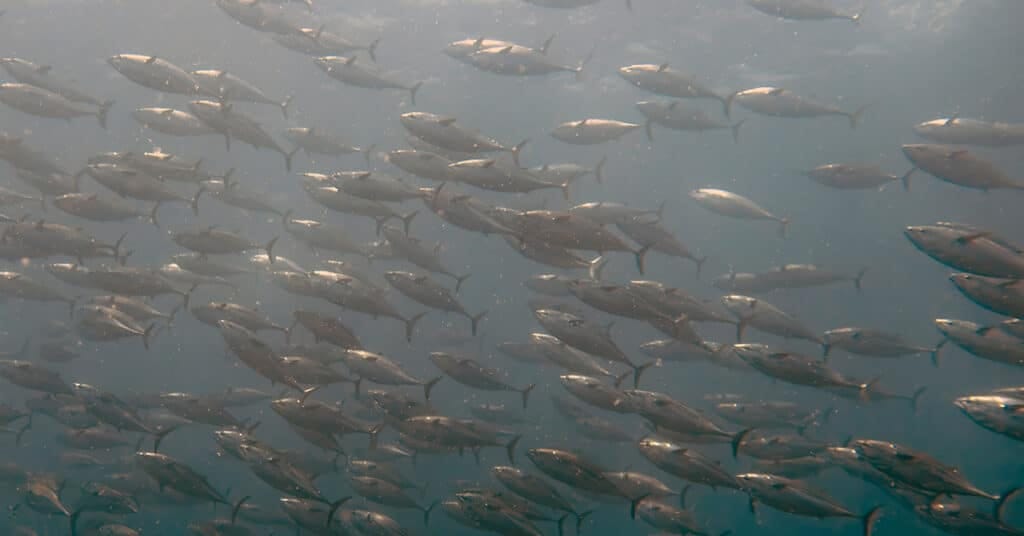
Yellowfin tuna (Thunnus albacares) has a milder flavour and firmer texture than skipjack. In Belgium there is a preference for yellowfin because of the taste. The flesh stays intact better, making it more pleasant for those who want recognisable pieces of fish in the tin. Yellowfin is also sold as fresh tuna steak, which already indicates that it’s a higher quality piece of fish.
Albacore or white tuna (Thunnus alalunga) is the mildest of the three. The flesh is lighter in colour — almost pink to cream — and has a more subtle flavour. Albacore has light flesh with a considerably milder taste and the pieces are larger than skipjack, which makes it generally more expensive too. Cnkyfood Those who don’t like a strong fishy taste usually choose this.
🍣 Watch the label!
Most tinned tuna mentions the species, but sometimes only as ‘light tuna’ or ‘white tuna’. Does it only say ‘tuna’ without further specification? Then it’s most likely skipjack, the cheapest and most commonly used species. Also look out for the catch area if it’s mentioned, that can give you a lot of information about sustainability.
What about bluefin tuna?
Bluefin tuna is the most expensive and most exclusive tuna species, but you won’t find it in an ordinary supermarket tin. Bluefin tuna quickly costs between 150 and 180 euros per kilo and is almost exclusively used for sushi and sashimi in exclusive restaurants. Moreover, the population is heavily overfished — so you needn’t go looking for this.
Bigeye tuna is a species you’ll encounter in some sushi restaurants, but that’s also under pressure. For tinned versions of this species: leave them alone.
Water, oil or something else: the liquid makes a big difference
The liquid in which tinned tuna is stored has a direct influence on taste, calories and usability. For many people this is the first filter when choosing a tin.
Tuna in water: the most neutral choice
Tuna in water is lower in calories because it only contains the fats that are naturally present in the fish. Per 100 grams you’re looking at about 108 kilocalories and less than 1 gram of fat. The protein content is around 23 to 25 grams — comparable with the variant in oil.
The disadvantage you hear most often: tuna in water is dry. The texture is more compact, the flavour more neutral. That’s not necessarily a problem — anyone who mixes the fish with other ingredients such as mayonnaise, olive oil, vegetables or a sauce will hardly notice any difference. But anyone who opens a tin directly and eats it will find tuna in water rather leaner.
A clever middle ground: buy tuna in water and add a dash of good olive oil yourself. That way you have control over the number of calories and over the taste.
Tuna in oil: fuller and tastier, but watch which oil
Tuna in oil clearly has more flavour and a juicier, softer texture. The flesh absorbs the oil during the preservation process, making it more pleasant to eat directly. For Mediterranean preparations — salade niçoise, bruschetta, pasta — it’s the obvious choice.
Despite draining, around 10 grams of fat easily remains on the tuna. That pushes the calorie value up to around 190 to 210 kilocalories per 100 grams. That certainly needn’t be a disaster, but it’s good to know.
The oil itself makes a big difference. Most cheap tins use sunflower oil — perfectly fine unsaturated fat, but omega-6 dominant. Anyone who already gets a lot of omega-6 from the rest of their diet would do better to choose tuna in olive oil. The olive oil in which the fish is preserved is in theory healthy.
However, beware of cheap tins of olive oil tuna: they can taste overwhelmingly of oil rather than fish. The Consumers’ Association tested a tin of white tuna in olive oil that received only one star from taste panel members, with comments that it tasted more of oil than tuna. The oil from a tin of tuna in olive oil is actually usable itself: as a dressing, for frying or through a sauce. That’s a small but useful bonus.
Other variants: vegetable sauce and ‘dry’ tuna
Some brands offer tuna in vegetable sauce. Sounds healthy, but the amount of vegetables is negligible: just a small percentage of onions and peas. That doesn’t really count as vegetables. B-young It’s more of a flavour variant than a proper alternative.
There’s also ‘no-drain’ tuna — a more recent concept where the fish is packed drier and you can spoon out the tin directly. Handy for on the go, but the taste and texture are generally inferior to the traditional variants.
🚨Water vs oil at a glance
Calories per 100g: water ≈ 108 kcal / oil ≈ 200 kcal Fat: water ≈ 1g / oil ≈ 8-12g (even after draining) Protein: comparable for both, ≈ 23-25g Taste: water = more neutral / oil = fuller Best choice for direct consumption: oil Best choice for flexible applications: water
Chunks or flakes: does that make a difference?
Chunks or pieces makes no difference in terms of calories. The difference lies in texture and presentation. Chunks are larger, more compact pieces that stay intact better. Pieces are smaller and fall apart more easily, but are also softer and go through a sauce or topping more easily.
The Consumers’ Association established in their taste test that pieces score higher on average for taste than chunks. For eating directly on bread or in a salad, most people therefore prefer pieces. For hot preparations where the tuna falls apart anyway, the choice makes little difference.
The nutritional value: why tuna is so useful
Tinned tuna is one of the most efficient protein sources you’ll find in the supermarket. Per 100 grams of tuna in water you get:
- Approximately 108 kilocalories
- 23 to 25 grams of protein
- Less than 1 gram of fat
- 0 grams of carbohydrates
- Omega-3 fatty acids (EPA and DHA)
- Selenium
- Vitamin B12 and niacin
The omega-3 fatty acids in tuna are associated with protection against heart disease and possibly strokes. They contribute to lowering blood pressure and bad cholesterol. Tuna is also one of the most important dietary sources of selenium, a trace mineral that acts as an antioxidant.
I find it striking how few people consider the nutritional value of a product they buy weekly. Tinned tuna is cheaper per gram of protein than chicken and almost every other protein source in the supermarket — and it just sits on the shelf without refrigeration.
How much tuna can you eat?
Tuna is high in the food chain, which means it can contain more mercury than smaller fish species. Mercury is a heavy metal that ends up in fish species through sea contamination. The larger the fish, the more mercury it contains. Due to its strong binding properties to proteins, mercury remains in the body for a long time.
Fortunately, skipjack and albacore contain relatively little mercury compared to larger species such as swordfish. The advice is not to eat tuna more than once or twice a week. For those trying to conceive or who are pregnant, the advice is not to eat more than four medium-sized tins per week.
Also watch the salt content. Salt content varies greatly by brand: from 0.4 to 1.6 grams of salt per 100 grams of fish. Those watching their sodium intake should compare labels.
👀 This YouTube survivalist lived for 17 days on only tinned tuna in Alaska
How long does tinned tuna keep?
This is where tinned tuna really excels. An unopened tin is essentially three to five years viable after the production date. The date on the tin is a ‘best before’ date, not an expiry date. After that date, quality may gradually deteriorate — taste, texture, smell — but the product is not automatically unsafe.
The Nutrition Centre confirms that tinned goods remain viable up to a year and possibly longer after the best before date, provided it still looks good and the packaging is intact. Look, smell, taste — those three senses are your best guide.
After opening
As soon as you open a tin, the rules change. Never store opened tuna in the tin itself — the metal can cause oxidation and give a metallic aftertaste. Transfer the fish to an airtight container.
- In the fridge (in airtight container): 2 to 3 days
- In the freezer (after transferring): up to 3 months
- At room temperature after opening: no longer than 2 hours
You can keep an opened tin of tuna in the fridge for another 2 days. It makes no difference whether it’s an oil- or water-based tin.
How do you best store unopened tins?
Store tinned tuna in a cool, dry and dark place. High temperatures, humidity and direct sunlight affect quality more quickly. A cellar, interior cupboard or pantry that’s not on an exterior wall is ideal. Always throw away a tin if it’s bulging, damaged or shows rust — a bulging tin may indicate bacterial activity inside.
Shelf life in brief Unopened: 3 to 5 years, possibly longer after best before date (look, smell, taste) Opened in fridge (airtight container): 2 to 3 days Opened in freezer: up to 3 months Storage advice: cool, dry and dark Bulging, damaged or rusted tin: always throw away
How do you tell if a tin of tuna has gone off?
1. Check the tin before opening
Watch out:
- Bulging tin (top or bottom) → sign of gas formation by bacteria.
- Leakage or rust spots (especially at seams).
- Deep dents, especially on the rim or seam.
- Hissing sound or spurting contents when opening.
👉 See one of these things? Do not open and throw away immediately.
2. Smell it after opening
Good tuna smells slightly salty/fishy.
Warning signs:
- Strong sour smell
- Rotten egg smell
- Metallic, strange or extremely sharp smell
Doubt = throw away.
3. Look at the colour and texture
Normal tuna:
- Light pink to beige (depending on species)
- Firm, fibrous
Bad:
- Dark brown or greyish discolouration
- Slimy or mushy
- Mould (rare in tins, but possible after opening)
Sustainability: the MSC label as a guide
Tuna is one of the most fished species globally, and not all stocks are equally healthy. A recent report by the International Seafood Sustainability Foundation showed that 61 per cent of tuna stocks are at a healthy level, 17 per cent are overfished and 22 per cent are at an average level.
The easiest way to make a sustainable choice is to look for the blue MSC label (Marine Stewardship Council). That label guarantees that the fish comes from a fishery that is independently monitored for overfishing, bycatch and ecosystem management. Skipjack and albacore stocks are generally in good shape. If you want to make a sustainable choice, first look for the blue MSC logo.
Bluefin tuna and bigeye tuna are best avoided completely. Those stocks are under severe pressure and moreover are not found in ordinary supermarket tins.
Which tinned tuna is the best now?
An honest answer: there is no absolute winner. But there are clear guidelines.
For taste and direct consumption go for tuna in (olive) oil, preferably yellowfin tuna or albacore in pieces. That gives the most pleasant eating experience without extra preparation.
For versatility and a smart stock choose tuna in water. More neutral in taste, but flexibly applicable. Add a dash of olive oil yourself if you want more flavour. Skipjack is the most affordable option; albacore is slightly more expensive but milder.
For the best price-quality ratio skipjack in water is the logical choice. It’s the cheapest variant, widely available with MSC label and contains the same protein value as the more expensive types.
For an emergency supply I recommend a mix of both: a number of tins in water for versatile use and a number in olive oil for direct consumption without extra ingredients. Always buy with MSC label, choose pieces over chunks and stock several brands so you can rotate for taste.
I’d say: just start. Buy a few tins of different types, taste them side by side and discover what you find tastiest. Tinned tuna is cheap enough to experiment with.
🔗 Read more about nutrition here
Finally
Tinned tuna is one of the most underrated products in the kitchen — and certainly as part of a well-thought-out store cupboard. The differences between water and oil, between skipjack and albacore, between chunks and flakes are real but not overwhelming: it ultimately comes down to personal preference and the use you have in mind. Always opt for a tin with the MSC label, check the tuna species on the label and alternate between variants to keep it interesting. With a few tins of tuna to hand you always have a quick, nutritious meal within reach — no electricity, no preparation, no excuse.