Every year tens of thousands of people in Belgium and the Netherlands end up in A&E after a road traffic accident. More than 20,000 casualties are admitted annually with serious injuries — and sadly hundreds die from their injuries. These are figures you’d rather not read, but which do make clear: the chance that you’ll ever be involved in an accident, or be first on the scene, is real.
And yet most people don’t know exactly what to do when it happens. Panic takes over. That’s precisely why it’s valuable to know the correct actions in advance — not as a theoretical list, but as something that’s truly in your memory when it matters.
This article takes you step by step through everything you can and must do at a road traffic accident: from securing the location, to providing first aid, to the administrative settlement afterwards.
Your own safety comes first
It sounds contradictory, but at a road traffic accident the first concern is not the casualty: it is always yourself. Anyone who puts themselves in danger becomes an additional casualty and only makes the situation worse.
Stop safely and make yourself visible
Switch on your hazard lights (four-way flashers) immediately. Preferably park your car beyond the accident site, so that your vehicle serves as a buffer against oncoming traffic. Switch off the engine. Then put on your high-visibility vest before you get out — not afterwards. In Belgium it’s compulsory to have a safety vest in the car, and in many other European countries the same rule applies.
Get out carefully, on the side furthest from the traffic. Keep your eyes on the road. On a motorway, approaching traffic from behind is at least as dangerous as the accident itself.
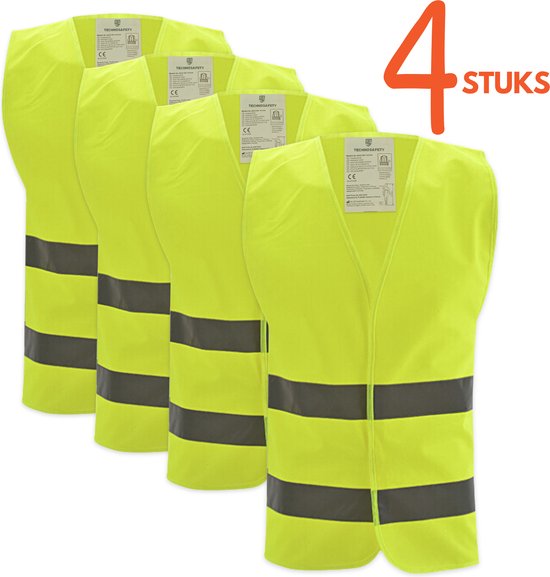
Veiligheidshesjes 4 stuks Geel
Met deze veiligheidshesjes 4 stuks in het geel is het hele gezin of vriendengroep goed zichtbaar. De gele veiligheidsvestjes hebben een universele maat, daardoor past iedereen ze. Dat is wel zo handig, want je weet maar nooit wanneer je de hesjes nodig hebt. Met de klittenband sluiting maak je het hesje eenvoudig dicht bij gebruik in een noodsituatie.
Mark off the location with a warning triangle
Place a warning triangle at sufficient distance from the accident site. The rules of thumb for this:
- Within built-up areas: approximately 50 metres
- On rural roads: approximately 100 metres
- On the motorway: at least 200 metres
Those distances are no exaggeration. At a speed of 120 km/h a car covers more than 30 metres per second. A driver who reacts late has hardly any room to stop.
Note: On the motorway always walk behind the crash barrier. Never walk across the carriageway to place the warning triangle on the other side.
Call the emergency services — and know what to say
Once the immediate surroundings are safe, call 112 (the European emergency number) if there are casualties or if there’s a risk of fire. If there’s only material damage and no casualties, then the number 101 (in Belgium) or the local police number is sufficient.
What do you report to 112?
The control room wants to know quickly and clearly:
- The exact location (street name, hectometre marker on motorways, direction of travel)
- The number of casualties and their visible condition (consciousness, breathing, visible injuries)
- Whether children, pregnant women or trapped persons are involved
- Whether a lorry, tanker or vehicle carrying hazardous substances is involved
- Whether there is fire or smoke development
I would recommend that, if you regularly drive the same routes, you consciously pay attention to hectometre markers or landmarks. In a stressful moment it’s easier to say “at hectometre marker 43.2, direction Antwerp” than to search for an address that doesn’t exist.
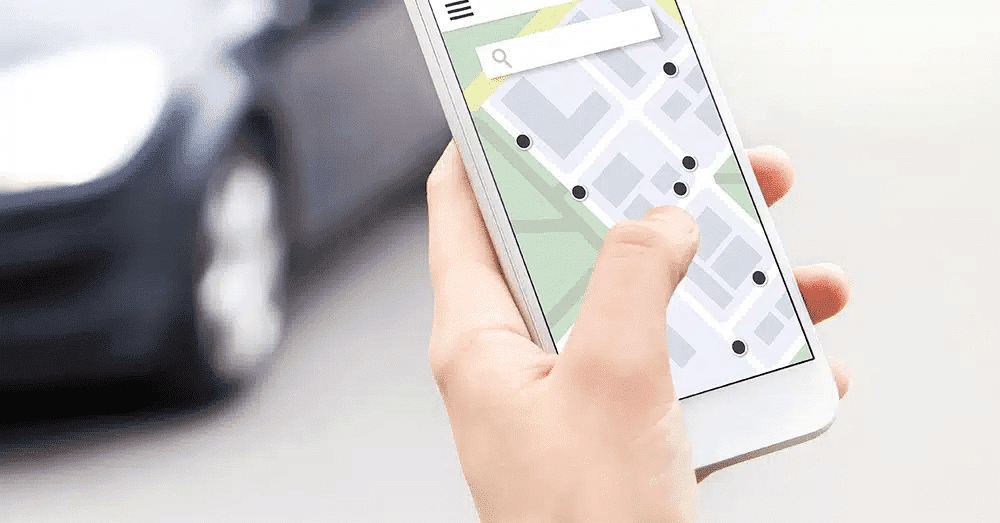
Providing first aid at a road traffic accident
This is the part that most people find most difficult. The fear of doing something wrong paralyses. But in most cases doing nothing is worse than imperfect action.
Approach the casualty correctly
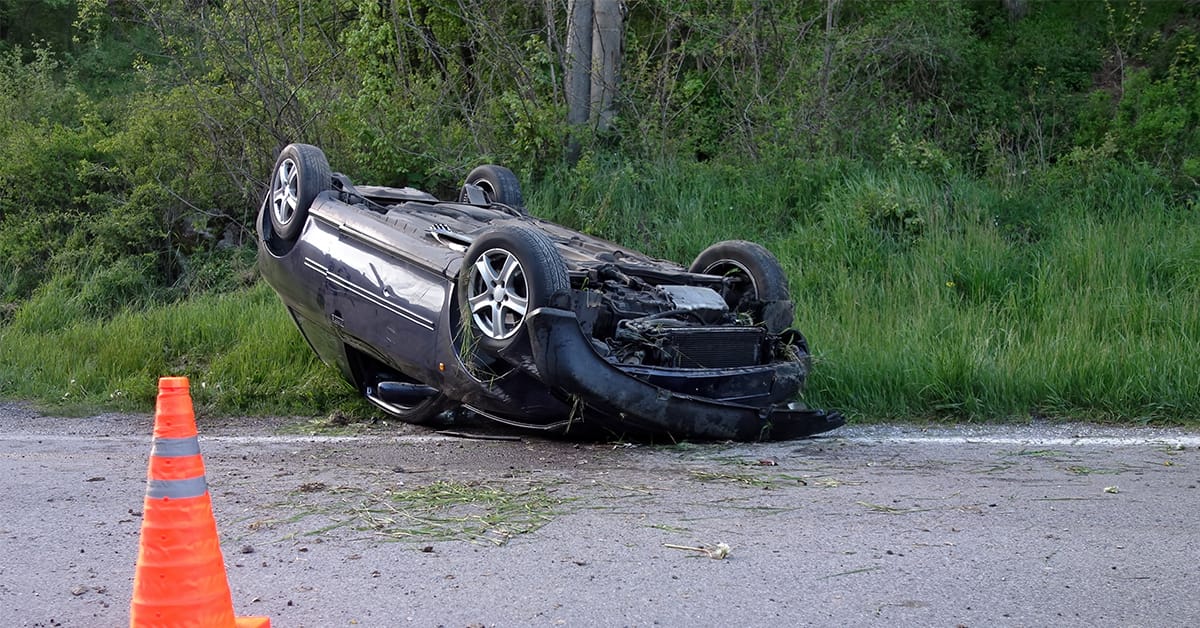
In a road traffic accident the risk of neck and spinal injury is high, especially at high speeds or in a collision where the vehicle has rolled over. Therefore always approach the casualty from the front — via the windscreen — so that the person can see you without turning their head. Speak loudly and clearly. Say something along the lines of: “Stay still, help is coming. Don’t turn your head.” Even if people want to move, you must try to stop them.
Do not move a casualty unless absolutely necessary
The golden rule: only move a casualty if there’s immediate danger to life. Think of fire, smoke, or a vehicle threatening to slide into water. In all other cases leave the casualty where they are. A wrong movement with spinal injury can cause irreparable damage.
If moving is nevertheless necessary, use the ‘Rautek manoeuvre‘: a technique where you grasp the casualty from behind under the armpits and drag them backwards to a safe place. It’s an emergency manoeuvre — not an ideal solution, but sometimes the only one.
Check consciousness and breathing
Check whether the casualty responds. Tap gently on the shoulder and ask a question. No response? Then check breathing: see if the chest moves, listen for breathing sounds, and feel with your cheek whether there’s air.
- Unconscious but breathing normally: place the casualty in the recovery position and wait for the emergency services.
- Unconscious and not breathing: start resuscitation immediately. Give 30 chest compressions followed by 2 rescue breaths. Have a bystander fetch an AED in the meantime if one is nearby.
🔗 Read some life-saving first aid tips from the Red Cross here
Treat first what kills first
With multiple casualties the triage principle applies: treat first what is most immediately life-threatening. A serious haemorrhage takes priority over a broken arm. Someone who isn’t breathing has more urgency than someone who is conscious and complaining of pain.
With serious bleeding press firmly on the wound with a clean dressing or if necessary an item of clothing. Use disposable gloves if you have them to hand — not only for hygiene, but also to protect yourself.
Important: Never enter a damaged vehicle. Airbags that haven’t yet deployed can still go off later. Don’t move or drag the vehicle either. Provide assistance through an open window or door.
What do you do if you’re trapped yourself?
A scenario that nobody wants to experience, but which does happen: you’re trapped in your vehicle after a collision. Doors won’t open, the dashboard is pressing against your legs.
Stay as calm as possible
Easier said than done, but panic costs energy and oxygen. Try to breathe calmly. If you can move, then switch off the engine to reduce fire risk.
Use a safety hammer
A safety hammer with seat belt cutter is a small tool that makes the difference. Mount one within reach in your car — not in the glove box which you might not be able to open after a collision. With the hardened point you smash a side window (never the windscreen, which is made of laminated glass), and with the blade you cut through the seat belt if the buckle is jammed.
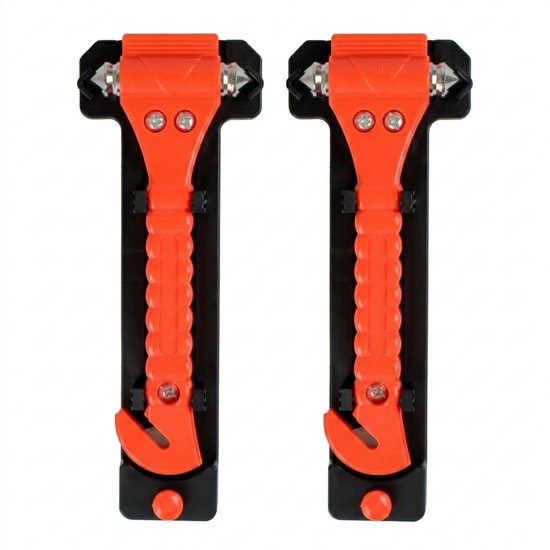
Veiligheidshamer met gordelsnijder – 2 stuks
Deze veiligheidshamer met gordelsnijder is onmisbaar in elke auto. Deze compacte noodhamer combineert veiligheid, functionaliteit en betrouwbaarheid in één ontwerp. Dankzij de dubbele hamerkop, het ingebouwde gordelmes en de meegeleverde houder met bevestigingsmateriaal ben je altijd voorbereid op noodsituaties onderweg.
Wait for the fire brigade in case of serious entrapment
In case of serious entrapment — when metal is deformed and the vehicle is physically holding you — waiting for the fire brigade is the only option. They have hydraulic shears and spreaders to cut the vehicle open. Don’t try to prise metal parts yourself: that can worsen injuries.
Emergency equipment that belongs in every car
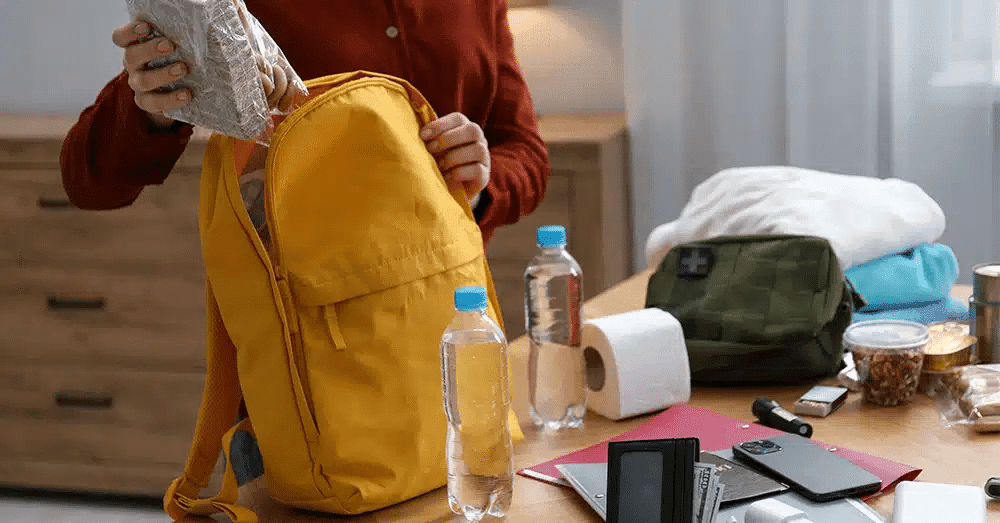
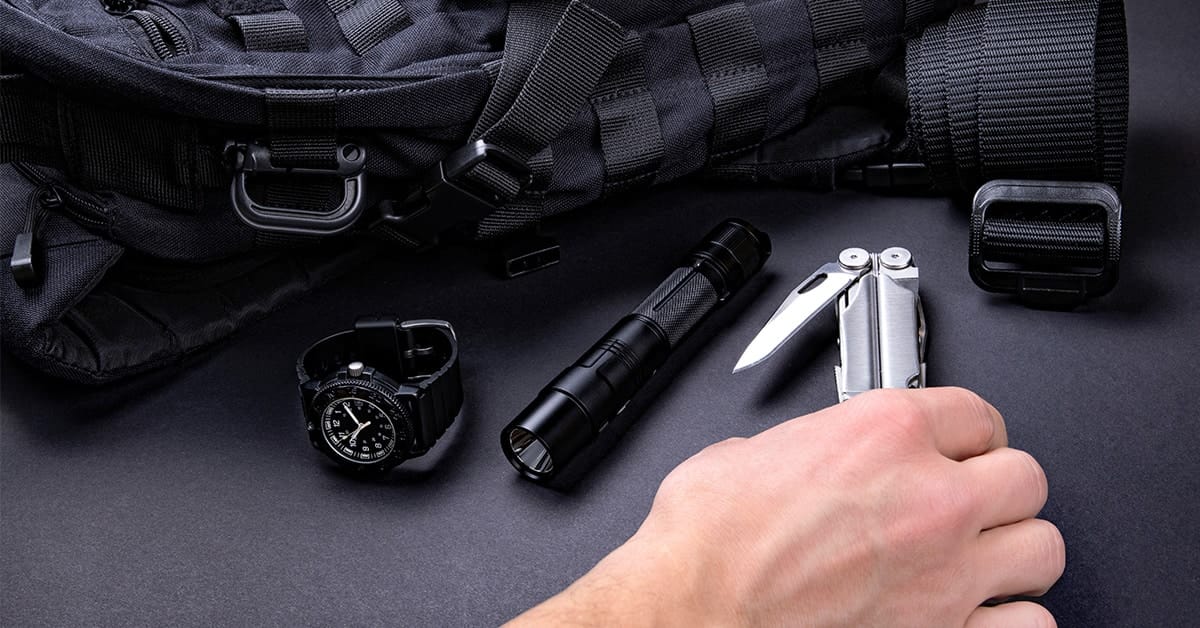
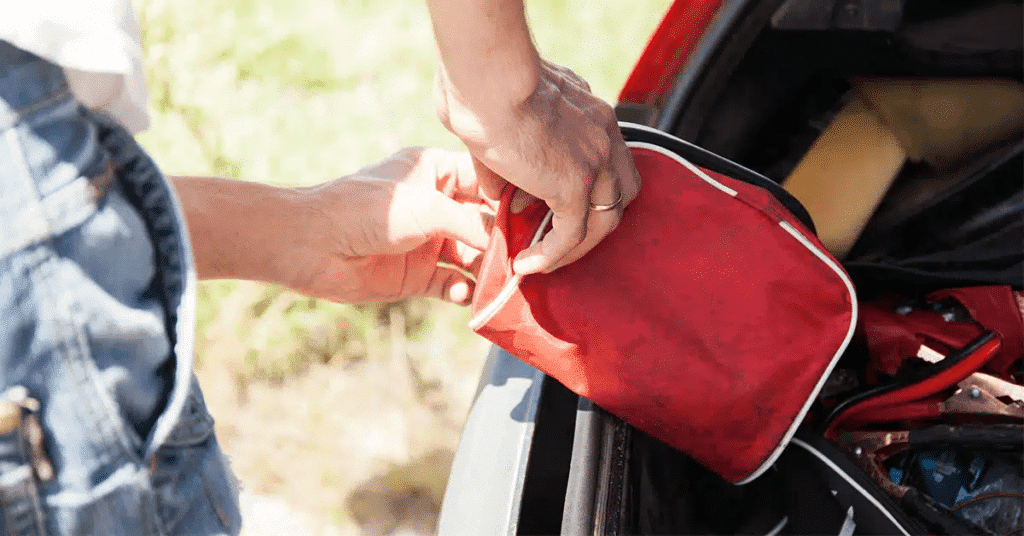
You can’t prevent everything, but you can ensure that you’re well equipped. I actually find it strange that many of these items aren’t even compulsory in the Netherlands, whilst they are legally required in countries such as Belgium, Germany and Austria.
👇 read here what should be in your essential emergency kit for your car
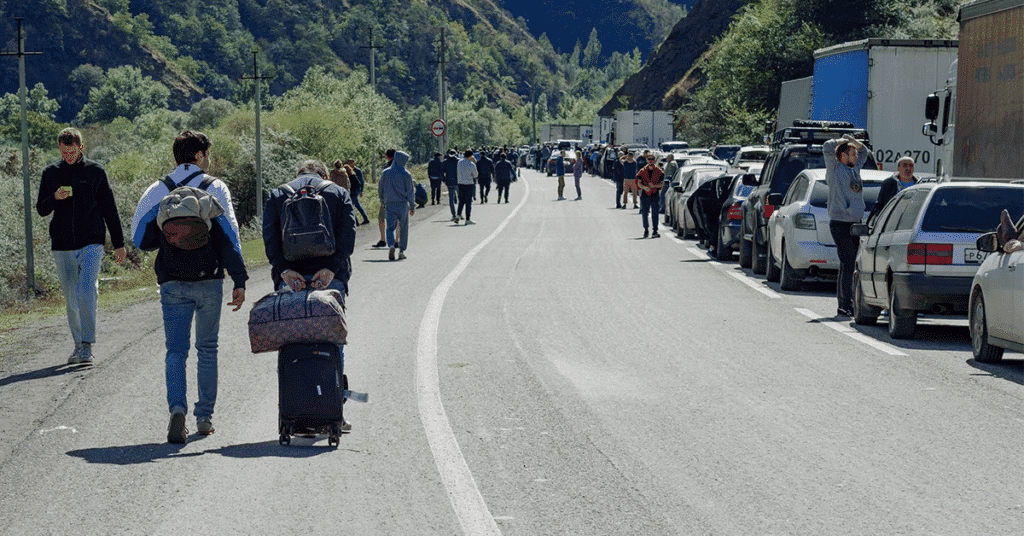
Valuable additions
In Belgium you are legally required to have a first aid kit in your vehicle. In the Netherlands this requirement doesn’t apply, but anyone who regularly drives through Europe would do well to adapt their equipment to the strictest requirements. That saves discussion during a check and gives you the means to act in an emergency situation.
After the accident: the administrative side
Once the initial shock has passed and the emergency services are on site (or if it’s an accident without injuries), the paperwork begins.
Complete the European Accident Statement
This form — often a blue document with carbon paper — is the standard document with which you record an accident. Fill it in together with the other party involved. Note the circumstances, make a sketch of the situation, and ensure that both parties sign the front and back.
Don’t have a form to hand? Then note at least: name, address, telephone number and insurance details of all those involved, registration numbers, and the names of any witnesses.
Document everything with photographs
Take photographs of the damage to all vehicles, the positions on the road, tyre marks, traffic signs and the general situation. Do this from multiple angles. These photographs are of great importance later for the insurer and possibly for the police.
One important point: only take photographs of the situation and the vehicles. Photographing or filming victims is not only unethical, in some cases it can also be a criminal offence.
Report the accident to your insurer
Inform your insurer within 24 hours about the accident. If you’ve already made a report on site via mobielschademelden.nl (Netherlands), then the details are automatically forwarded. If not, then contact them yourself.
Go to the GP — even with minor complaints
This is something many people skip, and that’s a mistake. Whiplash complaints, headaches or back pain sometimes only manifest themselves days after the accident. The longer you wait with a doctor’s visit, the more difficult it becomes to demonstrate the connection between the complaints and the accident. That can cause problems later when claiming damages.
Hit and run: you cannot simply drive away
It sounds obvious, but it happens more often than you think. In Belgium and the Netherlands it is prohibited to leave the scene of an accident if there are injured persons or if damage has occurred — even if you didn’t cause the accident.
You may temporarily leave the location to get help or call the emergency services, but in that case provide your name, address and telephone number to any witnesses.
Leaving the scene of an accident can lead to severe penalties: high fines, revocation of your driving licence, and in serious cases even imprisonment.
A first aid course: the investment you’ll never regret
I cannot emphasise it enough: taking a first aid course is one of the most useful things you can do for yourself and those around you. Not only for traffic accidents, but for any situation in which someone suddenly needs help.
The Red Cross offers courses in both Belgium and the Netherlands that are specifically focused on first aid at accidents. Organisations such as Savitae (Netherlands) also provide targeted training in life-saving action, including the Rautek manoeuvre and resuscitation.
I think that everyone who has a driving licence should take such a course at least once in their life. It doesn’t only provide knowledge, but also the confidence to act when every second counts.