Buying a home battery is not just one decision you make, but a series: how much capacity, which type of coupling, with or without installer, with or without solar panels — and that even before you look at prices. Most buying guides immediately proceed to brands and specifications, whilst the actual question lies beforehand: which system actually suits my situation?
Because a tenant in a flat has different needs than a family with an electric car and heat pump, and someone who wants to actively prepare for power cuts looks at very different characteristics than someone who simply wants to reduce his energy bill.
In this article we approach the choice scenario-driven. We previously explained how home batteries work and the types, and discussed the Zendure SolarFlow 800 Pro 2 as a concrete example of a plug-in system. This article builds on that and helps you determine which type of system suits your reality.
Two technical choices that determine everything
Before we go into the scenarios, there are two fundamental choices that characterise every home battery system. They partly determine which system is feasible for you.
AC or DC coupled?
With a DC-coupled system the battery is directly connected to the solar panels via a hybrid inverter. The power only needs to be converted once from direct current (DC) to alternating current (AC), which makes the system more efficient — typically 92 to 95 per cent. The disadvantage: you need a compatible hybrid inverter, which means you preferably install this if you don’t have solar panels yet, or if you’re willing to replace your existing inverter.
With an AC-coupled system the battery has its own inverter and you connect it to the alternating current network in the house. It charges via AC power, regardless of the source — solar panels, the grid, or both. That makes it more flexible and compatible with virtually any existing installation, but the efficiency is slightly lower: 85 to 90%, because the power is converted twice.
👊🏻 Rule of thumb
If you already have solar panels and a standard inverter, then an AC-coupled system is the least invasive choice. If you’re installing everything new, then it’s worth looking at DC coupling.
Fixed or plug-in?
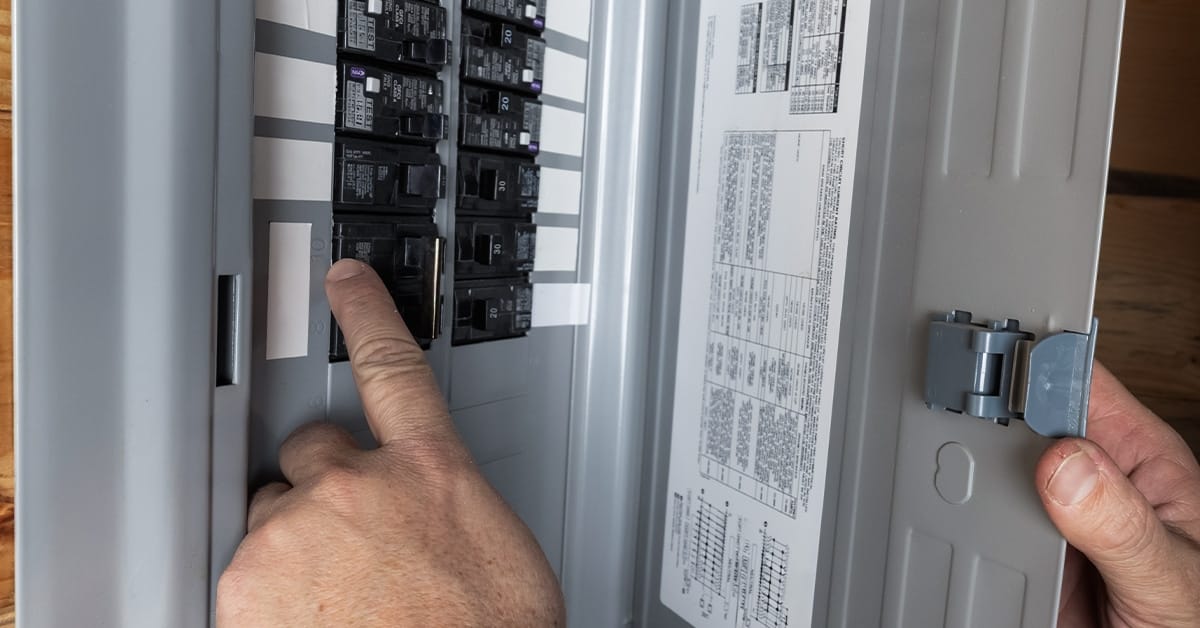
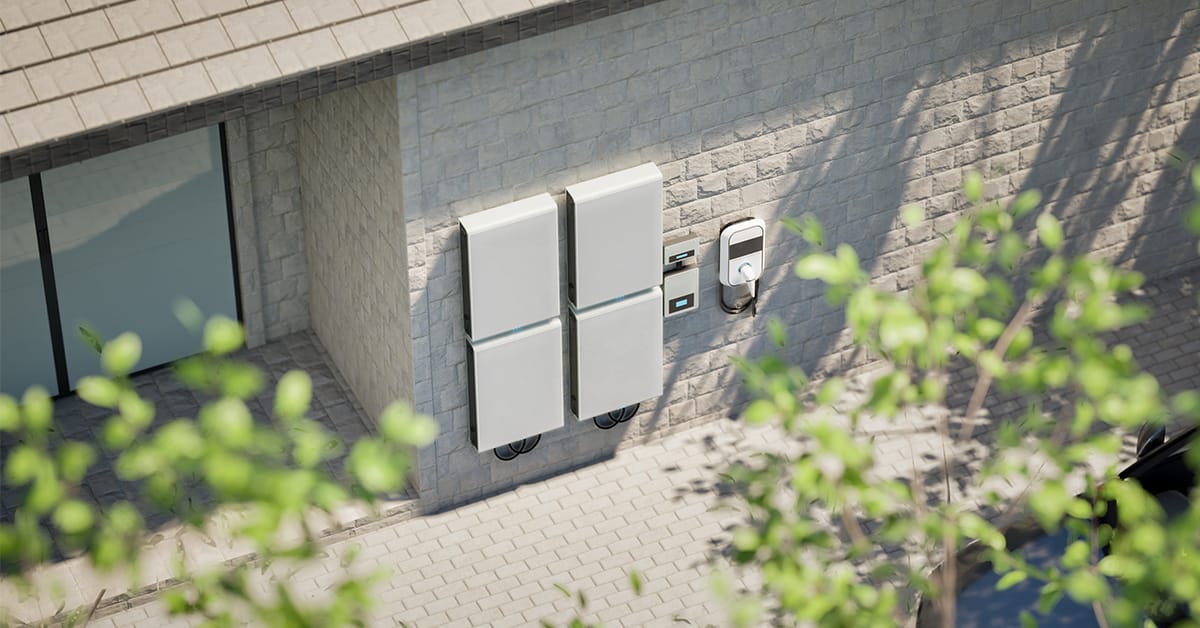
A fixed system is professionally installed and is connected to the fuse box. It can handle larger capacities, typically has more capacity and can — provided equipped with the right inverter and switch — provide the entire home with emergency power during a power cut.
A plug-in system connects to an ordinary socket and works without an installer. The capacity per unit is limited (1 to 3 kWh), the maximum discharge power is around 800 watts, and emergency power is limited to what you connect to one socket. You can read more about this in our article about the Zendure SolarFlow 800 Pro 2.
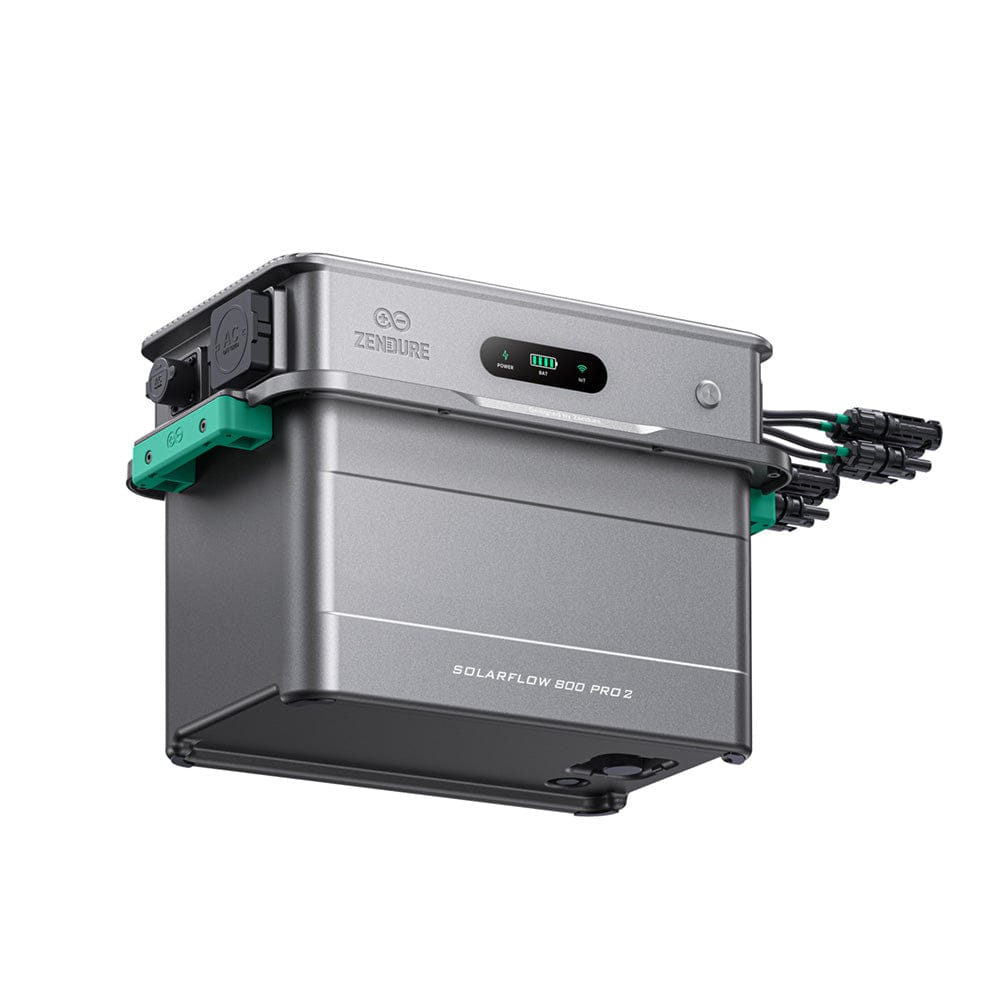
SolarFlow 800 Pro 2
Thuisbatterijsysteem voor zonnepanelen met een opslagcapaciteit van 1,92 kWh.
Scenario 1: you rent and have no solar panels
This is the scenario in which most people consider a home battery impossible, but that is more nuanced than thought.
What is possible?
A plug-in home battery legally falls under normal household use — just like a fridge or a washing machine. You don’t need permission from your landlord and you don’t make any modifications to the electrical installation. You connect it to a socket, link it to your smart meter and you’re ready.
Without solar panels, however, the role of the battery changes completely. You don’t charge it with your own solar power, but with cheap grid power at times when the energy price is low — with lots of wind at sea, in the middle of the night, or with negative electricity prices. You use that stored power during the day or in the evening. This works sensibly in combination with a dynamic energy contract.
What do you need to know?
The payback time in this scenario is longer and more uncertain than when you have solar panels. The saving depends entirely on the price spread in the energy market, which differs from day to day. Those who expect to save money quickly with this will be disappointed.
That said: there is another argument. As a tenant you have few other options to build up a buffer against power cuts. A plug-in battery of 2 to 3 kWh gives you sufficient autonomy during a short power cut to keep a fridge running, charge your phone and have some lighting. That has a real value that you don’t express in a payback time.
ℹ️ Did you know? Housing corporation Vesteda started a pilot project in early 2026 whereby tenants in Amsterdam and Diemen are offered free solar panels and a home battery. Those who live in rented accommodation with solar panels can also actively raise the subject with their landlord.

Scenario 2: you have solar panels but no battery yet
This is by far the most common case. You’ve invested in solar panels, notice that you generate more during the day than you use, and don’t want to feed that energy back to the grid for a low price.
Plug-in or fixed?
If your existing installation has a standard string inverter, there are two routes.
The simplest route is a plug-in system. You install it yourself, the threshold is low and the cost starts around €1,100 to €1,500 per unit. The disadvantage is the limited capacity and low power. For a small household or as a first step this is a fair choice.
The more complete route is a fixed AC-coupled system. That requires a certified installer, a higher investment (€4,000 to €6,000 for a system of 8 to 10 kWh), but also gives you considerably more storage capacity and the possibility of emergency power for multiple circuits in the house — provided the right configuration.
What about the net metering scheme?
In the Netherlands the net metering scheme will disappear on 1 January 2027. That means that self-generated power that you feed back to the grid is valued at a lower rate than what you pay for grid power. A home battery makes that feed-back less necessary and helps you consume more of your own power yourself. In Belgium a similar dynamic exists through the phasing out of the reverse meter.
Scenario 3: you also have an electric car
An electric car is a large power consumer. Depending on your driving behaviour you charge 40 to 80 kWh weekly. That combination with a home battery requires a larger system than the average 8 to 10 kWh that suffices for a family without EV.
Larger and smarter
For those who have an electric car, a capacity of 15 to 20 kWh is more realistic. The battery then functions as an intermediate buffer: during the day it charges with solar power, and in the evening the car charges via the home battery instead of directly from the grid. With a smart energy management system (EMS) this happens automatically at the cheapest moments.
I find this one of the more interesting combinations, because the payback time here can be faster than with a system without EV. The car is an additional consumer that drains the battery well — and that is precisely what a home battery needs to be profitable.
V2H: the car as an extra buffer
A step further is Vehicle-to-Home (V2H): the electric car itself functions as a home battery. The battery of an average electric car has a capacity of 60 to 100 kWh — much larger than a residential home battery. With the right bidirectional charging point and a compatible vehicle, that energy can flow back to the house in the evening.
V2H is not yet a standard solution in 2026: not all cars support it, bidirectional charging points are more expensive and the installation is complex. But it is a technology that is maturing rapidly and for those thinking about energy independence in the longer term, it is certainly worth exploring.
Scenario 4: you have a heat pump
A heat pump heats electrically. That makes it a large consumer, but also a flexible one: it can shift its operation in time to moments when electricity is cheap or self-generated.
Capacity is crucial here
A fully electric heat pump typically requires a home battery of at least 10 kWh, preferably 15 kWh or more. A rule of thumb that installers use: calculate 1 to 1.5 kWh battery capacity per kWp of installed solar panel capacity. An installation of 8 kWp therefore requires a battery of at least 8 to 12 kWh.
Important technical detail: the power of the battery inverter must be at least 3 to 5 kilowatts to be able to feed the heat pump correctly. A system that is too light causes interruptions or does not support the heat pump properly.
Communication between systems
Not every home battery system communicates smoothly with every heat pump brand. An energy management system (EMS) that controls the battery, the heat pump and possibly the solar panels together is not a luxury but a necessity in this scenario. When purchasing, explicitly ask about tested combinations and about the installer’s experience with your specific heat pump brand.
Scenario 5: you want a back-up for power cuts
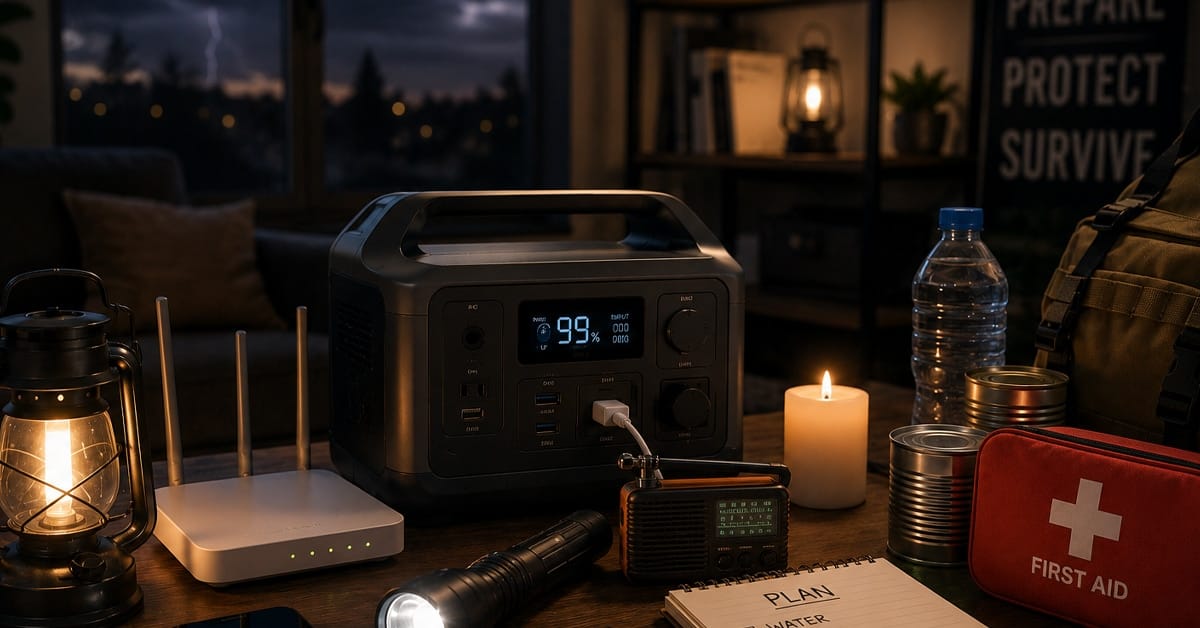
This scenario may appeal most to The Patriot’s target audience, but it is also the scenario where the most goes wrong during purchase. As we explained earlier in our article about home batteries: a standard home battery fails during a power cut. That is a safety requirement, not a defect.
What you really need
For true emergency power functionality you need a system that supports islanding operation: the home is automatically disconnected from the grid during an outage, after which the battery and possibly the solar panels take over the power supply. That requires an inverter that can work off-grid, an automatic transfer switch (also called a back-up box or gateway) and sufficient battery capacity for the desired autonomy.
There are three levels of protection, depending on how far you want to go:
- Emergency socket — a single socket on the battery itself to which you manually connect critical appliances. Simple, cheap, limited.
- Partial back-up — a specific group in the distribution board (fridge, lighting, router) remains powered during an outage. Requires a fixed system with the correct installation.
- Full house coverage — the battery takes over the entire installation. Requires the largest capacity, the highest investment and careful configuration.
Off-grid or hybrid emergency power?
There is a difference between a system that temporarily runs in islanding mode during an outage (hybrid emergency power) and a system that operates completely independently of the grid (off-grid). Off-grid living is a different category: you have no grid connection or want to be independent of it, and you combine a large battery bank with multiple generation sources. The capacities and costs are then in a different range — typically from 20 to 30 kWh, sometimes much more.
For those who simply want the fridge to keep running during an outage of a few hours, a fully off-grid system is oversizing. For those thinking about longer periods of grid outage — something that governments in Europe are increasingly warning about — the step towards a larger, more robust system is worth considering.

An honest word about complexity
The more systems you combine — solar panels, home battery, heat pump, charging point, dynamic contract — the more complex the control becomes and the more dependent you are on a well-functioning EMS. Those systems work seamlessly together in theory. In practice, there are compatibility problems, software updates that break something and installers who have insufficient experience with the combination.
Start simple. A well-dimensioned system that does what it promises is worth more than an integrated system that gives an error message every week. Scale up when the need arises.
Conclusion
There is no universal answer to the question of which home battery system is the best choice, because that question starts with your living situation, your consumption and your goals. A tenant without solar panels has more use for a simple plug-in battery with a dynamic contract than for a fixed system that he will never get round to. A family with a heat pump and electric car needs precisely the opposite. Those who want to prepare for power cuts must know that emergency power requires a specific — and more expensive — configuration that is not included as standard. Make sure you ask those questions before you accept a quote, not afterwards.