For most people, cooking is simple: you turn a knob, switch on a hob and begin. We hardly give it a thought how much that convenience depends on one specific system. However, there are many ways to prepare food, and it is surprisingly useful to be familiar with them.
This week is therefore not about food supplies or new purchases, but about a skill. Can you prepare a meal if your usual kitchen is temporarily unavailable? And do you know which alternatives are most practical for your situation?
That may sound like a theoretical exercise, but it is primarily a way to build more flexibility.
🔗 learn everything about food here
Why this is important
Cooking is a basic skill, but most people only know one way to do it. As a result, a small problem sometimes becomes bigger than necessary. A faulty appliance, work on the utilities or a temporary outage can suddenly have a major impact on something that normally seems self-evident.
Those who know different ways to prepare food have more options. Moreover, you often discover that some alternatives are also simply pleasant in daily life. Think of cooking on a barbecue during the summer, a campfire during a weekend away or a small gas stove during an outing.
Self-sufficiency is not only about emergency situations. It is also about becoming familiar with practical skills before you really need them.
More possibilities than you think
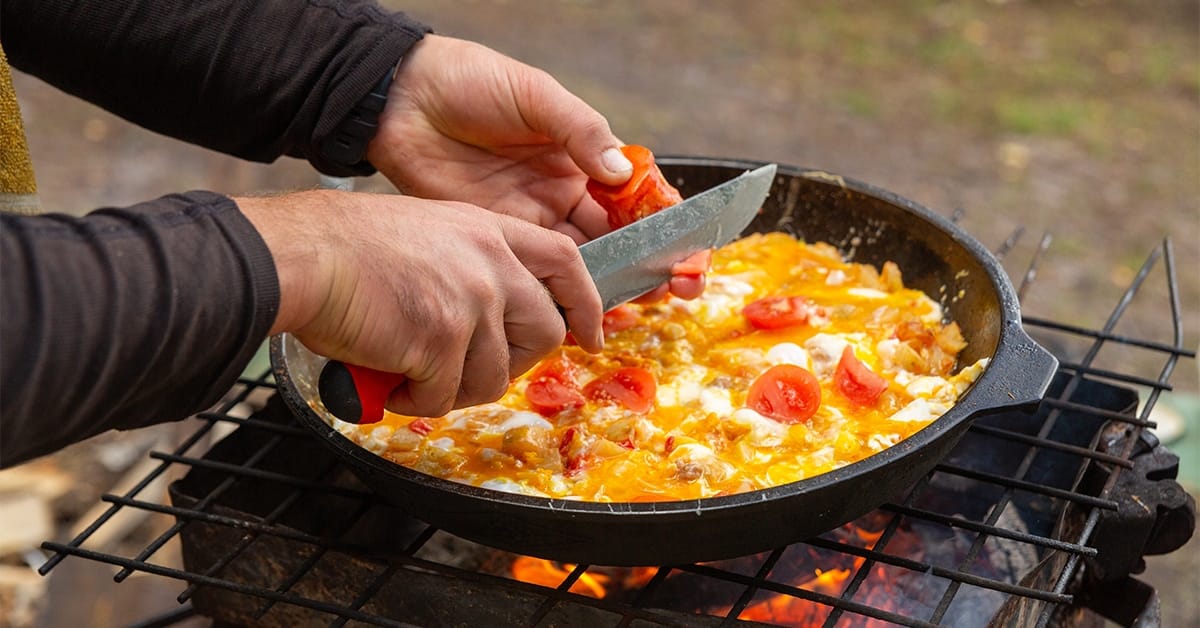
Many people already have alternative cooking methods without consciously thinking about them. A barbecue, a fire basket, a camping stove or even a wood burner can all be used to prepare food.
Each method has its own advantages and disadvantages. A barbecue is versatile, but less suitable for certain dishes. A gas stove is compact and easy to use, but requires a supply of fuel. A wood fire offers many possibilities, but requires a bit more experience and preparation.
The aim is not to become an expert in everything, but to get to know at least one alternative well.
Practice makes the difference
The biggest mistake people make is assuming they will work it out when necessary. In reality, even simple tasks proceed differently once you are not working with your familiar kitchen.
Boiling water sometimes takes longer. The temperature is more difficult to control. Some pots work better than others. These are not major problems, but you learn about them much more easily during a calm practice session than at a moment when you depend on that knowledge. By occasionally cooking in a different way deliberately, you build up experience without any pressure.
What will you do concretely this week?
Choose one alternative cooking method that is feasible for you. That could be a barbecue, a gas stove, a fire basket or another heat source that you already own. Prepare a simple meal on it. That does not have to be a culinary masterpiece. A pot of soup, a pasta dish or a simple casserole will do perfectly.
Pay attention to the practical aspects. How quickly does everything heat up? How much fuel do you use? What material works well and what would you do differently next time?
What often goes wrong?
Many people make things unnecessarily difficult for themselves by immediately choosing complicated dishes. The aim of this week is not to impress, but to become familiar with a different way of cooking.
In addition, it is often underestimated how much difference there is between different heat sources. A barbecue behaves differently to a gas fire, and a wood fire requires a different approach to an electric hob. That is normal. That is precisely why practice is so valuable.
Safety also deserves attention. Always ensure adequate ventilation, use appliances for what they are intended for and work carefully with fire and heat.
Finally
Those who can cook in different ways increase their self-reliance without needing much extra equipment. It is a practical skill that can be useful in unexpected situations, but which is also simply enjoyable to develop.
Moreover, you often discover that alternative cooking methods are not only a back-up, but also a pleasant addition to daily life. And that is precisely the kind of self-sufficiency that this series is about: building skills that are of value both today and tomorrow.
🪖 Self-sufficient in 52 weeks
Every week a small, achievable tip that you can apply immediately. No expensive survival gadgets or unachievable scenarios, but practical steps with which you better prepare your family for power cuts, chaos or unexpected crises.
Follow the series and discover how in one year you grow from zero to completely prepared. 52 weeks, 52 tips – and you are stronger than 90% of the people around you.
Discover all tips here!