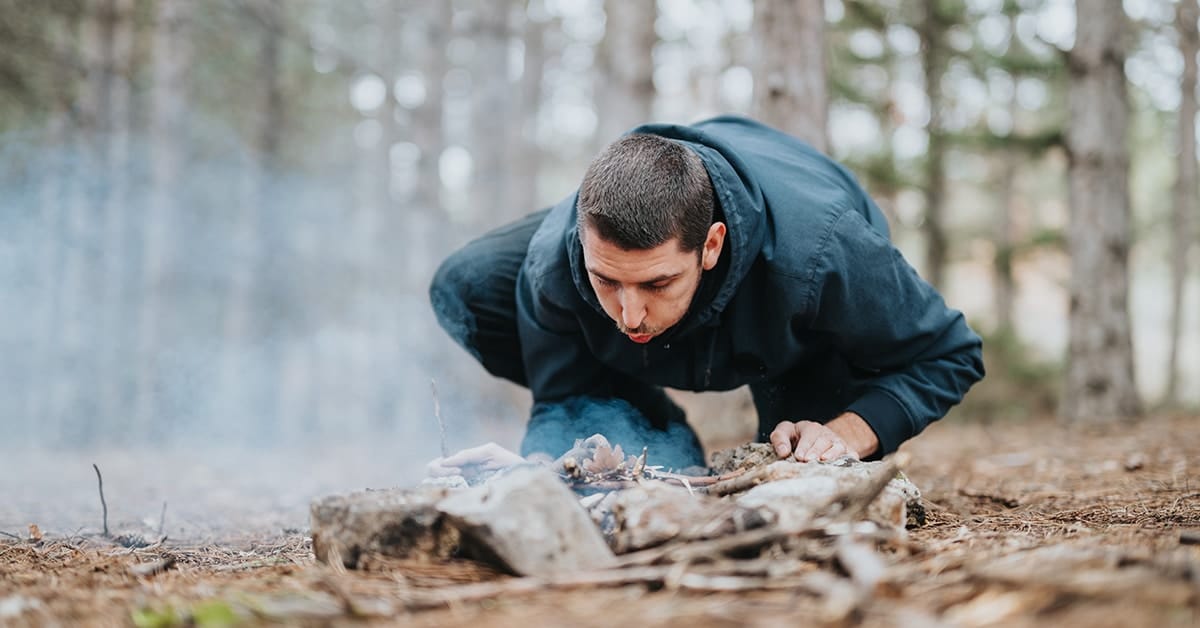
Have you ever thought: what if I were dropped in the wilderness far from any civilisation – would I survive that? And what would I need? And what if you have no choice due to lack of civilisation? Well, below you have a rudimentary starter’s guide. Good for a camping and hiking trip through the Scottish mountains. Probably also good for a minor apocalypse.
First things first, as they say in English. You don’t want to freeze to death. That means suitable clothing that keeps you warm enough and dry. In ‘the great outdoors’ different rules apply than in ordinary life. Your suitable cotton clothing is a lot less suitable for the necessary ‘layering’ system. Cotton retains water and releases it slowly.
Layers, layers and layers
How does that work?
- A few T-shirts made of merino wool or a synthetic material or hybrid. Dries faster, smells slower.
- A warm fleece (again dries faster) jumper, preferably with full zip opening.
- A rain jacket with sealed seams.
- Hat (merino wool) and gloves (fleece)
- A good trekking trousers with zip-off legs.
You can put the layers on or take them off depending on the temperature. The more layers: the warmer. But now you’re standing there in your suitable outdoor material, but in your bare feet…
For sock material you need merino wool again or something synthetic hybrid. Drier socks (here too several pairs) mean fewer blisters. Finally, your footwear must be both robust and waterproof. Think of ‘waterproof’ hiking boots (Goretex or equivalent) with high ankle support for rough terrain. You’d best not economise too much here. The minimum is something like the MH500 boots from Quechua (Decathlon). The ‘gold standard’, however, is the Renegade line from Lowa. More expensive, but durable. Walk these in for a few kilometres at home before you go camping and trekking!
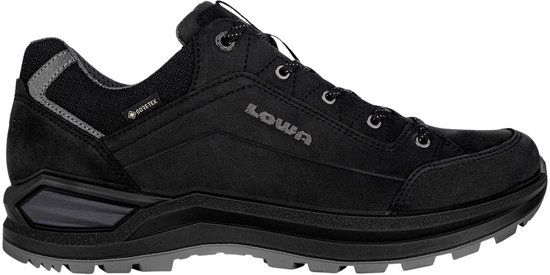
Lage wandelschoenen voor avontuurlijke mannen
De Lage wandelschoenen voor heren, de Renegade GTX, zijn ontworpen voor avontuurlijke mannen die graag de natuur verkennen. Met waterdicht Gore-tex blijven je voeten droog, terwijl de stevige Vibram Renvale buitenzool zorgt voor uitstekende grip op verschillende ondergronden. De nubuckleer en DynaPU tussenzool bieden comfort en demping. Deze schoenen zijn ideaal voor wie voorbereid wil zijn op de verrassingen die de natuur met zich meebrengt. In een onzekere wereld is het essentieel om goed uitgerust te zijn, zodat je elke stap met vertrouwen kunt zetten.
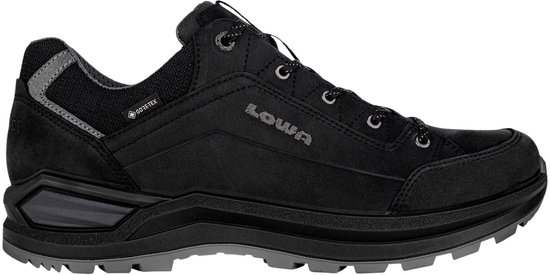
Wandelschoenen voor heren, waterdicht
De Renegade GTX Low wandelschoenen voor heren zijn ideaal voor avontuurlijke zielen die de natuur willen verkennen. Dankzij het waterdichte Gore-tex blijven je voeten droog, terwijl het nubuckleer en de DynaPU tussenzool zorgen voor een comfortabele pasvorm en goede demping. De gripvaste Vibram Renvale buitenzool biedt stabiliteit op diverse ondergronden. Deze schoenen zijn perfect voor degenen die zich willen wapenen tegen de verrassingen die de natuur kan brengen.
Shelter and sleeping comfort
Right. Now you can trek through nature and this in all weathers. But you don’t always want to be on the road (or lack thereof) of course. Shelter or a sheltered spot is important if you want or need to rest. An ultralight 1-person tent is welcome here, preferably under 2kg so it can easily go in your rucksack (more about that later). You can of course also opt for a larger tent for more people, but every kilo counts in this game. Suitable is the excellent MT900 line from the Decathlon brand Simond. You can also go lighter and more specialised, but that has a price.
There you go, a good tent in itself is nice, you’re out of the rain and out of the wind. But lying comfortably is also quite nice. You need a mattress for that. Choose a compact model that doesn’t weigh too much, and that you can inflate with an internal pump. So no dragging extra material (but you’d best put some patches or mattress plasters with the mattress bag – you never know). Our choice? The cheap Vertrex Inflate X1: built-in pump, very compact and a pillow incorporated in the form.
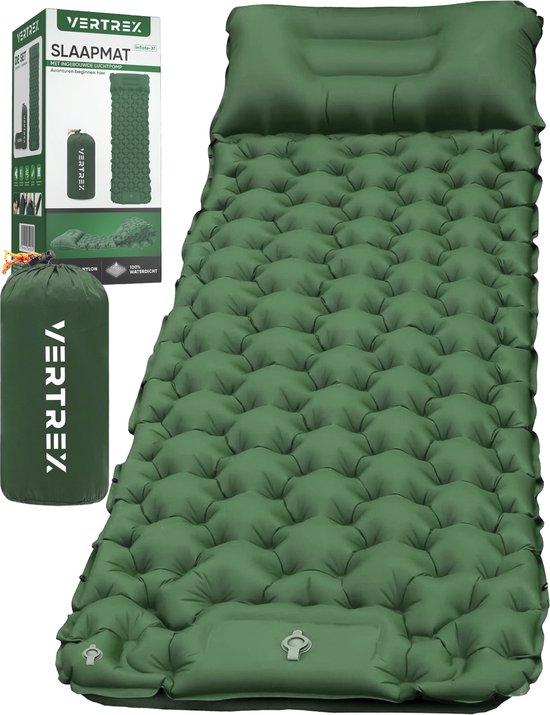
Slaapmat met voetpomp – mosgroen
De Vertrex Inflate-X1 slaapmat in mosgroen is perfect voor avontuurlijke reizigers die comfort en gemak waarderen. Dankzij de ingebouwde voetpomp is de mat snel op te blazen, terwijl de honingraat luchtkamers zorgen voor een stevige ondergrond. Lichtgewicht en waterdicht, biedt deze slaapmat betrouwbare bescherming in diverse omstandigheden. Met deze mat ben je voorbereid op onverwachte situaties in een wereld vol verrassingen.
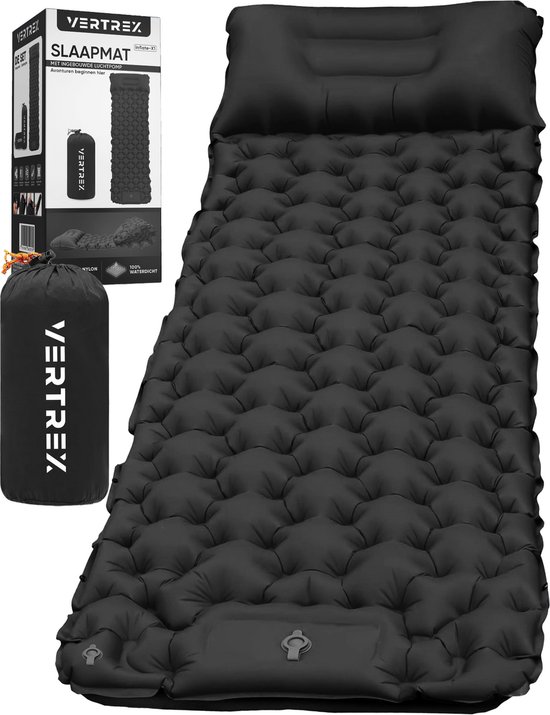
Slaapmat met ingebouwde pomp
De Vertrex Inflate-X1 slaapmat met ingebouwde pomp is ideaal voor avonturiers die comfortabel willen slapen, waar ze ook zijn. Dankzij het lichte, compacte ontwerp neem je de mat gemakkelijk mee. De honingraat luchtkamers bieden uitstekende ondersteuning, terwijl het waterdichte materiaal je beschermt tegen onvoorspelbare weersomstandigheden. Deze slaapmat is een betrouwbare keuze voor wie zich wil aanpassen aan de verrassingen van het leven.
Finally: a good sleeping bag. Here too you don’t want to drag too much weight, but on the other hand get sufficient warmth. Are you going for a very light and compact sleeping bag such as the Coleman Biker Mummy then that’s fine, but then you’d best also be prepared to keep your clothes on as well as a hat if it’s heading towards freezing temperatures outside. Otherwise you’d best go for a ‘four-season’ sleeping bag like this one from Naturehike: the CW700 is barely heavier, but a lot warmer. More expensive too of course.
Food and drink
Convenience and light weight are central to eating in the wilderness. Think of instant meals that only need boiling water. Our recommendation? The ‘easy meals’ from Action. Only comes in two variants (Mexican or Asian), but one pouch of less than 200 grams contains a complete meal for 1-2 people. 1.89 euros each.
How do you heat that up then? There are of course two ways. First the hardest way: on an open fire. Here you want to have made a coal bed so that you have as even a heat as possible. Then the easy option: a gas burner. For that you do first need a burner. Recommendations are the Pocket Rocket 2 from MSR, but there are also super compact things like the Ever Trex Ultra Light, barely as big as a few sugar lumps. Both have a universal thread that you can easily screw on and off a gas canister. You must then of course carry a gas canister (with thread) in your rucksack (so more about that later, promised). Decathlon sells the cheapest, from the brand ‘Forclaz’, their outdoor line.
Finally, you need a metal container for cooking. The ‘old school’ mess tin can serve (just put some socks in it and you’ve barely lost any space). But there are also more modern foldable cooking sets like those from Travelhawk, with cutlery and plates all in it.
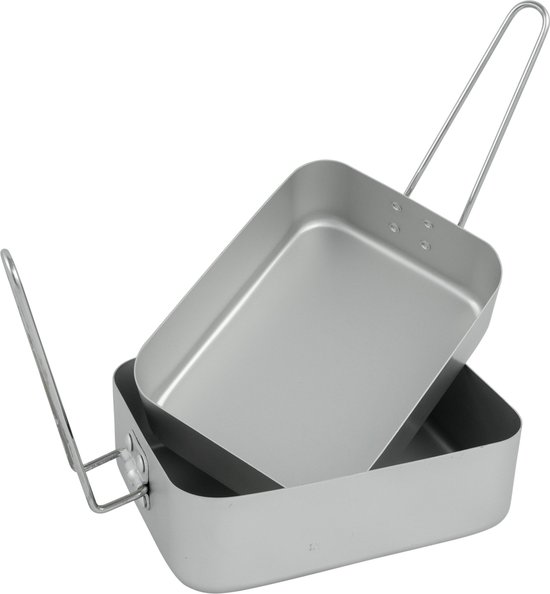
2-delige rechthoekige pannenset
Ontdek de 2-delige rechthoekige pannenset, ideaal voor divers gebruik in de keuken. Deze pannen zijn met stalen klapgrepen uitgerust, zodat ze eenvoudig te hanteren zijn. Met afmetingen van 16×12,5×6 cm en 17,5x13x6 cm zijn ze nestbaar en ruimtebesparend op te bergen. Met een inhoud van 0,9 en 1,5 liter zijn ze perfect voor het bereiden van maaltijden, zelfs in onverwachte situaties. Een handige keuze voor wie voorbereid wil zijn op de verrassingen van het leven.
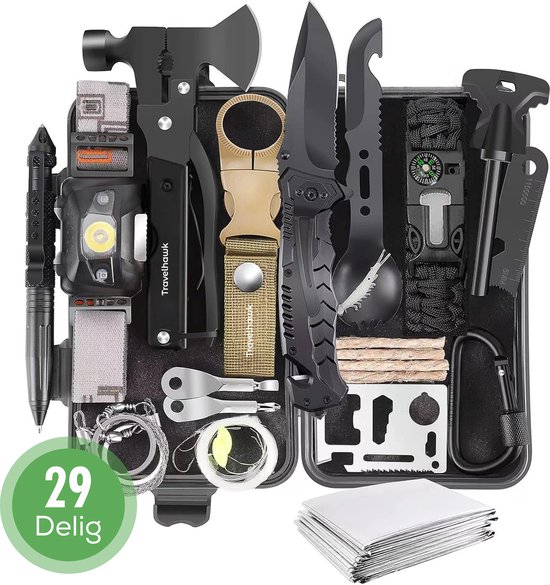
Survival kit met 29 tools
De Survival kit met 29 tools is jouw betrouwbare compagnon voor onverwachte situaties. Of je nu gaat kamperen of gewoon voorbereid wilt zijn, deze lichtgewicht set biedt essentiële gereedschappen zoals een tactisch mes, hoofdlamp en vuurstarter. Dankzij de robuuste, waterdichte case heb je alles overzichtelijk bij de hand. In een onzekere wereld zorgt deze kit ervoor dat je altijd voorbereid bent op wat komen gaat.
You can also forage and hunt, but that is of course subject to currently applicable laws. Hunting with a firearm can’t just be done without a licence, firearms aren’t freely available in Western Europe and moreover they’re also heavy to take along. With a powerful spring-powered air rifle such as the Weihrauch HW-90 you could in theory kill rabbits or squirrels, but again: in the current non-apocalypse that’s not just allowed.
What is tolerated, is picking berries, mushrooms, roots and such that you find in the wild. But eating them is not without danger. Here you’d best use a specialised guide for. Edible things that you can however easily recognise are dandelions, cleavers, nettles and bilberries. Tasty!
For your drinking: keep it simple. Buy one to three good aluminium drinking bottles. These from Quechua (Decathlon again) are fine, with the simple screw cap system. Next you need a nylon stocking of which you cut off a foot. You can hold this over your bottle if you want to fill it at a (running!) stream or river. Next you want all bacteria dead. There are all kinds of systems such as UV light or squeeze filters, but if you ask us water purification tablets with chlorine are still the safest, the cheapest and the lightest. Costs nothing and with one pill you purify 1 litre of water from 99.99% of all nasties.
🔗 discover here how you can make drinking water yourself
Can’t give up your coffee? A small moka pot from Bialetti works just as well on your hob at home as on your gas bottle from Decathlon.
First aid, electronics and miscellaneous
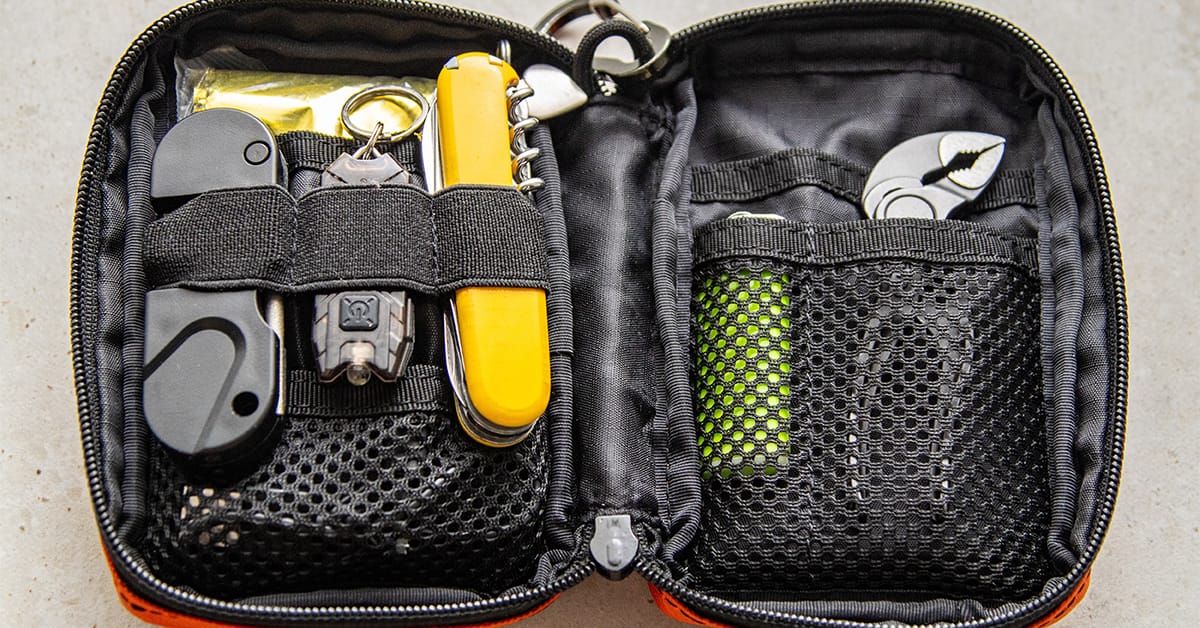
If you’re far from civilisation, you must help yourself. Treat small wounds with plasters. For larger ones you need compresses. But tweezers for splinters and ticks are also useful. The simplest option is an all-in-one box from Travelhawk, for example. Pro-tip: remove some redundant items and add: Compeeds, disinfectant, talcum powder (to keep your feet dry!), a small pot of Vaseline (against blisters). A small tube of sun cream is also not an unnecessary luxury. The small tubes for ‘kids’ often have the best SPF value. Anti-mosquito spray and even a mosquito head net can also be included.
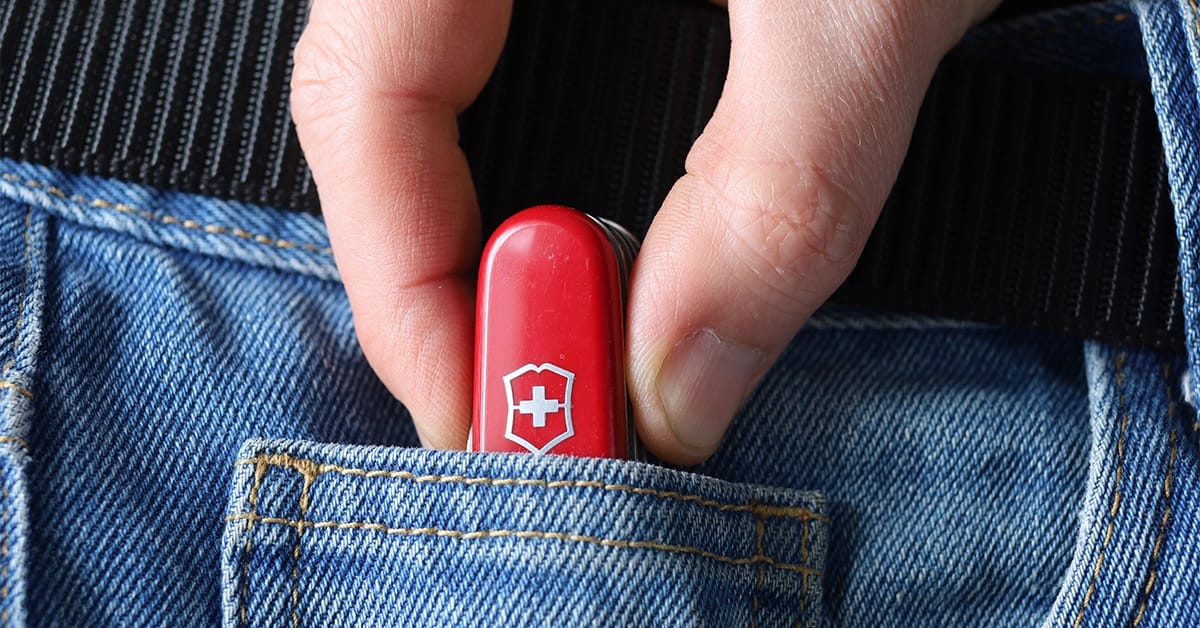
What else? A good pocket knife with scissors, e.g. from Victorinox, can serve you in all kinds of situations – from cutting an apple to filing your nails. A ball of (nylon) rope is equally useful. You can hang clothes on it and with a fishing hook you can even fish with it. A few more lighters for cooking. Firelighters to make a campfire. For toilet paper, it’s best to take a pack of ‘wet wipes’ – available in any supermarket. More versatile than a traditional roll. To keep everything dry (including your clothes!) you also want to make use of enough ‘ziplock-bags’ and small bin bags. The ordinary 3l bags with a seal from Toppits or an own brand in the supermarket will suffice.
For your personal hygiene, you’ll get further with an old-school bar of soap than heavy bottles of shampoo and shower gel. A simple non-electric toothbrush and toothpaste are of course also nice to have. Do you absolutely want deodorant? Then prefer roll-ons to bulky spray cans. Also leave your cotton towels at home. A microfibre towel or cloth (indeed!) will serve you better. Dries your body, but also dries itself much faster.
Also handy: a light power bank. Not just any power bank, but a multifunctional device with hand crank. The ‘FS Power Pack’ has a built-in radio, torch and battery with which you can keep your mobile charged. You can charge it in the sun or generate power yourself using the hand crank.
Your rucksack – your mobile headquarters
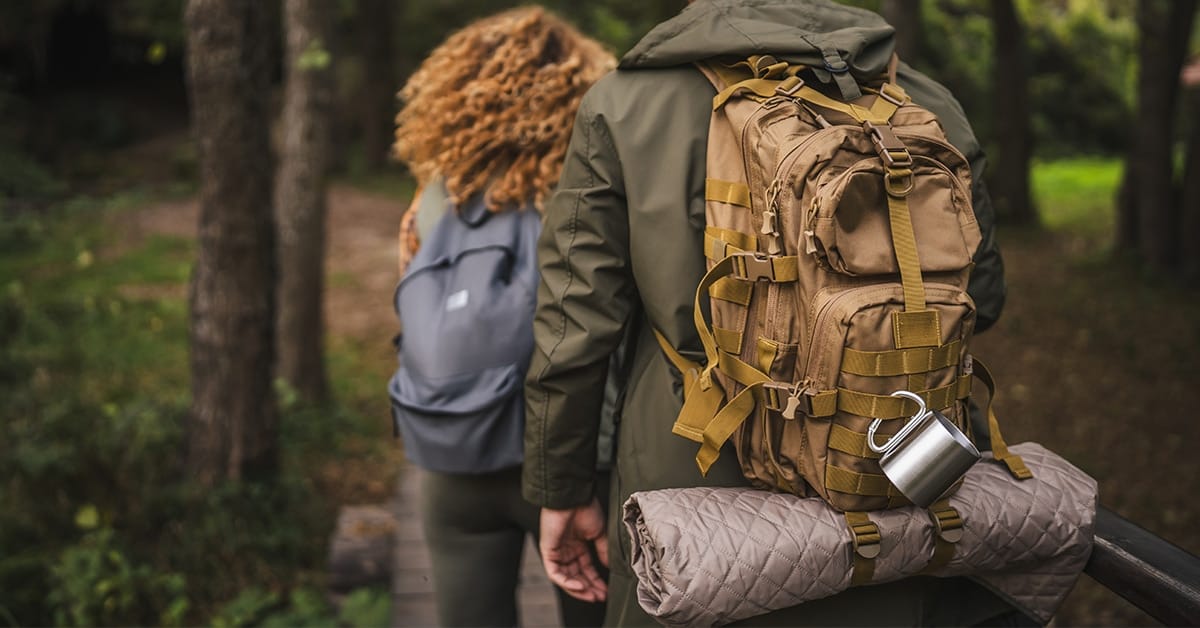
How are you going to carry all this in a ‘bearable’ way? With a suitable rucksack of course. This will be your headquarters on your back: everything will go in it, so it must be sturdy and ergonomic. Forget your old Kipling or Eastpak that you may still have lying around, you need a trekking bag with hip connection and shoulder reinforcement. Heavy things at the bottom, close to your hip.
An excellent entry-level model is the MT100 ‘easyfit’ from Simond (Decathlon). It has no less than 70 litres of volume and comes with a rain cover – and the ‘easyfit’ system adapts to your height. Would you rather not take any risks? Go for the Terra from The North Face (65 litres). Roughly twice as expensive, but trekkers swear by it.
Our experiences on the West Highland Way?
Let us hope that all the above-mentioned equipment brings you much pleasure during a camping trip rather than vital survival gear in nasty circumstances. But in both circumstances all this can already help you a long way.
Our lessons learnt from a recent hiking and camping trip along the Scottish West Highland Way? Every kilo counts. Before you pack your bag; ask yourself: what do I absolutely need and what doesn’t need to come? Take enough clothes that you can change, but not too many so that you don’t break your back. You can always wash things.
It’s also best to leave the tinned food at home, just like that heavy stove that you once used on a South French campsite in 2017. Making your bag light means going faster. For whatever reason that may or must be.