In recent weeks we have already looked at various ways to make food last longer. One technique that should not be overlooked is fermentation. Although it seems exotic or complicated to many people, it is actually one of the oldest and most natural preservation methods that exist.
For generations, food was fermented because it was practical. Fridges did not exist, nor did freezers. Yet people managed to preserve vegetables, dairy and other products for weeks or even months.
Today, fermentation is becoming popular again, not only because it makes food last longer, but also because it creates unique flavours. This week you will become acquainted with the basics of this age-old technique.
Why this is important
Self-sufficiency is not only about producing food, but also about using food optimally. When you have a good harvest of vegetables from the garden, you want to be able to preserve them for as long as possible without using much energy or expensive equipment.
Fermentation offers precisely that. The process uses natural bacteria that convert sugars and thus create an environment in which unwanted bacteria have less chance. As a result, food stays fresh for longer and at the same time acquires a different taste and texture. In addition, fermentation is surprisingly accessible. For many basic recipes you need nothing more than vegetables, salt, water and a glass jar.
🔗 discover everything about food preservation here
A technique that is closer than you think
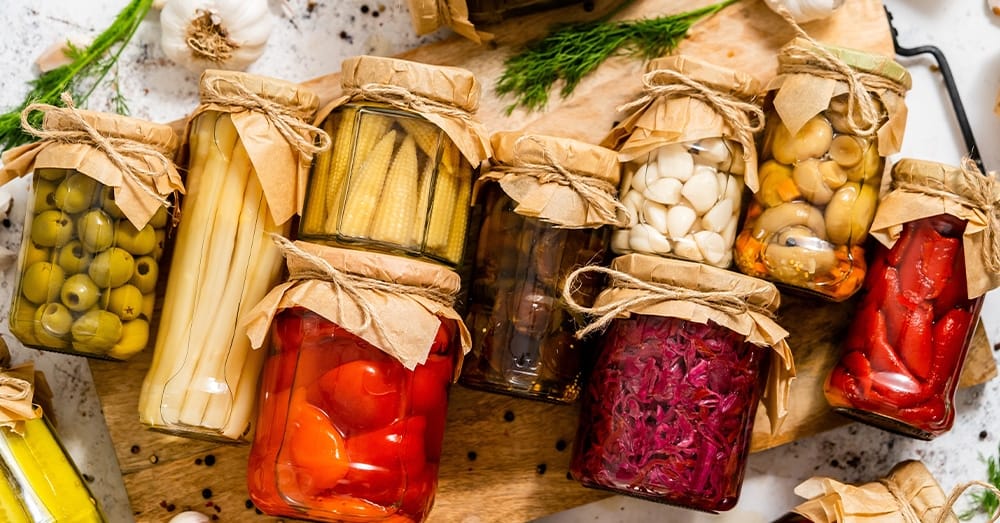
Even though fermentation sounds to some like something for hobby chefs, there is a good chance that you already eat fermented products. Yoghurt, cheese, sourdough bread, sauerkraut and certain types of pickles are all examples of fermentation.
What these products have in common is that natural processes are used to preserve and transform food. By fermenting yourself, you gain more insight into how food works and how people used to deal with surpluses and harvests.
Start simply
As with many new skills, it is wise to start small. Sauerkraut is a classic example. With white cabbage and a bit of salt you can go a long way.
Carrots, radishes or cucumber are also popular vegetables to experiment with. The most important thing is that you work cleanly and follow a simple recipe.
Fermentation does not require constant attention, but it does require some patience. The process is gradual and can take several days to several weeks, depending on what you are making. That waiting is perhaps the most difficult part for many people.
What will you do concretely this week?
Choose one simple vegetable and try a first fermentation project. You do not have to make large quantities. A single glass jar is sufficient to gain experience.
Take the time to follow the process. Watch how the food changes, pay attention to the smell and taste the result when it is ready. Even if it does not turn out perfectly, you learn more by trying once than by reading ten articles.
What often goes wrong?
The most common mistake is impatience. People constantly open the jar, change their approach or expect results after just one day.
Carelessness can also cause problems. Fermentation is a natural process, but that does not mean that hygiene is unimportant. Clean materials and a correct recipe remain essential.
In addition, many beginners are afraid that they are doing something wrong as soon as a smell or appearance becomes different from expected. That is why it is useful to read some basic information beforehand and understand how the process works.
📹 Watch this video about fermentation
In conclusion
Fermenting is a skill that fits perfectly within a self-sufficient lifestyle. It requires little material, little energy and allows food to be preserved naturally for longer.
Moreover, it brings you back into contact with techniques that were taken for granted for centuries, but which we have largely forgotten in modern society.
And as with so many skills, this also applies here: the best way to learn it is simply to start. One jar, one recipe and a little patience are enough to take the first step.