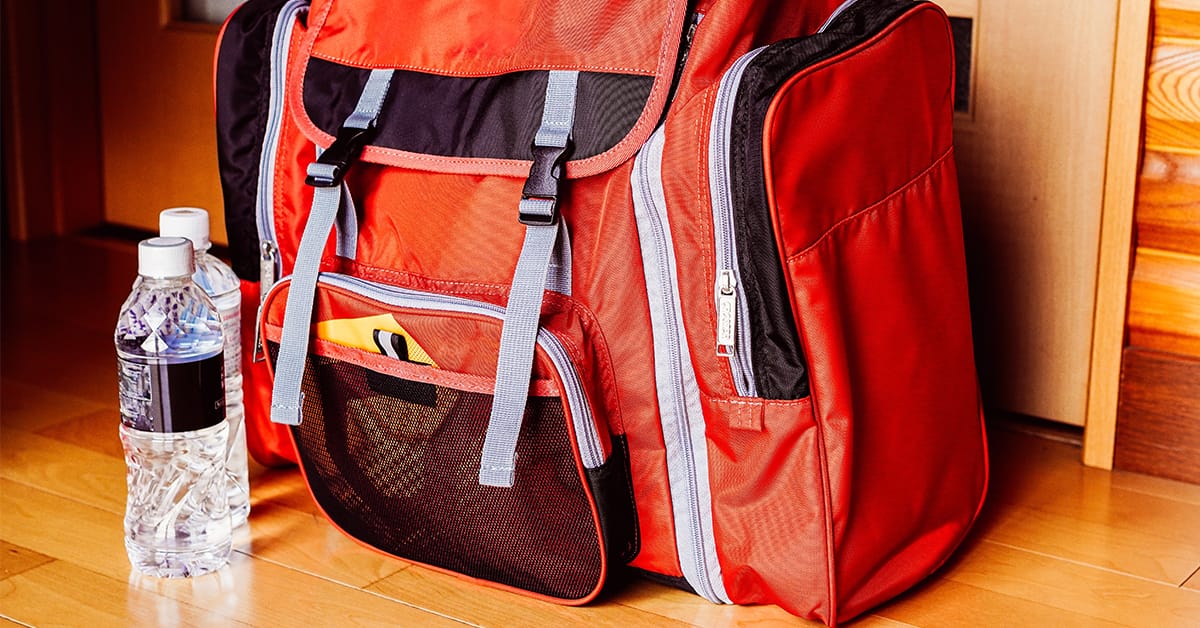
The Belgian federal government launched the ‘Prepared together‘ campaign on 21 April 2026, an initiative by the National Crisis Centre aimed at helping citizens prepare for emergency situations.
The advice is clear: make sure you have an emergency kit at home that will enable you to manage independently for at least 72 hours. Not a panic message, but a sober signal. Because, as the Minister of Home Affairs Bernard Quintin put it: “We no longer live in the same world as 20 years ago.”
I notice that this sort of announcement prompts many people to shrug their shoulders, but it can come in handy more often than you think. A power cut, a flood, a fire nearby: emergency situations occur more often than we think, and they are rarely announced. This article reviews each component of the officially recommended emergency kit and explains why it’s included.
Two parts: the rucksack and the home supply
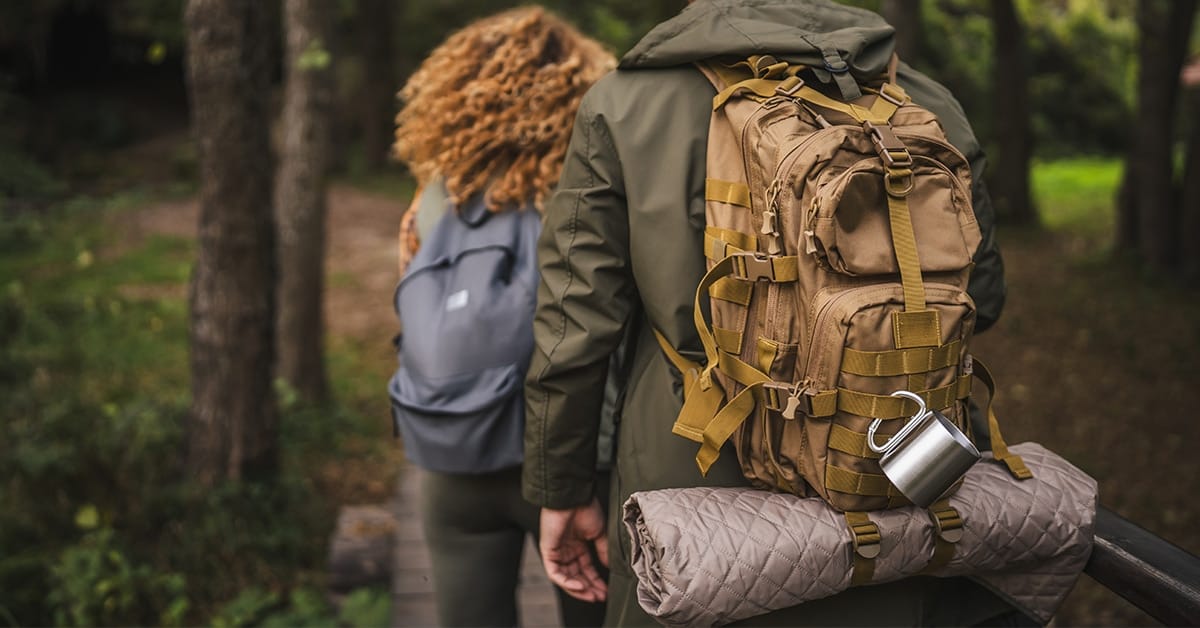
The National Crisis Centre makes a useful distinction. An emergency kit consists of two components: a quick rucksack or bag that you take with you during evacuation, and a broader home supply for situations where you have to stay at home — without electricity, water or internet. Both are necessary, because the situation determines which part you need.
Why this distinction matters
During flooding you need to leave quickly. During a fire in the area or a nuclear incident you are asked to stay inside. Both scenarios require different items, and those who lump everything together are poorly prepared for one or the other.
Documents and contact details
The papers you don’t want to forget
May sound dull, but this is the first thing the Crisis Centre mentions: copies of identity cards, insurance contracts and a list of telephone numbers. Not only of family, but also of your GP, insurance company, gas supplier and your alarm system.
In an emergency situation, digital communication sometimes fails. Your mobile is dead, there’s no network, or you’re too stressed to remember everything. A physical list with the right numbers — on paper, in your rucksack — costs nothing and can make a huge difference.
Also add pen and paper. Simple, but indispensable when you want to leave a message or need to make notes.
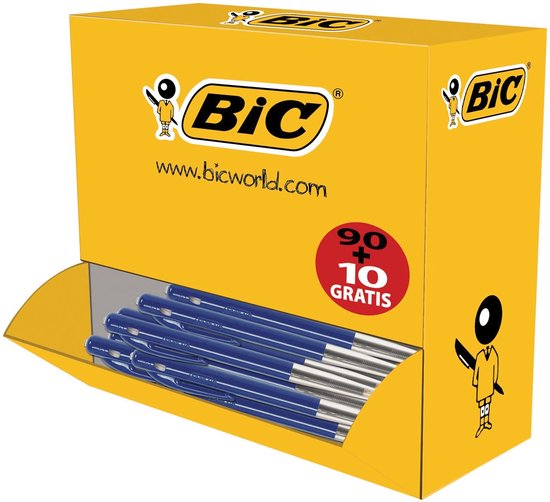
BIC M10 – Balpen – Klikmechanisme – Pennen – Medium Punt (1mm) – Pen – 100 Stuks
De BIC M10 balpen met een medium punt van 1 mm biedt een betrouwbare schrijfervaring, perfect voor dagelijks gebruik. Deze set van 100 pennen, inclusief 10 gratis, is uitgerust met een handig klikmechanisme en een zichtbare inktindicator. Met zijn stevige ontwerp is deze pen ideaal voor spontane notities, zodat je altijd klaar bent om je gedachten vast te leggen, zelfs in onvoorspelbare situaties.

Atomaschrift A5
Het Atomaschrift A5 is een veelzijdig notitieboek dat je helpt om ideeën en belangrijke informatie gestructureerd vast te leggen. Met zijn stevige omslag en aanpasbare pagina’s is het een ideale keuze voor wie bereid wil zijn op onverwachte wendingen in het leven. Dit notitieboek biedt de flexibiliteit om je notities te reorganiseren, zodat je altijd overzicht houdt, ongeacht de situatie.
Water
How much water do you really need?
For the rucksack, the Crisis Centre recommends a minimum of one litre per person — enough for the first few hours until you are somewhere where water is available. For the home supply, this increases to 3 to 10 litres per person per day. That sounds like a lot, but it’s not just about drinking: washing, cooking and toilet use also require water.
An adult drinks 1.5 to 2 litres per day. The rest you use for hygiene and cooking. Anyone who thinks a few bottles will suffice underestimates how quickly water runs out when the tap no longer works.
💧 Watch where you store your water
Don’t store your water reserve in the cellar or garage — those places are the first to be affected during floods.
Food
Eating without electricity or water
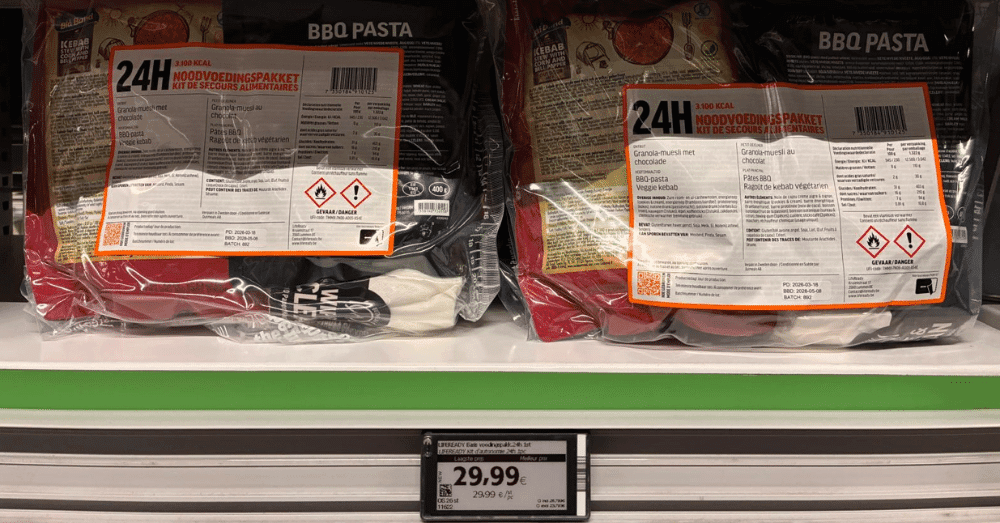
The rucksack is not the place for heavy tinned food. Choose biscuits, energy bars or nuts: light, high in calories and long-lasting without refrigeration. When you evacuate, you’re going to family or a reception centre — dragging detailed provisions along is not necessary then.
At home it’s a different story. Build up a supply of food that keeps for a long time and requires no preparation: nuts, crackers, tinned food. Don’t forget the tin opener — it sounds like a joke, but it’s a commonly made mistake.
Use your supply regularly and then top it up. This way you avoid everything expiring at once at the moment you need it.
First aid and medication
The basics of first aid
A basic medicine kit contains bandages, plasters, compresses, scissors, tweezers, safety pins, painkillers and disinfectants. That doesn’t need to be complete medical equipment — but the absolute basics must be present.
Does someone in your household take regular medication? Then always ensure a reserve supply of at least 72 hours. Chronic medication is precisely the sort of thing people forget when they evacuate in a hurry.
Also add wet wipes, toilet paper, tissues and disinfecting gel. During a water outage, these are the items that maintain your hygiene.
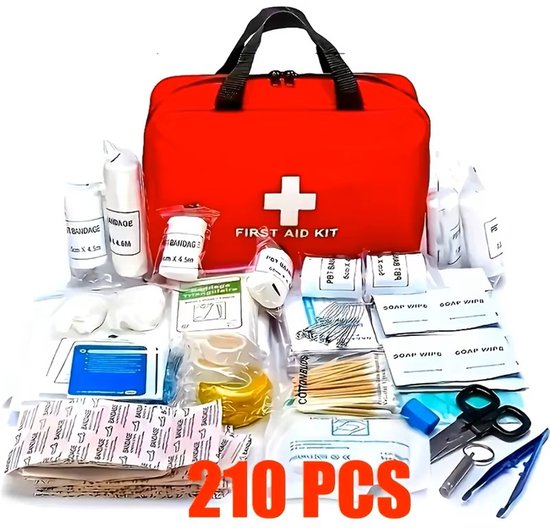
Compacte en draagbare EHBO-kit
Deze compacte en draagbare EHBO-kit is ontworpen om je en je gezin te beschermen tegen onverwachte situaties. Met 210 essentiële hulpmiddelen in een waterbestendige tas ben je goed uitgerust, of je nu thuis bent, in de auto zit of een avontuur in de natuur aangaat. Dankzij de overzichtelijke indeling vind je snel wat je nodig hebt. In een wereld vol onzekerheid biedt deze kit de gemoedsrust die je nodig hebt om goed voorbereid te zijn.
Iodine tablets
The Crisis Centre mentions iodine tablets separately — and rightly so. They protect the thyroid gland from exposure to radioactive iodine. But: never take them on your own initiative. Only when the government officially recommends this. More information can be found at nucleairrisico.be. We also wrote a comprehensive article about it.
Light and warmth
When the electricity goes out
This chapter is underestimated until it’s needed. A torch — preferably wind-up with a handle, so you’re not dependent on batteries — is indispensable. If you do opt for batteries, then always provide spare batteries.
Besides a torch, candles or tealights and a lighter or matches are handy. Not as a romantic addition, but as a practical alternative when there’s no electricity. Blankets provide warmth when the heating fails.
🔗 Choosing the right torch: this is our selection
The emergency radio
Information when everything else fails
This item deserves its own paragraph. An emergency radio on batteries or with a hand crank allows you to listen to official information when internet, television and mobile data fail. That sounds like a scenario from another century — until it actually happens.
The National Crisis Centre strongly emphasises the importance of correct information during emergency situations. Fake news spreads quickly in crisis moments. A radio that connects you with official stations is not a luxury, but an instrument for good decision-making. Also register for BE-Alert, the official warning system of the Belgian government.
🔗 Emergency radios that are ideal for your survival kit
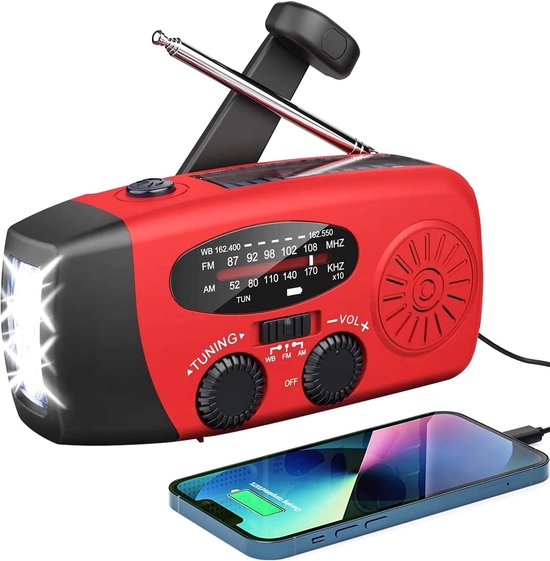
Accuradio voor onverwachte situaties
Ontdek de veelzijdige noodradio, perfect voor onverwachte situaties. Deze compacte, draagbare radio biedt AM- en FM-zenders, een krachtige zaklamp en fungeert als powerbank met een capaciteit van 2000 mAh. Opladen kan via zonne-energie, opwinden of USB-C. Met spatwaterdichte bescherming en een SOS-alarm is deze radio een betrouwbare metgezel voor avontuurlijke uitjes of als voorbereiding op onvoorziene omstandigheden in een steeds veranderende wereld.
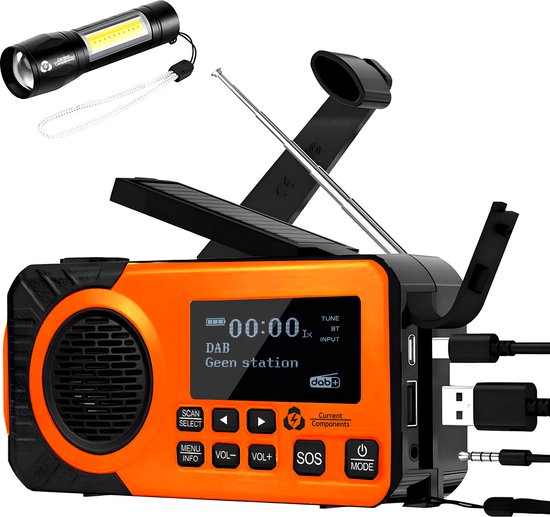
Noodradio – DAB+ met powerbank
De Current Components DAB+ Noodradio is een veelzijdige en betrouwbare gadget voor elke situatie. Met DAB+ digitale radio, Bluetooth-connectiviteit en een 5200mAh powerbank blijf je altijd verbonden. Dankzij de oplaadmogelijkheden via zonne-energie, handzwengel of batterijen ben je voorbereid op onvoorziene omstandigheden. Dit product biedt niet alleen informatie, maar ook verlichting en oplading, wat het een waardevolle aanvulling maakt voor wie zich in een onzekere wereld wil wapenen.
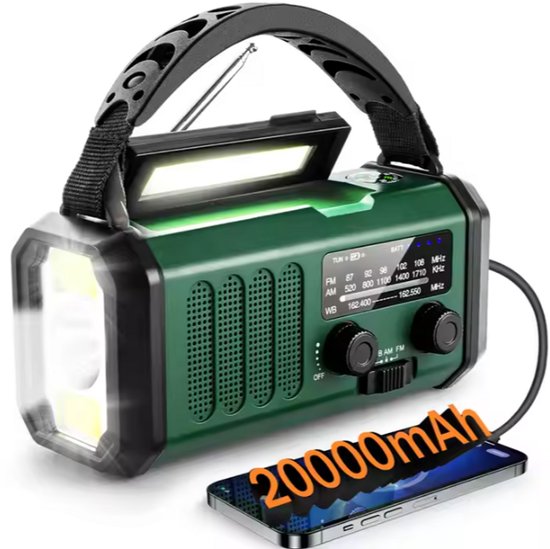
Noodradio – 20.000 mAh
Deze noodradio is een betrouwbare metgezel voor wie voorbereid wil zijn op onverwachte situaties. Met een krachtige powerbank van 20.000 mAh, AM/FM-radio en meerdere oplaadmogelijkheden, waaronder zonne-energie, ben je altijd verbonden. De LED-zaklamp met SOS-modus biedt extra veiligheid. Duurzaam en waterbestendig, perfect voor outdoor-avonturen of noodsituaties. Een essentieel hulpmiddel voor gemoedsrust in een onzekere wereld.
Communication and payment
What if your phone is dead?
A mobile phone charger alone is insufficient if there’s no electricity. Add an external battery (power bank). Also ensure you have a bit of cash: when payment terminals fail — which regularly happens during power cuts — cash is the only alternative. Think of an amount for approximately 72 hours, but don’t keep a large sum at home.
A multifunctional penknife and a whistle
Small items, great use
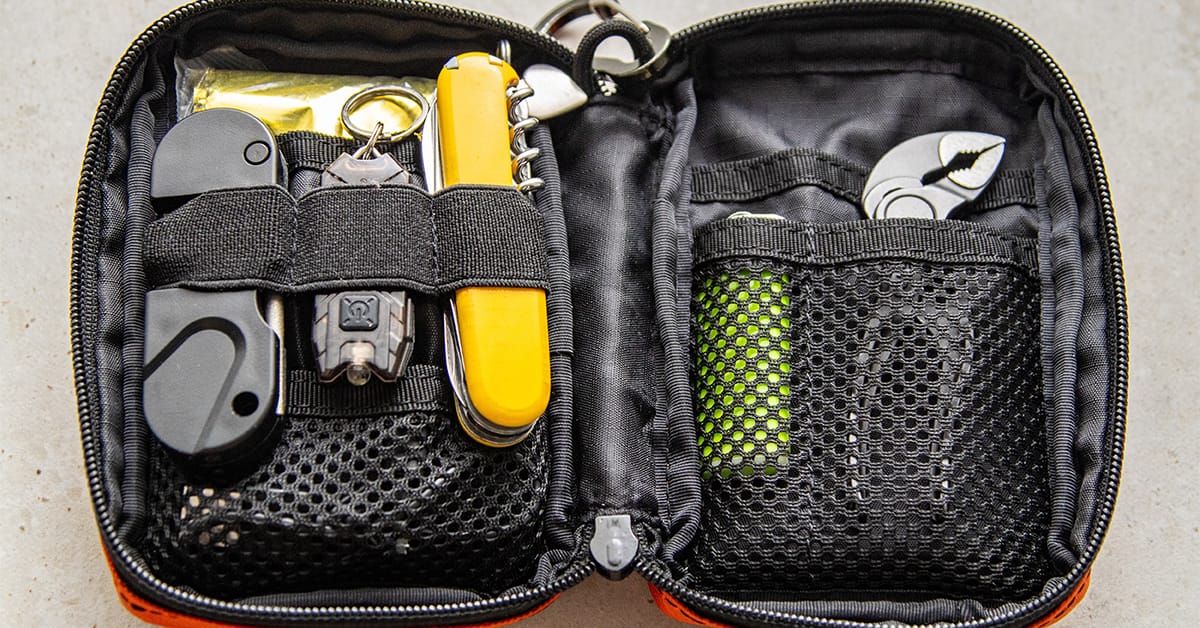
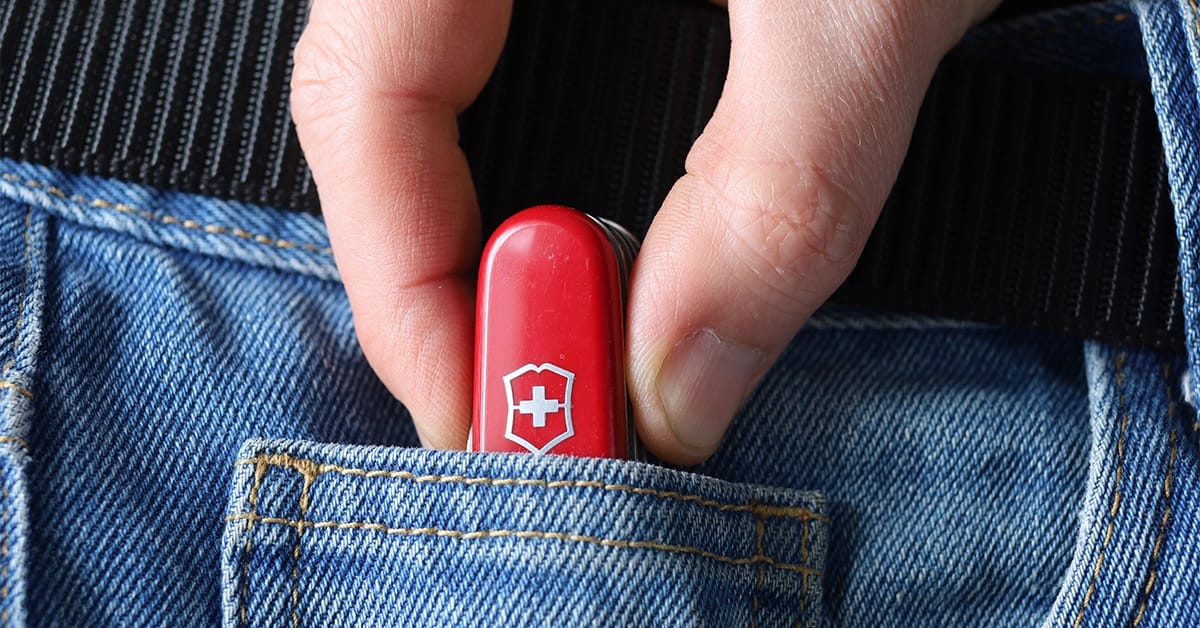
A penknife is versatile: from opening packages to small repairs. Choose a decent model with multiple functions. A whistle may sound strange in this list, but it has a concrete function: alerting emergency services to your location when your voice no longer carries or when you’re trapped.
Children and pets
Don’t forget the vulnerable family members
Those who have children extend the kit with health and vaccination booklets, nappies, spare clothing, baby food and a bit of toys. The latter is not an unnecessary luxury: children need familiar objects in stressful situations.
For pets, the same principle applies: medicines, passport, vaccination record, vet’s contact details, food and drinking water for 72 hours, and a transport cage or carrier. A recent photo of your pet can also be useful — especially if the animal gets lost during an evacuation.
Practical tips for your emergency kit
- Store everything in a fixed, accessible location that all household members know.
- Don’t let products expire: use them regularly and replenish.
- Share with neighbours: you don’t need to have a radio or torch per household.
- Also make an emergency plan: agree on who contacts whom, where you’ll meet and what the children should do if they’re home alone.
- Do you live in a flat? Consider a shared emergency kit in a communal area.
Conclusion
Putting together an emergency kit requires no major investment and no expertise. You already have most of the items at home — it’s mainly about having them in the right place and being able to access them quickly in an emergency. The ‘Prepared Together’ campaign by the National Crisis Centre is not an alarmist signal, but a logical step in a world that has become less predictable. Anyone who goes through this list and works through it step by step is already considerably more resilient than yesterday.